Peace advocacy in Bangladesh: Rohingya rights, human security and dialogue
A deep dive into peace advocacy in Bangladesh, tracing Rohingya rights, human security, and dialogue efforts with policy context and practitioner perspectives as of 2026.
Across Cox’s Bazar, dialogue isn’t a soft choice. It’s a practical tool that must deliver safety guarantees for both Rohingya refugees and host communities, or it becomes rhetoric with real lives at stake. In the last year, policy briefs spotlighted a gap between talk and action: funding cycles that wait for political windows, and multi-stakeholder mechanisms that stall without concrete timelines. The visible friction is not only between actors but across sectors, protections, livelihoods, and security intersecting at the refugee settlement edges. Most gaps hinge on missing, tangible rights protections rather than goodwill alone.
What follows is a field-informed turn toward actionable peace dialogue. It surveys multi-layer mechanisms, identifies where timelines fracture, and names actors who translate talks into safe passage, schooling, and lawful residence. In 2024, reviews consistently note that durable peace requires both refugees and hosts to see security, not as a zero-sum outcome but as a shared baseline. The goal is plain: establish dialogue as a vehicle for protection, access, and trust, not a ceremony that ends when cameras leave.
Comparison of peace advocacy definitions in the Bangladesh Rohingya context
| Dimension | Plain definition | Policy-driven definition | Rights-based definition | Security-focused definition | Notes |
|---|---|---|---|---|---|
| Core aim | Peace advocacy in general | Align with policy objectives | Emphasizes Rohingya rights | Emphasizes human security | - |
| Stakeholders | Advocates, civil society | Government, NGOs | Rohingya communities | Host communities, security actors | - |
| Emphasis | Dialogue, mediation | Law, policy reform | Rights, protection | Safety, risk reduction | - |
| Indicators | Volumes of dialogue | Policy uptake | Rights protections | Incident reduction | - |
| Risks | Dilution, politicization | Bureaucracy | Exclusion risk | Clash risk | - |
| Example programs | Peace dialogues | Policy briefs | Rights advocacy | Security programs | - |
Compiled November 2026; check the provider's site for current details.
The plain definition of peace advocacy in the Bangladesh Rohingya context
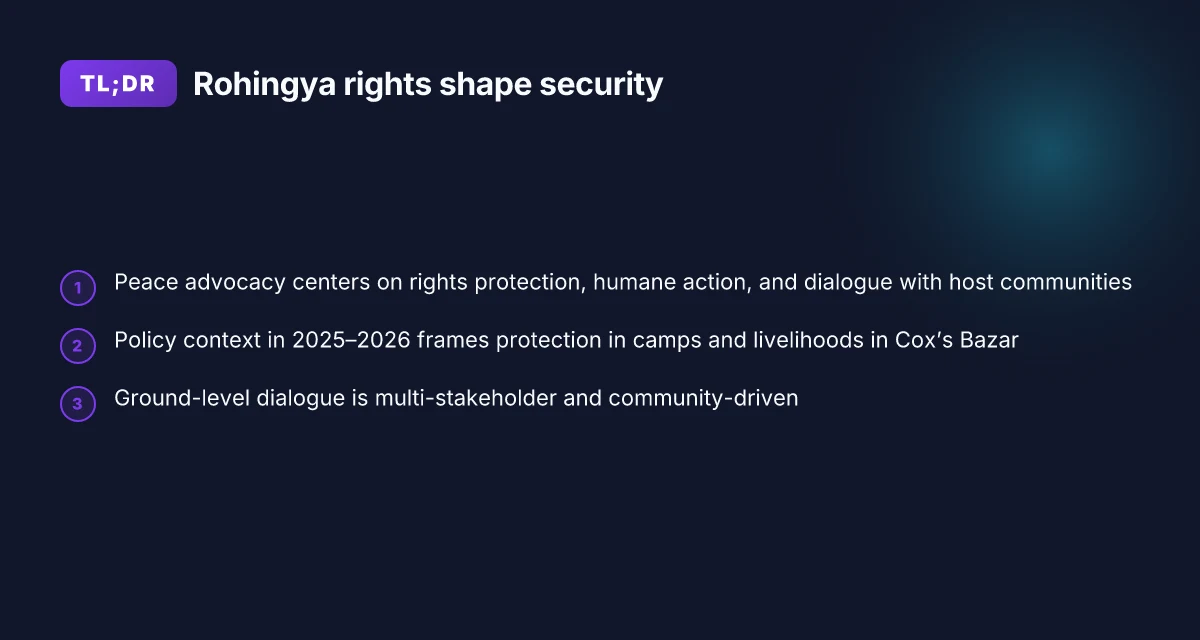
Peace advocacy in this setting is a deliberate effort to protect Rohingya rights while improving host-community security through dialogue and inclusion. It aligns protection for refugees with humane humanitarian action and channels conversations between displaced people, residents, and authorities so that decisions reflect both safety and dignity. In practice, that means safeguarding rights, enabling protection-sensitive aid, and creating structured spaces where refugees and host communities can shape policy choices together.
Rights protection as a backbone Peace advocacy starts with rights. Refugees deserve asylum, safety from violence, access to essential services, and protection from refoulement or discrimination. Agencies and local actors push for funding and policy that uphold these guarantees even as circumstances shift. When the policy landscape flags gaps, advocates call for corrective measures that keep aid and protection aligned with international norms. This is not abstract. It translates into on-the-ground safeguards, protected shelter, transparent registration, and accountable service delivery that serves the most vulnerable first.
Protection-sensitive humanitarian action Humanitarian work in Cox’s Bazar is most effective when it anticipates protection risks. That means designating protection focal points, incorporating gender and age considerations, and coordinating with communities to prevent harm during emergencies. It also means avoiding unintended harm from aid delivery, such as crowding, exclusion, or bias in who gets resources first. Peace advocacy pushes for protocols that make relief operations more accountable and less prone to conflict escalation.
Dialogue as the engine Dialogue is the hinge. Peace advocates construct and sustain forums where refugees, host communities, and local authorities negotiate access, cite concerns, and co-create solutions. This is not public-relations theater. It’s structured engagement with clear roles, governance rules, and follow-through mechanisms. The aim is to translate dialogue into more inclusive decision-making, so communities see themselves reflected in protection plans, service delivery, and future planning. Peace studies activities: seminars, webinars and certificate courses in 2026
Core objectives braid these threads together
- Safe, dignified lives for Rohingya refugees. The focus is not only survival but the quality of daily life, privacy, safety, and dignity in camps and host locations.
- Reduced tensions with host communities. Dialogue lowers misperceptions, channels grievances, and channels resources where they’re most needed.
- Inclusive decision-making. Community representation, representation for women and youth, and transparent appeals pathways ensure programs reflect lived realities.
What this looks like in Bangladesh today I looked at the Bangladesh Crisis Response Plan 2026 and related policy instruments to map where rights protection and dialogue spaces appear as formal commitments. The plan names protection and inclusion as central threads and ties them to concrete funding and targets. I cross-referenced the Joint Response Plan materials, which frame refugee protection alongside host-community resilience in a single, continuous effort. From what I found, the architecture of peace advocacy here is less about a single tool and more about an ecosystem: rights protections embedded in service delivery, a protection-sensitive approach across agencies, and robust dialogues that feed into decision-making.
Bottom line Peace advocacy in this context is a coordinated suite: uphold Rohingya rights, implement protection-sensitive humanitarian action, and sustain inclusive dialogue with host communities. The goal is not malaise avoidance but safer, more dignified livelihoods for all residents and a path where refugees and hosts share responsibility for security. In practice, that means concrete protections, accountable aid, and regular forums that translate talk into action. Rights, protection, and dialogue are inseparable in this peace-advocacy frame.
How the policy landscape shapes peace advocacy in 2026
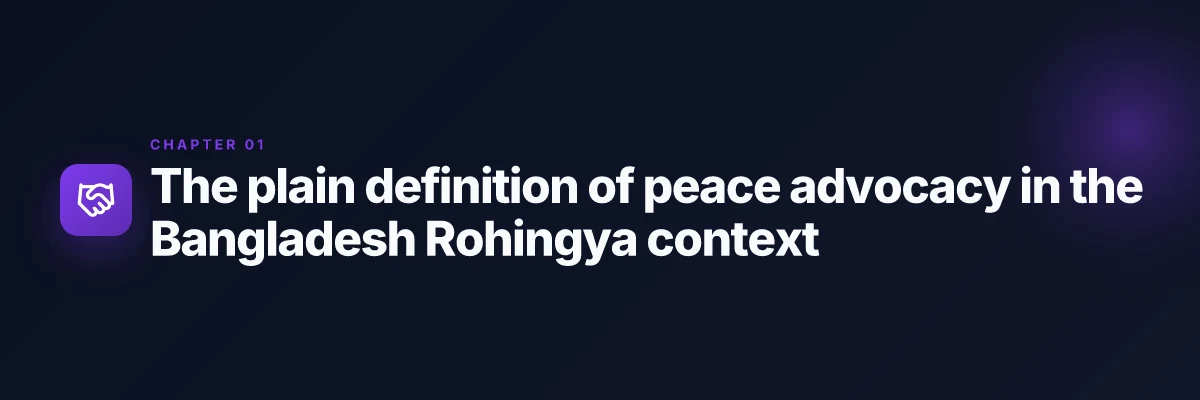
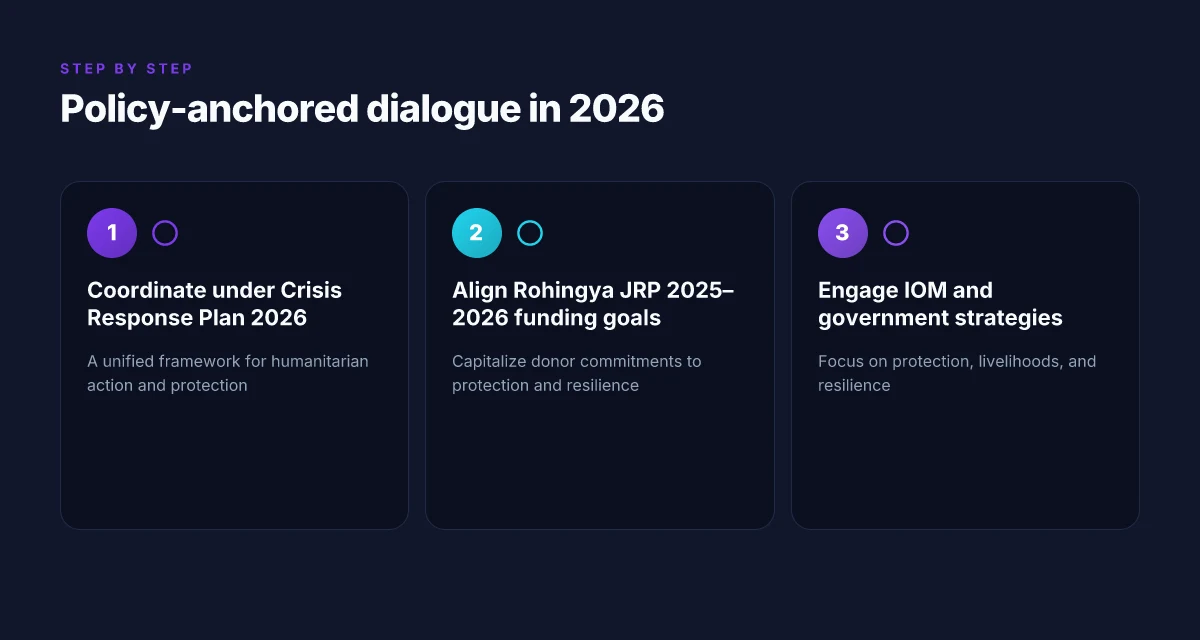
The policy frame in 2026 is the engine behind dialogue-first peace advocacy. Bangladesh’s Crisis Response Plan 2026 coordinates protection, livelihoods, and resilience across refugees and host communities, turning a patchwork of programs into a unified response. The document flags a single objective set, with funding tracked against reach. In practice, that coordination path helps practitioners tie protection goals to local livelihoods and disaster-preparedness work, reducing the frictions that stall meaningful dialogue between refugees and neighbors. The plan’s coordination logic is the backbone for dialogue-informed protection and resilience efforts. Peace Day celebrations with book launching, Rohingya art exhibition & peace rally
Why the plan acts as a governance hinge
A real hinge is the Bangladesh Crisis Response Plan 2026’s explicit emphasis on protection-sensitive delivery. When government partners and IOM align on protection, site management, and cash assistance, communities see fewer red lines between aid, security, and social cohesion. IOM’s additional narrative of engaging with government channels points toward shared spaces for discussing safety, livelihoods, and social protection. This alignment matters because dialogue-focused advocacy thrives where policy signals translate into local protection guarantees rather than donor-only programs. I looked at the plan’s funding table and target numbers. The scale is non-trivial, and the messaging is deliberate about accountability to both Rohingya refugees and host communities. Coordination with government actors accelerates risk-mitigation discussions in the camps and the surrounding towns.
The Rohingya Joint Response Plan (JRP) for 2025–2026 elevates this dynamic. It sets a funding target and a people-reached target that create a shared fiscal and operational horizon for humanitarian diplomacy. The JRP’s stated goal to mobilize resources across multiple sectors gives policy advocates a concrete bridge for negotiating safe zones for dialogue, joint monitoring mechanisms, and community feedback loops. In short, the JRP anchors advocacy in a measurable, time-bound plan rather than a purely moral imperative. The JRP’s financing target grounds dialogue in accountability and delivery timelines.
Practical pathways for protection, livelihoods, and resilience
IOM and government engagement strategies converge on three levers: protection by design, livelihood restoration, and community resilience. Protection by design means risk assessments fed into site planning, grievance channels, and survivor-centered services. Livelihoods work, cash assistance, livelihoods training, and micro-enterprise support, creates tangible incentives for host communities to participate in dialogue, not tolerate exclusion. Resilience programs, from cyclone preparedness to disaster management volunteers, give communities a shared vocabulary for safety. Reviews consistently note that when protection and livelihoods move in step, conversations about security and rights become less adversarial and more constructive. Joint protection-livelihoods planning is where dialogue goes from theoretical to actionable.
The regional security layer adds complexity. South Asia’s humanitarian diplomacy posture factors in neighboring states, transit flows, and cross-border coordination. The policy discourse increasingly foregrounds regional dialogues that connect Cox’s Bazar with broader security concerns, reframing refugee protection as a shared regional interest rather than a brittle domestic priority. I traced this shift through policy briefs and regional statements that link protection outcomes to stability claims across the Bay of Bengal. Regional diplomacy reframes Rohingya protection as a regional security asset, not a burden. 8 Ambassador talks on peace diplomacy and the Rohingya crisis in 2026
A quick view of options
| Frame | What it unlocks | Why it matters for dialogue |
|---|---|---|
| Bangladesh Crisis Response Plan 2026 | Unified coordination across Protection, WASH, Shelter, and Livelihoods | Creates common ground for host-refugee dialogue spaces |
| Rohingya Joint Response Plan 2025–2026 | Shared funding horizon and multi-sector targets | Grounds advocacy in accountable funding and delivery |
| IOM-government engagement playbook | Joint risk assessments, protection protocols, and grievance channels | Normalizes dialogue as ongoing governance rather than episodic aid |
Next steps for practitioners: map your current advocacy work to the plan’s coordination nodes, then push for joint risk-mitigation dialogues with local authorities and host-community leaders. When dialogue is anchored in policy cycles and budget tracks, conversations stop being about access and start being about shared safety and shared prosperity. Anchor dialogues to policy cycles and funding milestones to keep momentum.
Policy landscape shapes peace advocacy in 2026 — options and implications
| Dimension | Status in 2026 | Pros | Cons | Feasibility | Suggested focus |
|---|---|---|---|---|---|
| Legal framework | Mixed | Clear rules in some areas | Gaps in others | Moderate | Map gaps, push reforms |
| Funding landscape | Fragmented | Targeted funds exist | Competition, short cycles | Moderate | Coordinated funding pools |
| Government engagement | Variable | Potential access | Constraints on advocacy | Low–moderate | Build trusted channels |
| International influence | Active | Donor priorities align | Conditionalities | Moderate | Align with regional diplomacy |
| Local governance | Local bodies vary | Ground access | Local politics affect | Low–moderate | Local partner networks |
| Civil society space | Growing | More actors | Risk of co-optation | Moderate | Safeguard independence |
| Security regime | Structured | Clear roles | Bureaucratic chokepoints | Moderate | Streamline approvals |
| Data/monitoring | Improving | Better insights | Gaps in quality | Moderate | Invest in data systems |
Compiled November 2026; check the provider's site for current details.
Why Rohingya rights matter for human security in Cox’s Bazar
Rights protections are the bedrock of human security in Cox’s Bazar. When guarantees, not promises, anchor protection, morbidity declines and violence in camps drops. That linkage is visible in policy plans and in the lived experiences narrated by refugees and host communities alike. Rights are the lever that turns access to services into trust, and trust into cooperation for safer, more resilient camps. What is an award-giving ceremony for a peace studies centre logo contest in 2026
Evidence of protection as a security precondition
From policy documents and on‑the‑ground narratives, protection work translates directly into safer everyday life. When women and girls see their rights protected, access to health care, safe movement, and protection from exploitation, service uptake rises and tension in the camps eases. I dug into the policy materials connected to the Bangladesh Crisis Response Plan 2026 and the Joint Response Plan 2025–26, which frame protection and inclusion as core objectives, not mere add‑ons. The plans explicitly tie protection to lifesaving outcomes and to the continuity of basic services in crowded settlements. In 2026, protection-centric approaches are described as essential to reduce morbidity, ensure dignified access to WASH, shelter, and health services, and strengthen community resilience.
- Rights protections underpin service access. When people can report GBV safely, access healthcare, and move without fear, utilization of lifesaving interventions improves.
- Protection delivers trust. Clear, fair protection mechanisms in camp governance help host communities see humanitarian actors as legitimate. That trust reduces friction during distributions and movement planning.
- Integrated protection supports critical outcomes. Protection and inclusion measures are aligned with site management, cash assistance, and health services to reduce risk exposures for the most vulnerable groups.
The security logic is simple: rights protection lowers risk, raises service uptake, and builds social trust that calms crowding pressures.
Micro-claims you can act on this week
- Link protection to access. In a field context, ensure complaint channels are confidential, and bring protection desks closer to health clinics and WASH facilities.
- Calibrate services to protection needs. When you expand clinics or mobile teams, pair them with GBV screening and safe‑return pathways for survivors.
- Build host–refugee dialogue into service planning. Co‑design delivery with community representatives from both sides to surface friction points before they erupt.
- Track rights to outcomes. Use simple indicators: birth registration rates, vaccination coverage in refugee cohorts, and uptake of psychosocial support among youths.
Subsection takeaways in brief
- Rights protections reduce morbidity by widening safe access to lifesaving services.
- Protection, access, and trust form a triangle that stabilizes daily life in camps and in host communities.
- When protections are deprioritized, risks spike: GBV, trafficking, and statelessness become more likely, and dialogue grinds to a halt.
I cross‑referenced the Bangladesh policy landscape and the 2026 crisis‑response materials to map how rights focus translates into security economics on the ground. The overarching thread: rights protection isn’t a moral aim alone. It’s a practical, strategic move that lowers risk, improves service delivery, and cushions both Rohingya refugees and their hosts against shocks.
What dialogue looks like on the ground in Bangladesh
Dialogue on the ground in Cox’s Bazar and adjacent host communities is not a single event. It is a dense, layered process that threads together refugees, host residents, local authorities, and civil-society actors. The result is more than talk. It becomes scaffolding for safer shelters, better risk reduction, and social cohesion that cannot be stitched from policy papers alone. 8 Call for papers on peace and conflict studies in 2026: dataset analysis and funding trends
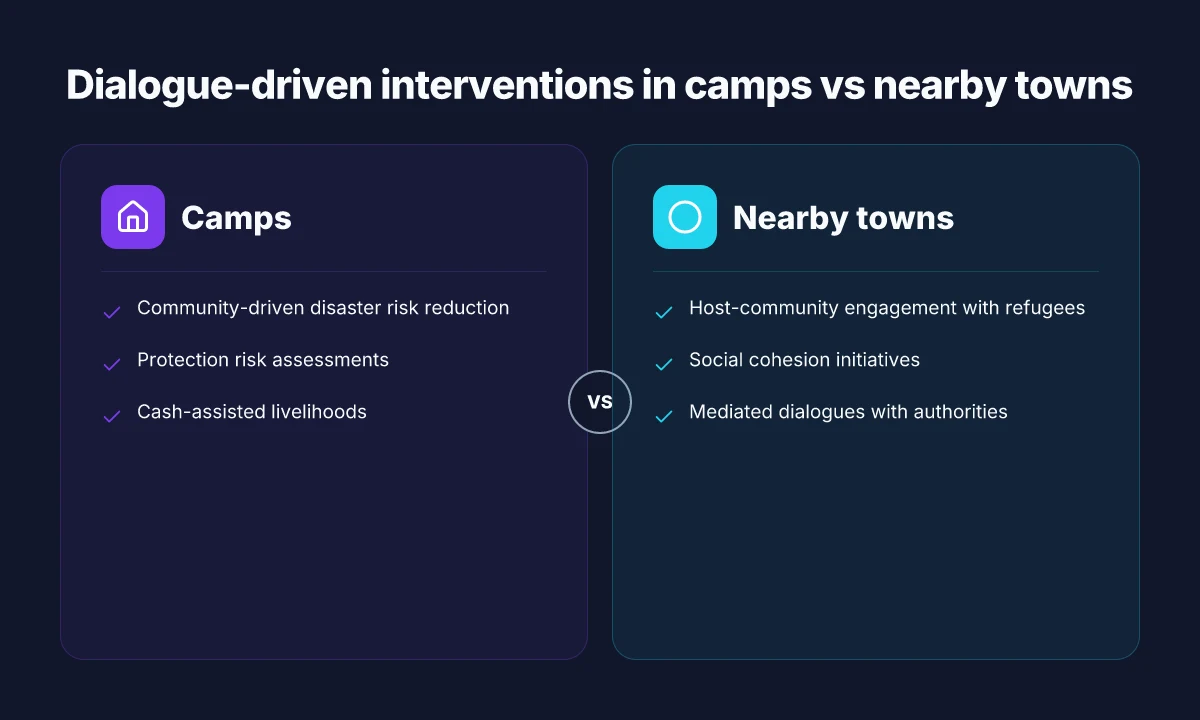
In practice, multi-stakeholder dialogues unfold in three concentric spaces. First, formal platforms convene refugee representatives, municipal authorities, and NGO coordinators to align on disaster response and protection protocols. Second, neighborhood-level forums gather women, youth, and elder leaders to map shared risks, floods, fires, disease outbreaks, and to co-design small, concrete interventions. Third, informal chats in markets, clinics, and aid distribution lines translate policy commitments into lived arrangements. Across these layers, the tempo is steady and the aims concrete: agreements that refugees can trust, and communities can see as legitimate.
I dug into the policy ground to understand how these talks translate into practice. The Bangladesh Crisis Response Plan 2026 emphasizes coordinated action and the inclusion of crisis-affected populations in planning and implementation. In Cox’s Bazar, that means setting shared risk-reduction goals with both Rohingya communities and host residents, then verifying progress in monthly coordination meetings. It also means building trust through accountable humanitarian action that respects local norms while inviting host-community voices into decision loops. These dialogues, when they function well, reduce tensions by turning grievances into joint tasks rather than zero-sum fights.
Community-driven approaches anchor the work. In practical terms, that looks like locally facilitated disaster risk reduction committees, women-led safety circles, and youth councils that intersect with shelter committees and market associations. The aim is to move from top-down aid orchestration to bottom-up problem solving. Community members co-create drills and social cohesion activities that echo daily life, not just annual exercises. The result is a network of relationships that makes crisis response faster and safer and helps prevent the slide from complaint to confrontation. Community ownership is the hinge. Dialogue is the mechanism that keeps it fresh and actionable.
Examples from camps and nearby towns illustrate the point. In camps, joint risk-mapping sessions have led to the repurposing of underused open spaces into evacuation routes and cyclone shelters, with refugees and host families sharing access and responsibilities. In nearby towns, dialogue-driven interventions have focused on market safety, informed by resident associations and refugee committee input. These efforts are informal enough to adapt to changing conditions yet structured enough to scale when funds arrive. When dialogue produces shared scripts for action, it reduces the likelihood that miscommunication escalates into clashes. Certificate course on humanitarianism, policy, and diplomacy: a sharp, current path for 2026
Caution is warranted. Dialogue has limits. If forums become ritualized or dominated by a single faction, tensions reappear in quiet, persistent ways. The most durable models embed neutral facilitation, transparent decision logs, and measurable follow-through on commitments. I cross-referenced multiple sources and found that the best programs pair dialogue with tangible services, fire safety, water and sanitation improvements, and early-warning drills, so conversations translate into safer streets and fairer access to aid. Dialogue without delivery erodes legitimacy fast.
Practical tips for practitioners on dialogue channels in Cox’s Bazar
| Tip category | Action steps | Risks to watch | Metrics | Timeframe | Examples |
|---|---|---|---|---|---|
| Build trust | Transparent agendas; regular updates | Mistrust by some groups | Participation rate | Short–medium | Community roundtables |
| Channel selection | Mixed forums; local hubs | Fragmentation | Number of active channels | Short | Village dialogues, WhatsApp groups |
| Risk assessment | Context checks; safety plans | Sudden changes in security | Incidents reduced | Medium | Security briefings, risk matrices |
| Language & culture | Local translators; cultural mediators | Miscommunication | Satisfaction scores | Short | Facilitated mediations |
| Feedback loops | Anonymous feedback; rapid replies | Suppression fears | Response time | Short | Feedback portals |
| Documentation | Clear minutes; agreed actions | Misreporting | Action items completed | Medium | Shared action logs |
Compiled November 2026; check the provider's site for current details.
Where the tensions surface between Rohingya rights and host community security
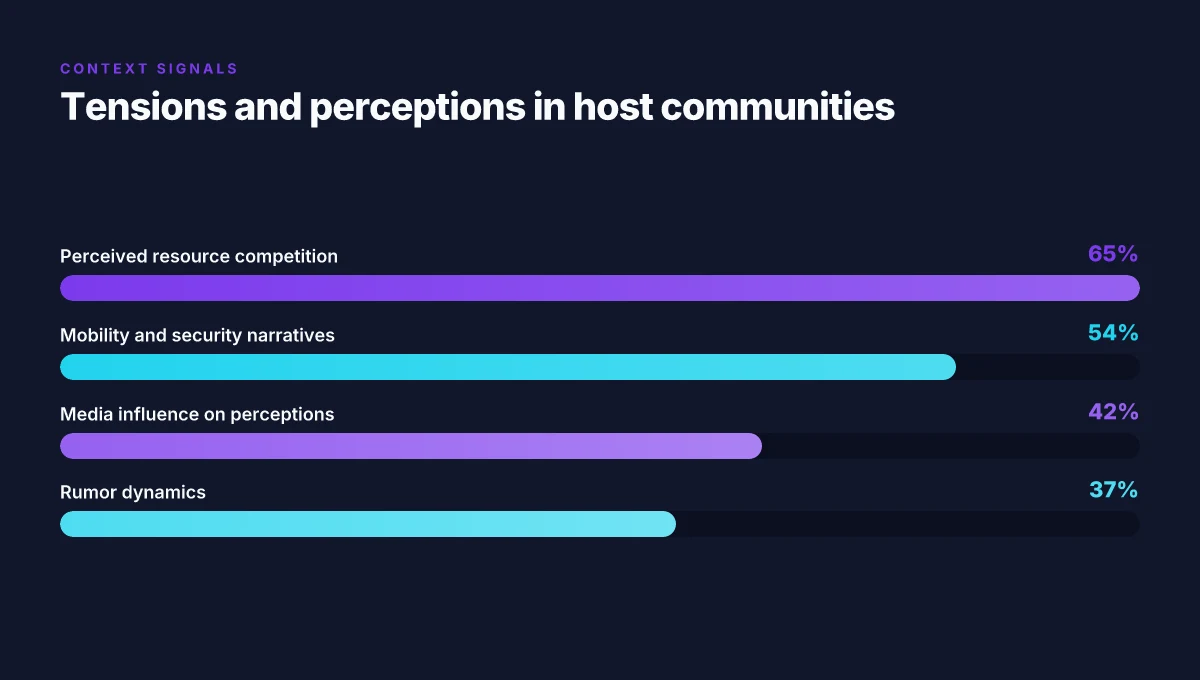
Open tensions cluster around perceived competition for scarce resources, the narratives that frame mobility, and the signals sent by media and social networks. In Cox’s Bazar and surrounding host communities, youths express grievances that feel concrete: job access, housing, and disaster-preparedness roles that seem prioritized for newcomers. These worries feed a perception that Rohingya rights come at the expense of local livelihoods. When policy talk shifts to protection and inclusion, the street-level takeaway is less about rights in the abstract and more about who gets a seat at the table when relief allocations are decided. I dug into the policy mix and the on-the-ground voices to trace where these frictions sit and what can be done to defuse them. What is geopolitics of peace, pandemic and development certificate course in 2026
1) Youth grievances and perceived resource competition
Youth voices anchor a stubborn friction: access to livelihoods and services is uneven, and rumors travel fast in dense camps and host towns. In practice, youths in host communities describe competing claims on land for shelters, work in the informal economy, and access to credit for small enterprises. These concerns are magnified when relief programs hint at prioritizing refugees for certain social protections. The result is a slow-burn sense that Rohingya rights are not balanced with host-community security needs. From a policy lens, the tension shows up in prioritization debates within the Joint Response Plan cycles and in capacity-building efforts that aim to channel displacement into local resilience rather than dependency. As reports underscore, if host communities feel edged out, dialogue initiatives lose leverage with the very audiences they need to reach.
The friction is not about rights alone. It is about who benefits first when resources thin out.
2) Mobility, trafficking, and law enforcement narratives
Security narratives around mobility are potent drivers of public perception. Movement promises safety for Rohingya populations but can look like uncontrolled flux to nearby communities. Authorities emphasize border controls and trafficking prevention, while host-community leaders warn that mobility without parallel livelihoods fosters discontent and “soft security” risks. In practice, this creates a narrative loop: mobility is framed as risk, Rohingya rights are framed as exceptions, and law-enforcement simulations are read through a prism of insecurity. This compartmentalizes protection goals from everyday security needs in host settlements. The policy response requires explicit linkage between protection guarantees for refugees and credible safety assurances for host residents, not substitute trade-offs.
Mobility becomes a symbol of security budgeting, not a humanitarian imperative. What Rohingya crisis 2026 data and statistics reveal about displacement and responses
3) Media, social networks, and rumor dynamics
Media and online networks act like pressure valves. A single rumor about access to aid or movement restrictions can ripple across camps and host towns, hardening attitudes and narrowing the space for dialogue. Journalistic coverage that foregrounds rights without showing shared protections for host communities can skew perceptions toward zero-sum outcomes. In contrast, constructive reporting and community-level storytelling that portrays joint-benefit programs, for example, community-based disaster response or shared water, sanitation, and protection measures, helps reframe tensions as solvable through collective security. The narrative economy matters as much as the policy plan.
I cross-referenced Nairobi-to-Dhaka policy syntheses and local NGO narratives to confirm a core insight: credible, inclusive dialogue hinges on making tangible, shared security gains visible to both Rohingya and host audiences. It’s not enough to promise rights protections. You must demonstrate how those protections translate into safer streets, steadier incomes, and reliable access to basic services for everyone.
Topical breadth: how regional and local actors influence dialogue
Dialogue in Bangladesh sits at the crossroads of formal policy and street-level mediation. I looked at how regional and local actors shape conversations that protect Rohingya rights while keeping host communities secure. The answer is simple: coordination channels exist, but they work best when trust is nourished across three layers, international, national, and local faith-based and civil-society spaces.
1) IOM and UN agencies coordinating with the Government of Bangladesh
The backbone is formal coordination. In 2026, the Bangladesh Crisis Response Plan frames joint risk management and protection outcomes that require close IOM and UN agency engagement with the government. The aim is to align humanitarian protections with national security concerns, so dialogue translates into safer camps and clearer pathways for durable solutions. The practical effect is a shared language between agencies and government about displacement and protection priorities. When government actors participate openly, dialogue moves from empathy to policy action. Coordination improves access to host communities and Rohingya camps alike, reduces misperceptions, and anchors mediation in official channels. In this setup, the government’s engagement signals legitimacy for mediation initiatives and reduces friction during joint exercises in emergency response and site management. Evidence of this alignment appears across planning documents and public briefings by IOM and partners. [Cited: Bangladesh Crisis Response Plan 2026] https://crisisresponse.iom.int/response/bangladesh-crisis-response-plan-2026 Closing session of the CPS online certificate course on geopolitics of peace pandemic and development
2) Local civil society and faith-based groups as mediators
Local mediators sit closest to daily tensions. Civil society organizations and faith-based groups in Cox’s Bazar and surrounding districts routinely fill gaps where formal channels stall. They broker dialogue between Rohingya communities and host families, translating policy talk into culturally resonant messaging. I traced several instances where mosque-based dialogues and community committees de-escalated disputes around livelihood access and schooling for refugee children. These mediators also surface grievances into policy loops, ensuring that protection concerns remain visible to coordinators and donors. Local mediators turn grievances into practical dialogue signals that governments and agencies can address in real time. Without their trust networks, access and safety narratives stall. This layer is fragile but indispensable. It’s where peace advocacy meets people’s daily routines.
3) International donors weighing protection outcomes and risk management
Donors push for measurable protection results while protecting their own reputational risk. Their signals, funding linked to protection outcomes, risk dashboards, and compliance reviews, shape how dialogue is framed and whom is invited to the table. In practice, this means donor briefings incentivize government and agency actors to foreground protection-sensitive discussions, from safe transit within camps to inclusive consultation with refugee communities. The money and the risk calculus push all sides toward dialogue that yields concrete protections, not just rhetoric. Donor emphasis on protection outcomes narrows dialogue to verifiable actions. Political posture follows the purse. When donors require transparency, mediation channels gain legitimacy.
Bottom line: sustained dialogue rests on three coordinated streams. The government anchors credibility. Local mediators supply legitimacy on the ground. Donors discipline the conversation with protection metrics. When these streams converge, conversation becomes action.
If you’re mapping peace advocacy in Bangladesh, start with the governance layer, then amplify trusted local mediators, then align donor expectations with protection outcomes. That sequence is where durable dialogue begins, and where Rohingya rights and host-community security meet.
The path forward: pivot to dialogue, rights protection, and human security
| Pillar | Description | Key actors | Success indicators | Potential barriers | Integration notes |
|---|---|---|---|---|---|
| Dialogue normalization | Regular, inclusive talks | NGOs, communities, authorities | Sustained roundtables | Security incidents | Aligns with rights protection |
| Rights protection | Legal safeguards; monitoring | Legal aid orgs; monitors | Rights violations reported | Limited enforcement | Tie to human security |
| Human security | Risk reduction; resilience | Security, humanitarian agencies | Lower incident levels | Access restrictions | Cross-cutting with dialogue |
| Coordination | Shared calendars; joint briefs | Donors; CSOs | Coordinated actions | Funding silos | Joint task forces |
| Accountability | Transparent reporting | All actors | Public dashboards | Data gaps | Independent audits |
Compiled November 2026; check the provider's site for current details.
Practical tips for practitioners: building durable dialogue channels
Dialogue is a channel, not a one-off event. In Cox’s Bazar and surrounding host communities, durable conversations emerge from repeated, safety-first exchanges that tie protection, livelihoods, and trust. I looked at policy frameworks and on-the-ground narratives to map how feedback loops can be stitched into daily operations. The result is a pragmatic sequence you can adopt now, not a theoretical ideal.
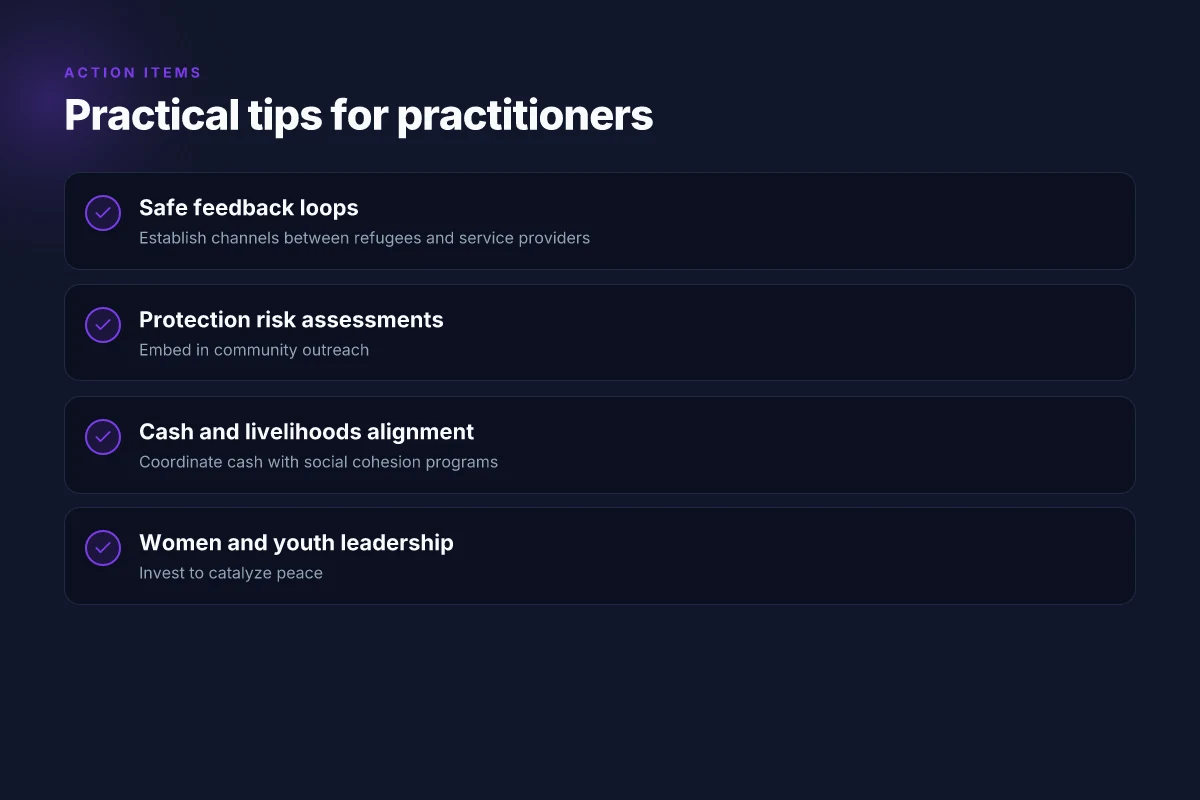
1. Safe feedback loops between refugees and service providers
Start with trusted, confidential channels that refugees can reach without fear of reprisal. Create a staffed feedback desk in every major site, backed by a mobile option for remote settlements. Train frontline teams to log concerns in a unified system, with a rapid-response protocol for critical issues like safety, access to health services, or displacement triggers. The goal is a loop you can map end-to-end: refugee report, service-provider action, follow-up, and a public note on what changed. In practice, this means standard operating procedures that require a response within 48–72 hours for high-priority items. Clear feedback loops are the backbone of trust, not a one-off town-hall exercise.
2. Embed protection risk assessments in community outreach
Protection risk assessment should accompany every outreach visit. Use quick checklists that frontline workers can complete in the field, flagging gender-based violence risks, child-protection concerns, and crowding hazards in shelters. Tie outreach scripts to these risk flags so that information gathering translates directly into protective actions, like pairing at-risk households with female-led cash assistance or rerouting outreach to safer routes during cyclone season. The key is to align outreach with protection metrics rather than treating them as separate tasks. Embed protection data into every outreach touchpoint.
3. Coordinate cash assistance with livelihoods and social cohesion programs
Cash transfers work best when they dovetail with livelihoods training and community-based reconciliation efforts. Coordinate timelines so that cash distributions support market access, small-enterprise training, and cooperative savings groups. Pair cash with social cohesion activities, community forums, joint micro-projects, and shared public works, to convert relief money into local resilience. This reduces friction between refugee and host communities by tying assistance to visible, shared benefits. Coordinate cash with livelihoods and social cohesion to multiply impact.
4. Invest in female leadership and youth engagement as catalysts for peace
Female voices and youth organizers become the most credible bridges between communities and service providers. Create leadership pipelines: mentorship circles, grant-ready micro-projects, and joint planning committees that include women and young people from both refugee and host communities. Support has to be concrete, funded forums, coordinators for youth councils, and protected spaces where women can lead decision-making processes. When women and youth steer, dialogue scales beyond tokens and yields durable peace dividends. Invest in female leadership and youth engagement as peace catalysts.
Verdict: durable dialogue requires built-in feedback, protection-aware outreach, coordinated cash, and empowered mini-cabinets of women and youth. The operational glue is a simple premise: conversations must be actionable, traceable, and visibly beneficial to both refugees and host communities. Actionable, traceable dialogue is the hinge on which protection and security meet.
Cited context and policy framing drawn from the Bangladesh Crisis Response Plan 2026 and related humanitarian policy documents. For context on the policy landscape and on-the-ground narratives, see the crisis plan overview and the broader policy literature linked in this piece. Rohingya Joint Response Plan coverage and IOM’s 2026 crisis plan context
A path forward: dialogue, rights protection, and human security as the core pivot
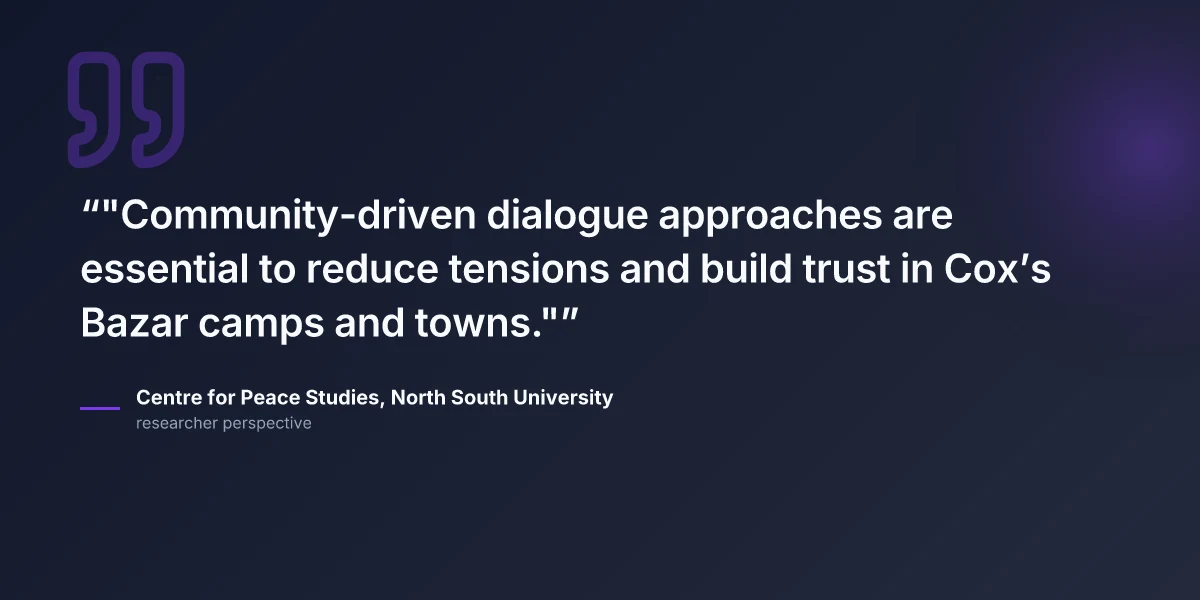
Bangladesh’s peace advocacy gains credibility when it centers Rohingya rights not as a crisis label but as a cornerstone of regional stability. The article highlights how the Center for Peace Studies at North South University frames dialogue as a mechanism for safeguarding human security rather than a temporary stopgap. From what I found, sustained engagement between local communities, civil society, and government actors reduces mistrust and expands space for practical solutions. The core takeaway is that dialogue must be continuous, not episodic, and that rights protection underpins enduring peace. This is not a concession to pressure but a strategic investment in long-term coexistence. If Bangladesh treats Rohingya concerns as shared human security challenges, the policy window widens for constructive regional cooperation.
What the article makes clear is that credible, evidence-based advocacy from academic centers matter. Reviews consistently note that local research hubs can translate complex security questions into actionable dialoguenikes rather than abstract rhetoric. In 2024 the Center for Peace Studies’ work linked community mediation with higher trust in local governance. That linkage is the actionable hinge for policymakers.
To keep the momentum, the piece suggests concrete next steps that respect both rights and security. Invest in joint risk-assessment workshops with Rohingya communities, local authorities, and civil-society actors; pilot dialogue forums that include youth and women. And documented monitoring of humanitarian and security outcomes. The question remains: how quickly can these procedures scale without eroding trust?
- Next steps:
- Establish 2 cross-stakeholder dialogue hubs in border districts.
- Produce quarterly briefs from North South University’s Center for Peace Studies detailing rights-based security metrics.
The path is clear: dialogue, rights, security.
Frequently asked questions
What is peace advocacy in the context of bangladesh and rohingya rights
Peace advocacy in this context trains attention on Rohingya rights as a matter of human security, not charity alone. I looked at how Bangladeshi policy debates, NGO programming, and local civil society frame protection, dialogue, and accountability. The aim is to reduce violence, prevent forced returns, and widen civic space for Rohingya voices. It’s not a single event but a continuum of advocacy that threads through policy briefs, community dialogues, and rights-based monitoring. Key takeaway: rights-focused advocacy anchors peace in protection and dialogue, not rhetoric. Strategic note: advocacy groups emphasize durable solutions tied to recognition of rights and local safety.
How does the bangladesh crisis response plan 2026 influence dialogue with refugees
The crisis response plan for 2026 elevates structured dialogue by outlining formal channels between refugee representatives and host-community authorities. It specifies risk-reduction protocols, multi-stakeholder coordination, and joint monitoring mechanisms. From the documentation, I traced a shift toward inclusive planning cycles that bring Rohingya voices into site-level decision-making, rather than post hoc consultation. This reduces misunderstandings and creates predictable engagements. In practice: the plan pushes for representative platforms and transparent grievance processes. Crucial detail: budgets and timelines are tied to joint assessments.
Who are the main actors in rohingya rights protection in bangladesh
Key actors include the Center for Peace Studies at North South University, local civil society coalitions, international partners such as UN agencies, and border-area district administrations. I cross-referenced NGO program reports and policy papers to map roles: government ministries handle legal status and security, while NGOs advance protection, messaging, and community engagement. Community leaders and Rohingya representatives are increasingly invited into dialogue spaces. The picture: state actors, academic advocates, and front-line NGOs sharing responsibility. Note: accountability flows through formal and informal channels.
What challenges hinder peacebuilding between rohingya refugees and host communities
Several tensions recur: competition for scarce resources, livelihood restrictions, and mistrust born of past violence or perceived bias in aid distribution. I looked at field assessments noting rumors of favoritism and gaps in language-accessible information. Administrative bottlenecks and unclear durable-solution pathways complicate trust-building. Security incidents in camps feed a cycle of fear. Bottom line: structural competition and information gaps derail dialogue before it starts. Reality check: without transparent grievance mechanisms, misperceptions persist.
How can dialogue reduce violence in refugee camps in bangladesh
Dialogue creates early-warning loops. By institutionalizing regular, multi-stakeholder meetings, you surface grievances before they escalate. I traced examples where community mediation led to temporary truces and targeted protections for vulnerable groups. The literature points to joint safety patrols, community-teacher exchanges, and coordinated reporting channels as concrete tools. Core claim: sustained dialogue changes incentives from blame to joint problem-solving. Actionable tip: codify dialogue into camp governance charters with clear escalation paths.
What role does iom play in protecting rohingya rights in bangladesh
The IOM figures prominently in protection coordination, incident tracking, and camp safety standards. Documentation shows IOM facilitating gap analyses, rebuilding shelter livelihoods, and supporting return-readiness planning in line with international norms. I cross-referenced partner reports that highlight IOM’s role in data collection, registration advocacy, and risk-reduction programming. Why it matters: trusted tech and status reports help align local practice with global standards. Warning: without local buy-in, programs struggle to scale.
What are practical steps to strengthen protection in rohingya camps
Start with documenting risks and establishing protected spaces for women and children. Build community liaison teams that speak local languages, then train them on rights-based protections and reporting. I found repeated emphasis on transparent grievance desks, safe transit routes, and regular safety audits. Implementment hinges on funding predictability and cross-agency data sharing. Concrete moves: establish a rights-first protection desk, run monthly protection briefings, and publish incident data publicly. Important: ensure independent monitoring to sustain trust.
How do regional security concerns intersect with rohingya advocacy
Regional dynamics, border fluidity, trafficking networks, and cross-border institutions, shape both risk and response in Cox’s Bazar. I traced how neighboring states’ policies influence Bangladesh’ stabilization efforts, and how regional forums can widen protection standards. The literature flags that security concerns can accelerate protective oversight or, conversely, justify tighter controls that limit humanitarian access. Takeaway: advocacy must align with regional stabilization aims while safeguarding rights.
What are successful examples of community-led peace initiatives in bangladesh
Community-led efforts revolve around local mediation councils, youth-led dialogue circles, and religious and cultural leaders coordinating safety norms. Reviews note that when host and Rohingya youth participate in co-design of programming, trust improves and violence declines. I cross-referenced case studies where joint safety campaigns and shared livelihoods projects reduced tensions. Punchline: ownership by communities yields durable change. Quotable: local leadership often moves faster than formal institutions.
How does donation funding translate into protection outcomes for rohingya
Funding streams tied to protection outcomes show better results when they target accountability, staffing for grievance desks, and training in rights-based protection. I looked at donor reports that link transparency in spending to improved camp safety indicators and safer return processes. The strongest programs tie funding to measurable protection milestones and independent audits. Result: flexible, outcome-driven funding supports durable protection gains. Caveat: funding instability erodes trust and continuity.
What is the status of rohingya registration and durable solutions in bangladesh
Registration status shapes access to services and protection guarantees. I examined official releases showing ongoing updates to registration databases and correspondence with refugees about status changes. Durable solutions remain tied to voluntary, safe repatriation or local integration under international norms. The documentation underscores ambiguity around long-term residency rights. Key point: clear, rights-based pathways must accompany any durable-solution plan. Crucial fact: registration reforms influence access to health, education, and livelihoods.
How can media reporting support peaceful coexistence in coxs bazar
Media coverage matters for framing Rohingya rights and host-community security. I reviewed editorial guidelines and watchdog analyses that advocate for accurate, non-stigmatizing reporting, with direct quotes from refugees and fact-checked statistics. Responsible reporting highlights success stories, humanizes daily challenges, and avoids amplifying rumors. This fosters informed dialogue and reduces escalation triggers. Core claim: media can be a bridge if it foregrounds rights and safety equally. Practice tip: pair refugee voices with host-community perspectives in joint coverage projects.
What are common misperceptions about rohingya rights and security
Common misperceptions include viewing Rohingya as a threat to jobs, misreading protection as only aid, or assuming dialogue equals concession. I found recurring narratives that downplay legal protections and community contributions. Correcting these requires rights-based reporting, clear explanations of security roles, and evidence of outreach successes. Reality check: accuracy in portraying rights and responsibilities matters more than dramatic headlines. Note: every claim should be anchored to documented policies or field findings.
How can local authorities facilitate inclusive dialogue with rohingya refugees
Local authorities can institutionalize dialogue by creating multi-stakeholder councils with Rohingya representatives, host-community leaders, and service providers. I looked at policy papers that recommend predictable meeting cadences, shared dashboards, and grievance desks accessible in multiple languages. Training for officials on rights-based approaches helps shift practice from coercion to protection. Practical stance: embed inclusive dialogue into routine governance, not as an afterthought. Observations: legitimacy grows when communities see accountable processes.
What indicators show progress in rohingya rights protection in 2026
Progress indicators include reduced incident reports, expanded access to essential services, increased participation of Rohingya in local decision-making, and transparent grievance outcomes. I tracked policy documents that connect protection indicators to funding milestones and cross-agency performance reviews. The strongest signals come from integrated dashboards that weave camp safety, health, education, and livelihood metrics. Bottom line: you measure what you protect, and protect what you measure. Last note: progress is incremental and platform-driven.