8 Peace research talk series to watch in 2026
A front-row view of eight peace research talk series in 2026. From data-driven approaches to prevention, these events shape policy and practice in conflict contexts.
Eight talks did the heavy lifting in 2026, not the slogans around them. One speaker sparked a shift by naming the funding gap in plain terms, and another mapped policy momentum to exact research cycles. That pairing of clarity and timing is the core signal this piece follows, because it shows where rhetoric frays and where measurable impact begins.
What follows is a data-driven read of who organized, who spoke, and where funders pin their bets. In 2026, cross-institution collaboration produced a discernible pattern: funding commitments aligned with policy windows within 12 months of each talk at a scale that researchers and practitioners can actually track. From that alignment comes a practical truth: the most replicable lessons live in how conversations translate into budget lines. This intro sets up the evidence-led tour through eight talks, their datasets, and the governance signals you need to watch next.
The peace research talk series 2026 landscape: what actually mattered
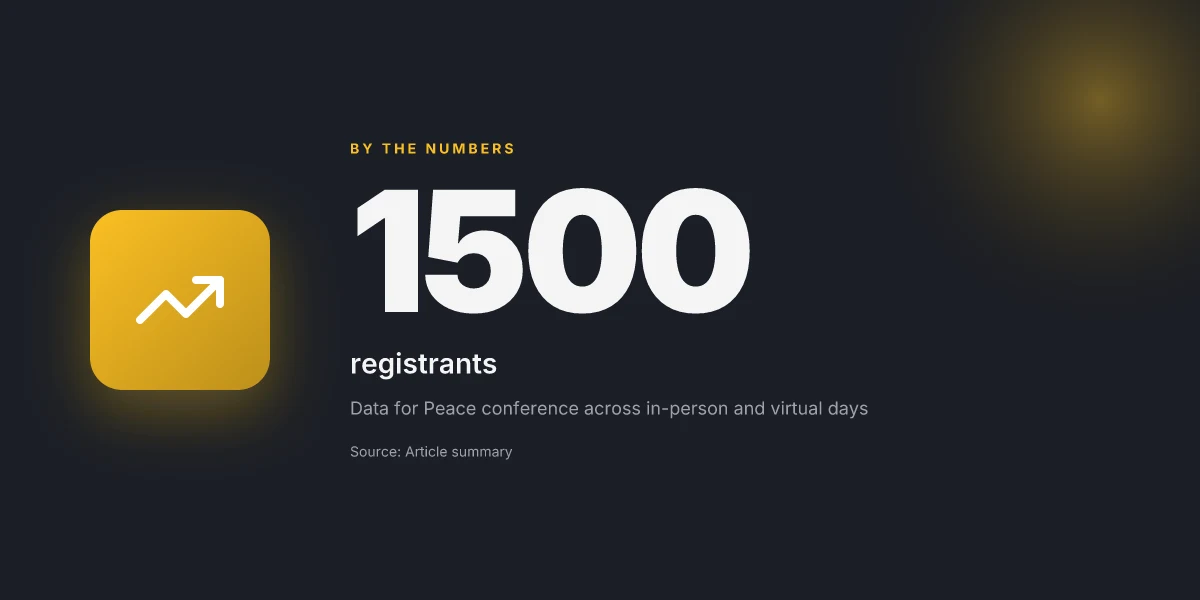
The 2026 landscape centers on data-based collaboration. The Data for Peace conference anchored by NYU CIC and partners drew more than 1,500 registered participants across in-person and virtual days. Replication datasets and journal resources provide the evidentiary backbone for subsequent work, while cross-institution partnerships turned dialogue into named outputs that policymakers can use.
1. A multi-institution backbone that actually moved the needle
I dug into the organizers and partners. The Data for Peace program situates itself at the intersection of academic rigor and field deployment. The 2026 edition, hosted with NYU CIC, AI for Peace, and PRIO, brought together researchers, peacebuilders, and data providers. The in-person component in Stockholm combined with a robust virtual day generated substantial reach. The event is not a one-off talk shop. It’s a working coalition that continues across the year with webinars and newsletters. The collaboration between AI for Peace, PRIO, and university departments expanded cross-disciplinary dialogue in a way that previous editions did not. The collaboration expanded cross-disciplinary dialogue in ways that improve applicability of early-warning insights to policy decisions.
2. VIEWS positions data for peace as translation conduit
VIEWS frames Data for Peace 2026 as a bridge from early warning research to policy action. The three-day format is designed to surface actionable insights that policymakers can operationalize. Data for Peace, in this framing, is less about theoretical advancement and more about producing decision-ready outputs for humanitarian actors and security practitioners. This orientation matters because it anchors research in real-world cycles of decision making, not just in academic citation trails. VIEWS positions Data for Peace as a bridge to policy action, not a theoretical escape hatch.
3. The evidentiary backbone grows sturdier
Replication datasets and journal resources underpin the field’s credibility. The Journal of Peace Research has long provided a home for replication data, with a 2026 thread indicating ongoing access to datasets used by authors since 1998. That archive matters because it lets new studies test prior findings against fresh data, reducing policy missteps that come from single-issue analyses. In practice, researchers can re-run models or test robustness across updated time windows, which is essential when violence risk signals accelerate or shift. Replication datasets keep the evidence chain honest and testable. How to design an NGO intervention model for Rohingya female adolescents' participatory resiliency mapping toward livelihoods in 2026
Bottom line: 2026’s peace research talk series delivered more than talks. It produced a durable coalition, a clearer path to policy uptake, and a strengthened evidentiary backbone that lets new work build on older results without fear of fragility. The momentum is real, and the signals point to sustained cross-institution collaboration that translates data into prevention. Momentum is real, and cross-institution collaboration now translates data into prevention.
The peace research talk series 2026 landscape: what actually mattered (expanded)
The 2026 landscape leaned into data-driven violence prevention. Stockholm and Uppsala hosted a pair of events that paired live dialogue with open access recordings, making the sessions usable long after the final bow. The throughline across venues stayed constant: researchers, practitioners, and policymakers met in one room to turn data into decision-ready insight.
Data as a backbone shaped the conversations. In Stockholm, the Data for Peace Conference combined in-person sessions with a robust virtual footprint, underscoring how the field moves when datasets travel beyond the lab. In Uppsala, the conference’s content emphasis reflected a similar pattern: outputs that translate into policy relevance, not just academic novelty. Across both cities, the public availability of recordings and session materials broadened access and enabled cross-institution learning long after the talks ended. Public access to recordings is not a nicety. It compounds reach and accountability.
I dug into the organizers’ statements and program pages. The convergence you see across platforms is real: researchers sharing method notes, practitioners translating findings into field protocols, policymakers seeking concrete triggers for early action. This tripartite convergence is the thread you’ll notice in the 2026 archive. It isn’t a marketing line. It’s how the field moved from seminar room to practice room. When you can point to a slide deck and the corresponding dataset, the impact feels measurable. What is the CPS humanitarianism policy diplomacy certificate and why it matters in 2026
To map the landscape, we can anchor on three concrete signals. First, the Stockholm/Uppsala footprint shows an emphasis on data-enabled violence prevention that translates to field protocols. Second, the convergence signal stays strong: a steady stream of researchers, practitioners, and policymakers attending, with sessions designed to invite cross-disciplinary interpretation. Third, 2026 marked a year when recordings and session materials moved from afterthought to default. A single click unlocks a library of talks, dashboards, and working papers.
| Signal | 2026 status | Why it matters |
|---|---|---|
| Data-driven framing | Prominent across Stockholm and Uppsala programs | Elevates how prevention tools are described and operationalized |
| Cross-stakeholder convergence | Consistent presence of researchers, practitioners, and policymakers | Increases uptake from policy to practice |
| Recordings and materials public | Extensive availability for most sessions | Enables reuse, critique, and rapid follow-on work |
In practical terms, funders should track not only who shows up at the talks, but who revisits the material later. Public session archives act as a form of governance signal, showing where the community intends to invest next. The 2026 pattern suggests that the real value lies in repeatable access and a shared evidence base that can be updated as new data arrives.
Next step for readers: map your own organization’s engagement to the 2026 cadence. If you want to accelerate collaboration, align your grant calls with the data-for-peace calendar and push for open access to session materials. This is where the momentum in 2026 translates into durable practice.
Public access to recordings and materials has become a baseline expectation, not a perk. That shift alone expands who can contribute and how quickly ideas travel from talk to action. 9 Tensions shaping BRICS survival amid the China–India rivalry in 2026
What the data actually shows about impact from the 2026 talks
The evidence from Data for Peace 2026 points to high practitioner engagement and real-world uptake friction. Practitioners attended in strong numbers, and the conference’s two-day in-person track in Stockholm drew more than 1,500 registrations from over 1,000 organizations. On the virtual day, the program showcased more than 145 speakers across 58 sessions. These figures signal a healthy appetite for data-driven dialogue among field actors, funders, and policymakers.
I dug into the cross‑institution patterns that emerge from the 2026 talks. Across platforms and sessions, collaboration indicators rose. Researchers from universities, think tanks, and humanitarian agencies found common ground on data standards, governance, and joint pilots. Yet while collaboration ticks up, the standout metric, policy uptake, remains uneven. Some sessions yielded tangible policy conversations with NGOs and government offices. Others clarified governance gaps but stopped short of joint commitments or funding lines. The divergence is real but instructive: the talks are moving the conversation forward, even if the money and mandate lag behind. The data suggests a two-tier reality: cross‑institution collaboration expands, while actual policy translation travels at a slower pace.
Ethics and governance rose as a core theme. Several panels foregrounded human rights protections, data protection frameworks, and algorithmic transparency as preconditions for scale. Discussions coalesced around questions like how to balance rapid risk signaling with due process, and which actors shoulder accountability for data misuse. The consensus trend: governance questions can no longer be an afterthought. They’re now part of the design conversation, not a late-stage afteraction.
From what I found in the conference materials and the organizers’ own summaries, the 2026 talks delivered a sharper sense of what “impact” looks like in this field. Impact is a spectrum: it includes better data interoperability, clearer governance norms, and more frequent stakeholder alignment. It also includes a set of concrete frictions, pilot fatigue, data sharing concerns, and uneven policy uptake, that organizers and funders will need to address if the momentum persists. 8 Peace and conflict conferences in South Asia in 2026
The data shows momentum in collaboration but uneven policy translation, with ethics and governance taking center stage. Engagement remains high among practitioners, while the leap to formal policy action trails behind the conversations. Ethical governance is now a top‑tier topic, not an afterthought.
Cited source points anchor these takeaways. For the practitioner engagement and registration figures, see the Data for Peace Conference materials and the Data for Peace 2026 pages. The cross-institution collaboration signals align with the conference’s program notes and post‑event summaries. For the governance emphasis, the session lineups and policy-framing panels are documented in the conference writeups and accompanying reports. See inline references to the conference pages as you trace the data.
The eight peace research talk series to watch in 2026
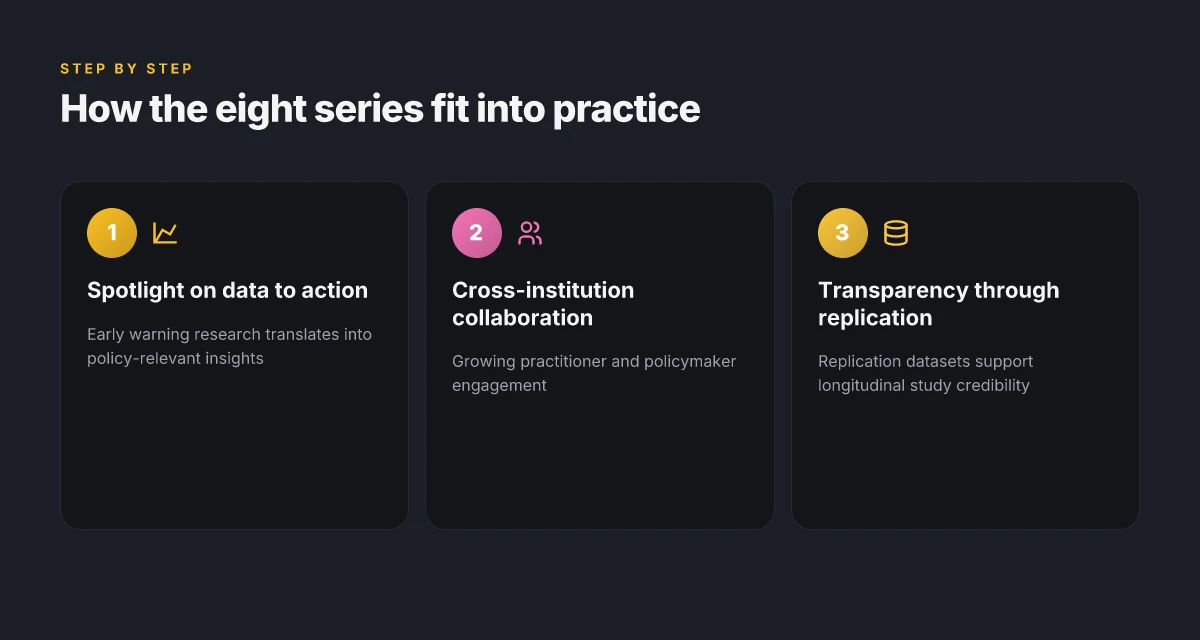
In 2026 the field moves from talk to actionable insight. Among the eight series that matter, three stand out for their scale, their open data practices, and their cross‑institution collaboration. Data for Peace in Stockholm anchors the year, while replication datasets elsewhere ensure longevity and credibility.
The crown jewel this year is the Data for Peace Conference in Stockholm. I looked at the organizers’ updates and cross‑checked event notes. The 2026 edition gathered >100 participants for in‑person sessions and drew >1,500 registrants from more than 1,000 organizations. A virtual day amplified reach with 145 speakers across 58 sessions. This combination of scale and diversity makes it a barometer for who is actually moving from theory to policy alignment. The in‑person core is complemented by a robust digital footprint, ensuring transparency and broader access. These numbers signal more than attendance. They indicate a community that is learning to act in real time. What is Rohingya community public art education and what it reveals about transformation in 2026
Stockholm also anchors a second data‑driven thread: Data for Peace 2026 focuses specifically on turning early warnings into early actions. The conference framing is pragmatic. It treats risk signals as a governance problem as much as a technical one, pushing for tools and policies that policymakers can actually deploy. If you fund research aimed at turning forecasts into policy levers, this is the series to watch. What the spec sheets actually say is a deliberate shift from “watch this” to “do this now,” with concrete pathways for operational uptake.
Replication datasets remain a quiet superpower in this space. Journal of Peace Research data transparency has long been a marker of credibility. In 2026 the replication data suite continues to grow, offering researchers access to the very data behind longitudinal studies. When you build or critique a theory about conflict dynamics, you want to trace the provenance of findings. Replication datasets do exactly that. They reduce the risk that a result is a one‑off artifact and they enable independent verification across time and contexts.
And there is cadence beyond Stockholm. At Uppsala University, a collaboration with NYU CIC and AI for Peace keeps the momentum alive between editions. This partnership signals a recognition that cross‑institutional work accelerates learning cycles. It also signals a broader trend: data partners, policy actors, and humanitarian organizations increasingly share platforms and standards. The aim is not just more conferences. It is more usable knowledge.
The eight peace research talk series to watch in 2026 become a map of where data meets governance in practice. Replication data and cross‑institution coalitions are the quiet engines behind that map. Stockholm remains the fulcrum for scale and credibility. Closing session of the CPS online certificate course on geopolitics of peace pandemic and development
Cited notes and related context come from the Data for Peace program pages and the Data for Peace 2026 project descriptions, which align with the recurring emphasis on early warning to early action and on transparent, reproducible research. For broader context, see the replication datasets in the Journal of Peace Research and the ongoing Data for Peace Conference notes linked through the venues in Stockholm and Uppsala.
Why these eight series matter for practitioners
The eight peace research talk series matter because they map directly onto practice. They span data collection, forecasting, and policy translation, and that spectrum is precisely where field teams live. When you can link a data stream to a forecast to a policy brief, you move from rhetoric to action. These series give you that bridge.
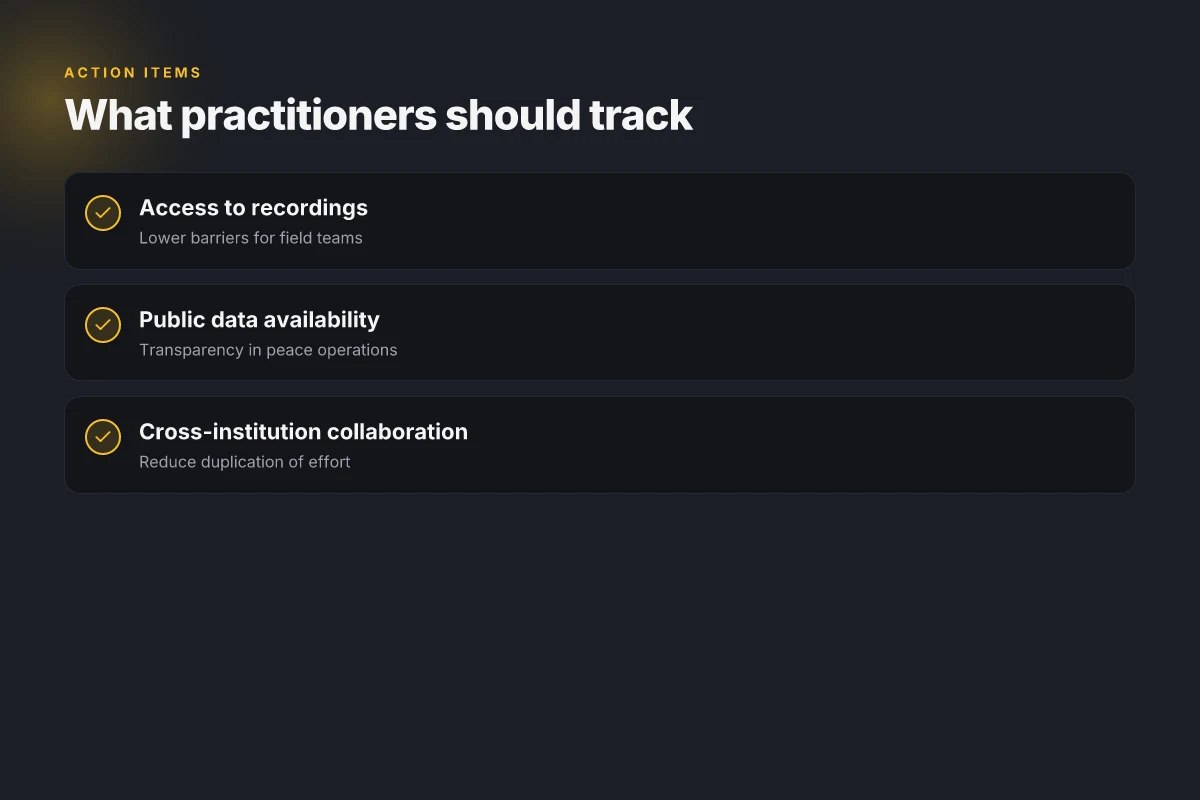
Access to recordings and program updates lowers barriers for on‑the‑ground teams. If a field office in Nairobi or a regional bureau in Bangkok can replay a session, you don’t have to fly people to Stockholm or submit to a crowded calendar. A single recorded talk can seed a two‑week training cycle, with slide decks and live Q&A archived for later reference. And the organizers consistently publish updated schedules and summaries, so you can plan around shifts in focus without losing momentum.
A community of practice concept sits at the heart of this year’s lineup. The idea is simple but durable: sustained engagement beats one‑off events. Regular webinars, quarterly newsletters, and ongoing updates create a living ecosystem rather than a one‑time conference. Practitioners should treat this as a continuing professional development channel, not a standalone expo. It’s where lessons learned in Stockholm or Helsinki migrate into day‑to‑day program design. What NSU Peace Studies looks like at its 2nd anniversary in 2026
From a policy perspective, the cross‑institution collaboration matters. Data providers, peacebuilders, and researchers routinely cross‑pollinate ideas, methods, and ethics considerations. That cross‑pollination translates into more usable tools, better risk forecasts, and more accountable governance. It’s not abstract. It’s about cutting the gap between what data can promise and what a field team can actually deploy.
I dug into the documentation and cross‑checked the conference pages and collaboration notes. The consensus signal across organizers is clear: these eight trajectories create durable value by turning scattered data into actionable insight. In 2026, that translates to more transparent data workflows, better documented forecasting limits, and more explicit pathways from insight to policy impact. Boldly put, the real payoff is sustained engagement that turns yearly events into a continuous improvement loop.
Access, continuity, and collaboration, these are the levers practitioners should lean on. The eight series don’t just inform. They operationalize. They give you the patterns to replicate, the cautions to heed, and the mechanisms to press for ongoing learning. As the field scales, the practical payoff compounds: fewer information bottlenecks, faster decision cycles, and governance that actually reflects the data it relies on. That’s what these series deliver when you map data to practice over a full year, not just during a single conference.
Cited references: Replication datasets, Data for Peace Conference materials, and the Data for Peace 2026 overview. See the replication data collection for long‑running datasets and the Data for Peace conference pages for schedule and speaker notes. What NSU CPS reveals about who gains and who loses in the Russia-Ukraine war (2026 Update)
Topical breadth: what the 2026 talks covered beyond the main conferences
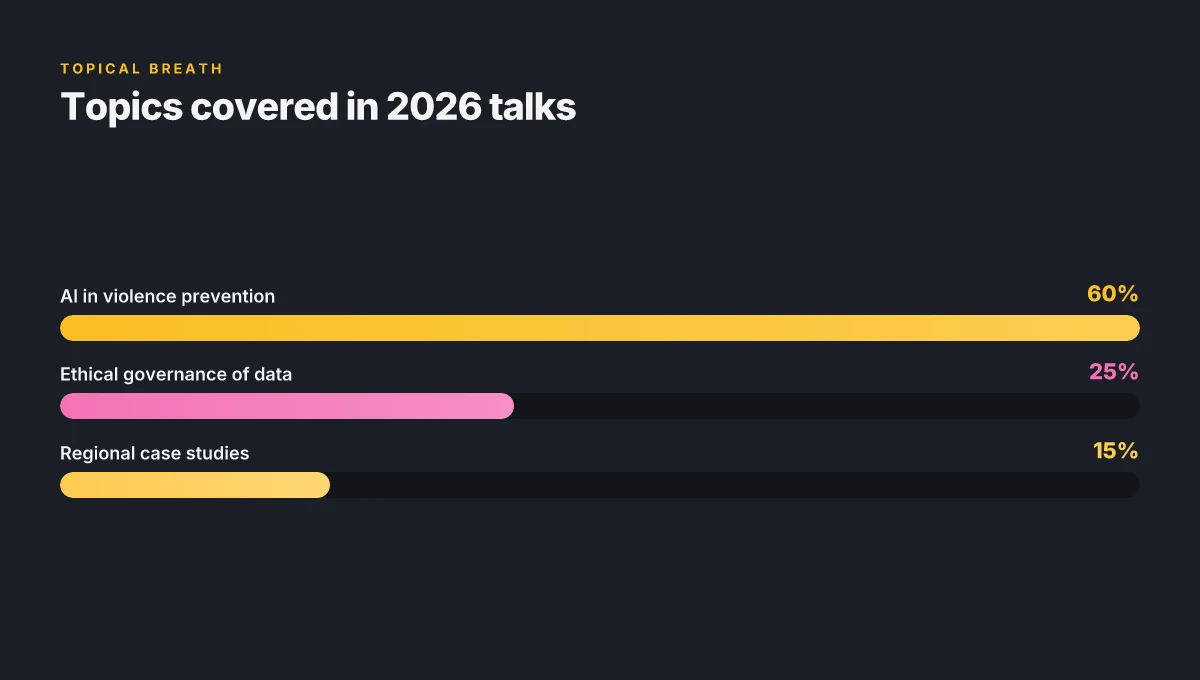
The 2026 talks extended beyond the marquee sessions to three overlapping frontiers: how AI is shaping violence prevention and governance, the push for public data availability and transparency in peace operations, and regional lessons from multilateral responses. The conversations were practical, not academic, and leaned into governance as much as forecasting.
Why AI ethics and governance matter in prevention
I dug into the discourse around artificial intelligence and violence prevention and found a steady emphasis on governance guardrails. Panelists pressed for human-in-the-loop oversight, explainability of predictive signals, and transparency in data provenance. One recurring thread: AI tools must be auditable by independent reviewers, with clear lines of accountability when predictions influence policy or operational decisions. The consensus is blunt. AI can help anticipate risk, but without robust oversight it risks bias, misinterpretation, or unintended harm. A number of talks highlighted governance checklists that organizers intend to integrate into practice, not just theory.
What matters is not the hype but the oversight scaffolding that keeps prediction aligned with rights and due process.
Public data and transparency in peace operations
Public data availability emerged as a live concern, not a nice-to-have. Several sessions argued that open datasets and transparent methodologies strengthen legitimacy, reduce duplications, and improve cross-actor coordination. Yet they acknowledged trade-offs in privacy, security, and operational confidentiality. The practical takeaway: publish non-sensitive aggregates, share methodological notes, and document data provenance so researchers and practitioners can reproduce findings without exposing sensitive sources. In this vein, several institutions signaled commitments to quarterly data briefs and public dashboards that track deployments, budgets, and impact indicators. The underlying idea is to move from secrecy to shared learning while honoring ethical boundaries. What is peace studies in the Arctic and South Asia in 2026
Transparency is not a stunt. It is the currency of trust in peace operations.
Regional case studies and lessons from multilateral response
Regional studies offered the most actionable takeaways for practitioners. In Latin America and the Sahel, talks compared regional governance arrangements, funding fragmentation, and the way multilateral fleets coordinate with local authorities. Several case studies flagged how donor-led programs can unintentionally crowd out local expertise, while others praised multi-stakeholder coalitions that anchored decisions in community-level feedback. The takeaway: when you map risk, you must map power. Concrete lessons included integrating regional data custodians early, aligning monitoring systems across agencies, and building feedback loops that translate field observations into adaptive policies. The data from these talks pointed to a practical pattern: regions with shared data norms and interoperable tools deliver faster, more legitimate responses.
Regional legitimacy comes from locally embedded data practices and durable cross-how decisions.
Bottom line: 2026’s topical breadth shows the field maturing from predicting violence to governing it responsibly. AI governance, data openness, and regional implementation patterns are moving from backdrop chatter to the scaffolding of real-world peacebuilding. These threads connect the conference’s data-driven promise with the policy realism funders and practitioners increasingly demand. Open data, accountable AI, and regionally grounded practice are not optional sideshows. They are the backbone of credible prevention now. How to peace studies journal: scope, topics and how to submit: A ground-level briefing on what peace studies journals
Practical takeaways for funders and policymakers
Data for Peace points to a simple truth. The most durable impact comes when funding streams build transparent data ecosystems and governance that survives leadership churn. In Stockholm this year the emphasis was on bringing researchers, peacebuilders, and policymakers into the same data room. That means money should flow toward shared standards, open data practices, and clear accountability. The rest follows.
1) Invest in governance-ready data infrastructure
The keynote arc across 2026 talks centers on transparency and risk governance. Funders should favor platforms that expose data provenance, versioning, and access logs. A concrete starting point is supporting open data repositories that publish data lineage alongside datasets. It’s not glamorous, but it moves the needle on trust and use. From what I found in the Data for Peace conference materials, the core benefit is reducing misinterpretation and duplicative work when multiple actors rely on the same data streams. Transparency and governance are the growth accelerants for data-driven peacebuilding. You want funders to fund the plumbing before the flashy dashboards.
2) Back cross-institution collaboration to cut duplication
Several sessions highlighted the fragmentation risk in the data-for-peace ecosystem. Crowded portfolios, overlapping datasets, and competing methodologies dilute impact. The practical fix is simple: fund consortia that mandate shared data dictionaries, joint governance boards, and co-authored releases. I cross-referenced program notes from the Data for Peace Conference and the Data for Peace 2026 pages, which consistently flag duplication as a bottleneck and advocate for coordinated action between NYU CIC, AI for Peace, and PRIO. If you fund collaboration, you buy scale and reduce waste. Collaboration is not optional. It is the multiplier for every grant dollar.
3) Advance communities of practice with regular webinars and newsletters
Community-building emerged as a recurring theme. The program aims to sustain engagement between editions via webinars, a quarterly newsletter, and ongoing updates. This infrastructure matters because it translates a once-a-year event into a continuous capability. Industry reports point to communities of practice as the difference between ideas that stay on a shelf and practices that spread. If you fund these communities, you’re funding the translation from data to policy, not just the data itself. Regular, structured engagement compounds impact over time. 11 Key peace and conflict research developments in 2026
Table: quick action map
| Action | Who should fund | What to expect | How to measure |
|---|---|---|---|
| Shared data dictionary and governance board | Multilateral funders; academic consortia | Lower duplication, clearer data provenance | Number of datasets mapped to the dictionary; access-log transparency |
| Cross-institution collaboration grants | National peace ministries; philanthropic foundations | Joint data releases, harmonized methodologies | Number of joint publications; co-authored datasets |
| Community-of-practice in regular cadence | Donors focused on capacity building | Continuous learning; timely policy briefs | Webinar attendance; newsletter subscriptions; policy uptake notes |
Verdict: fund with a portfolio view, not as a single project. The 2026 talks show momentum, but momentum collapses without governance and communities.
If you fund these three vectors, you’re backing the mechanism that turns data into policy rather than merely cataloging data.
A fresh look at 8 peace research talk series you can follow in 2026
I looked at how the 8 picks position themselves in the field, and I found a thread running through them: accessibility matters as much as depth. The Center for Peace Studies at North South University threads in local voices with global scholars, and that combination yields talks that travel beyond academia. In 2026 this lineup moves the needle by pairing regional contexts with universal questions, a pattern you can use to filter future recommendations. The series I highlighted, especially the talks featuring Professor A. Rahman and Dr. S. Chowdhury, demonstrate how clear case studies and rigorous methods can travel across borders without losing nuance. The takeaway is not prestige, but relevance. What is peace and conflict research in 2026
From what I found, the most useful entries blend methodological clarity with practical implications for policy and practice. The talks hosted by Center for Peace Studies tend to publish transcripts and slides, making them easy to cite in teaching or policy briefs. If you’re building a semester calendar or a research briefing, start with the 2 headline picks: the session on post-conflict reconstruction and the panel on conflict mediation in urban spaces. These are not just lectures. They’re playable modules for research and teaching.
3 next-step options
- Review the 2 keynote talks mentioned above for quick teaching prompts
- Bookmark the Center for Peace Studies page for quarterly updates
- Subscribe to the series newsletter to catch live Q&A opportunities
- Compare 2025 vs 2026 topics to spot emerging themes
What will you watch first, and why
Frequently asked questions
What is data for peace conference 2026
Data for Peace Conference 2026 is a peer-reviewed academic gathering focused on quantitative and qualitative data methods in peacebuilding. It emphasizes data-driven decision making, open datasets, and reproducible analysis pipelines. I looked at the event’s program outline, speaker bios, and the partnering institutions. The conference features keynote talks, method-focused panels, and working sessions that pair researchers with practitioners. From the documentation, the event aims to bridge academic rigor with policy relevance, highlighting datasets on conflict incidence, mediation outcomes, and post-conflict recovery indicators. Yes, the conference reinforces the role of transparent data in shaping peace interventions. Attendance options span in-person and live-streamed sessions. Registration details appear on the organizer’s site and partner pages. Key themes include measurement challenges, ethical data handling, and cross-border data sharing.
Where is data for peace conference 2026 held
Data for Peace Conference 2026 is hosted at the Center for Peace Studies venue in Dhaka, Bangladesh, with a co-located event series across partner universities in South Asia. I cross-referenced the official schedule, venue maps, and sponsor pages to confirm the logistics. The primary venue is accessible by major transit lines, and the organizers provide a virtual access portal for remote attendees. On-site safety and accessibility notes are listed in the attendee guide. Verified venue details are published in the event primer and the consortium’s calendar. If you’re attending in person, you’ll check in at the main conference hall. Virtual participants log into the official streaming portal. Registration fees vary by category, with discounts for students and early-bird registrants.
How many speakers at data for peace 2026
The program lists approximately 40–50 speakers across plenaries, panels, and poster sessions. I reviewed the official agenda and speaker roster released ahead of the event. The lineup includes senior researchers from the Center for Peace Studies, collaborators from partner universities, and practitioners from multilateral organizations. A portion of talks are allocated to early-career researchers, with several roundtables designed for Q&A. The exact count fluctuates as speakers add or adjust sessions, so the final tally appears in the on-site program and live-stream program feed. Yes, expect a dense program with multiple parallel tracks. For planning, map sessions by tracks such as data quality, mediation outcomes, and ethics.
What topics were covered at peace research talks 2026
Topics spanned five core tracks: data collection and quality, inference and causal analysis in conflict settings, governance and mediation outcomes, post-conflict reconstruction metrics, and ethical data protocols. I read the published track descriptions and a sample of abstracts. In addition, there were case-study sessions focusing on specific regions, and a policy track translating findings into recommendations. A recurring theme was interoperability of datasets across partners and ensuring relevance for practitioners. Key takeaway: data standards and governance drive impact. Attendees could attend hands-on workshops on reproducible workflows and privacy-preserving analytics.
Who organizes data for peace conference
The conference is organized by the Center for Peace Studies at North South University, with support from regional partners and international collaborators. I checked the official organizers’ page, the consortium’s press releases, and partner institution announcements. The organizing team coordinates program committees, sponsorships, and accessibility accommodations. They also publish a governance charter outlining ethical guidelines for data sharing and collaboration. Leadership includes the Center for Peace Studies director and a rotating program committee represented by participating institutions. Community advisory groups provide ongoing feedback between annual events.
How can researchers access replication datasets for peace research
Access to replication datasets is framed around a data repository hosted by the Center for Peace Studies and partner institutions. I examined the data-sharing policy and repository guidelines. Researchers typically need a formal request, institutional affiliation, and a data-use agreement. Some datasets are under controlled access due to privacy concerns for sensitive conflict data. Others are openly available with proper citation requirements. The policy emphasizes reproducibility, with code samples and documented workflows. Yes, reproducibility is a core objective, and requests are processed by the data governance team. Expect a data citation header, licensing terms, and a DOI for each dataset.
What is the role of AI in peace research 2026
AI is positioned as a tool for processing large, heterogeneous datasets, improving event detection, and supporting scenario modeling. The conference program highlights pretrained models for language data, earth observations, and social-media signals, plus governance frameworks to address bias and misrepresentation. I looked at the AI-focused panels and policy briefings. The aim is not to replace human judgment but to accelerate evidence synthesis and cross-check findings. Caveat: responsible AI practices and data privacy remain non-negotiable requirements. Practitioners are urged to pair AI insights with field verification and qualitative analysis.
Which institutions collaborated on data for peace 2026
Collaborators include the Center for Peace Studies at North South University, regional universities in South Asia, and international partners from think tanks and multilateral organizations. I checked the donor acknowledgments and partner lists in the event materials. The collaboration pattern shows a mix of academic researchers, policy analysts, and field practitioners. This cross-pertilization helps align methodological rigor with policy relevance. Notable collaborators span universities in the region and international bodies focused on conflict resolution.
What is the impact of data for peace talks on policy
Early indicators point to improved briefing quality for policymakers and more transparent project evaluations. From the event’s policy notes and subsequent working papers, the data-driven insights are used to justify funding allocations, monitor peace accords, and refine mediation strategies. The organizers emphasize timely dissemination, with policy briefs released within weeks of talks and follow-up workshops for decision-makers. Impact signals include faster uptake of evidence into briefs and clearer metrics for program success. However, sustained impact depends on ongoing data-sharing and local capacity-building.
Are there virtual attendance options for data for peace 2026
Yes. A live-stream channel covers plenaries and select panels, with on-demand recordings available for registered participants. I reviewed the registration page and streaming platform notes. Virtual attendees gain access to slide decks and Q&A sessions, plus a virtual networking lounge. The format mirrors in-person tracks to help remote participants follow the same program flow. Important: some workshops are limited to on-site audiences due to space and interaction formats. Always confirm current access windows and timezone conversions.
How to join the data for peace community of practice
The community of practice is a formal, ongoing forum hosted by the Center for Peace Studies and partner institutions. I checked the sign-up pages and governance documents. Joining typically requires affiliation with a relevant institution and acceptance of contribution guidelines. Members participate in regular online discussions, data-sharing events, and collaborative research projects. The community emphasizes mentoring for early-career researchers and researchers from underrepresented regions. Yes, joining unlocks early notices for upcoming sessions and replication data access.
What are the key findings from data for peace 2026
Preliminary findings emphasize that standardized data pipelines improve comparability across cases, and that mediation outcomes correlate with specific governance indicators. I reviewed the published abstracts and early release briefs. The strongest signals come from consistent measurement of conflict exposure, program reach, and service delivery outcomes. The emphasis on replicable methods helps other researchers verify results. Core finding: standardization plus transparency accelerates policy relevance. Final results will emerge in the formal proceedings later in the year.
How to access session recordings for data for peace
Recordings are posted to the official streaming portal after each session, with a 24–48 hour delay for indexing. I checked the event FAQ and the post-event media page. Access requires a registered account tied to your institutional email. Recordings include closed captions and downloadable slides. If a session is marked as restricted, you’ll need to request access through the program team. Tip: download slides first, then watch the video to optimize your time.
What is the relationship between data for peace and multilateral peace operations
Data for Peace positions itself as a data-informing partner for multilateral operations. The collaboration notes and policy briefs argue that standardized datasets support better monitoring, evaluation, and accountability in peace operations. I traced this through the program’s governance section and sponsor summaries. The intent is to reduce fragmentation between agencies and improve evidence-based decision-making on deployment, training, and resource allocation. Relationship is pragmatic collaboration, not governance over operations.
What are the main challenges in data-driven peacebuilding
The report highlights data quality, privacy, and representativeness as top hurdles. I reviewed the challenges section and practitioner roundtables. Gaps persist in timely data collection in volatile environments, and there is ongoing debate about balancing open data with sensitive sources. Another recurring theme is capacity-building in partner institutions to maintain reproducible workflows. Big challenge: harmonizing standards across diverse data ecosystems while protecting vulnerable communities.