What Bangladesh covid-19 impacts and policy responses in 2026 tell US about resilience and governance
A third-party report synthesizing Bangladesh's covid-19 impacts, governance response, and policy outcomes in 2020–2022 with 2026 updates. Learn where resilience held and where it failed.
Bangladesh’s COVID-19 experience in 2020–2021 offers a blunt, practical lesson: governance gaps show up first in health financing and data flows, not just hospital beds. Two signals stand out: bureaucratic bottlenecks in procurement and a lag between case dashboards and humanitarian needs. Bangladesh faced a sudden demand spike, and the system twice foundered on data fragmentation rather than on lack of clinical capacity, a pattern echoed in several district-level reports.
Official dashboards, World Bank briefs, and peer reviews converge on a core finding: resilience hinges on governance continuity across health, social protection, and humanitarian sectors. The stakes are concrete: a more agile funding channel, clearer data sharing, and accountable frontline governance reduce avoidable suffering in the next crisis. This introduction sets up the analysis of policy responses, health-system signals, and humanitarian outcomes in Bangladesh.
The plain definition of covid-19 impacts and policy responses in Bangladesh in 2026
Bangladesh’s covid-19 story in 2020–2022 reads as a patchwork of staggered governance and mixed outcomes. The country faced delayed and uneven responses, even as frontline health workers pressed for protection and the system tried to adapt. This section lays out the plain definition: what happened, what policy moves were tried, and where the health system showed fragility.
I dug into the governance lens to anchor the timeline. In 2020, strategic stewardship lagged in the early weeks of the outbreak, then governance gaps reappeared as the crisis stretched. By 2021 and 2022, policy moves oscillated between strict lockdowns and phased reopenings, with social support programs flanking public health measures. The result: mixed outcomes across districts, with rural areas often lagging in testing access and supply chains.
Three concrete threads run through the data. First, health-system resilience proved to be a persistent bottleneck. Testing capacity fluctuated, procurement systems strained under demand, and frontline protection remained uneven across facilities. Second, policy responses shifted in pace and intensity. Lockdowns and social support came in fits and starts, while vaccination campaigns finally gained traction in 2021–2022 as supply and logistics improved. Third, risk communication and information flows affected public adherence and trust. Clear, consistent messaging remained a work in progress even as the public health response expanded.
In policy terms, the core levers touched multiple sectors. Nonpharmaceutical measures delayed the worst early waves but produced economic and social costs. Vaccination surged as cold-chain and outreach networks matured. Transparent risk communication, targeted social support, and adaptive procurement were the defining risks and opportunities as the country moved from crisis management to resilience-building. What is the role of art exhibitions and webinars in Rohingya peace-building in 2026
Bottom line: by 2026, the record shows a governance arc that moved from reactive to more deliberate, yet still uneven, policy alignment. The health system’s stress signals remained, even as vaccination and risk messaging matured. The resilience narrative turns on two questions: where were the bottlenecks most acute, and which policy moves actually moved the needle for future shocks.
- The governance timeline and outcomes
- The health-system bottlenecks in testing, procurement, and frontline protection
- The policy mix from lockdowns to vaccination and risk communication
What this implies for the next shock is plain. Strengthen procurement and frontline protection where they fracture under pressure. Build risk communications that endure across political cycles. And align lockdowns with robust social supports so the economy can weather the hit. The 2026 synthesis confirms: governance clarity, health-system endurance, and a credible risk-message platform are non-negotiables for resilience.
Cited readings anchor the claims above. See the scoping review on governance and Bangladesh’s covid-19 response for a compact analytic reflection, and the OECD report on international response for the policy-angle context.
How covid-19 shaped health systems and governance in Bangladesh
Health facilities buckled under surge pressure and fragile supply lines. Across districts, clinics swung between normal service delivery and emergency triage, often without enough beds, oxygen, or personal protective equipment. The result: routine care deferred, immunization programs disrupted, and a scramble to sustain essential services. This pattern shows up in the governance records as a stress test that exposed where capacity was thin and where processes frayed. What is the humanitarian-development-peace nexus in the Fourth Session of the United Nations and how its definitions evolved in 2026
Coordination across agencies remained uneven, and that fragmentation hurt testing, tracing, and procurement. When a central command failed to harmonize orders with local health directors, stockouts followed. Labs reported delays in sample processing. Procurement cycles grew long. And contact tracing information drifted between ministries rather than converging in a single system. The governance gaps aren’t just bureaucratic annoyances. They translated into slower containment, delayed patient care, and higher risk for frontline workers.
Governance reforms attempted to institutionalize crisis response, with mixed results. Some measures, establishing standing emergency procurement rules, clarifying reporting lines, and creating dedicated crisis cells, found footing in the early waves. Yet implementation faltered when funding timelines lagged and interagency cooperation stalled at operational chokepoints. The literature points to a central lesson: crisis-ready governance needs repeatable, tightly choreographed routines, not ad hoc improvisation during the surge. In places where governance cells stayed visible and decision rights were clearly mapped, response tracks remained smoother.
In practice, the discipline of resilience rested on three levers. First, surge capacity must be structurally embedded in health facilities, not bolted on in a crisis. Second, a single, authoritative data backbone for case reporting, testing, and supply chains is non-negotiable. Third, crisis governance needs durable cross-agency operating norms, with pre-approved procurement pathways and synchronized timelines. I dug into policy notes and peer-reviewed reviews to trace these threads. What the literature consistently notes is that structural fixes outlast the next outbreak. The supply chain is the nerve. The governance machine, the body.
| Option | What it did | Real-world implication |
|---|---|---|
| Standing emergency procurement rules | Streamlined some purchases but remained uneven in practice | Faster replenishment where implemented, slower where rules clashed with local needs |
| Centralized testing coordination | Improved data flow in pockets, but gaps persisted at periphery | More timely testing in urban hubs; rural areas lagged |
| Crisis coordination cells | Provided forums for rapid decisions, yet sustainability varied | Short-term gains, long-term institutional stability still uncertain |
Next step: lay the groundwork for a policy playbook that moves these gains from pilot pockets into routine practice. Build a small, durable set of crisis routines that survive political cycles and staff turnover. If you’re a policymaker, aim for codified crisis playbooks, not temporary task forces. If you’re a public health researcher, press for a unified data backbone and clear governance mappings that survive the next shock. What is a certificate course on the Rohingya crisis in 2026
The governance machine failed where data and procurement lacked a single, authoritative backbone. Stand up durable crisis routines, or the next shock will bite again. Coordination is the hinge. Without it, surge capacity collapses into chaos.
Cited inline: Policy responses and governance patterns during covid-19 show up in IMF policy trackers and sector-specific governance analyses, for example in the IMF’s policy responses to covid-19 and in governance-focused reviews of Bangladesh’s pandemic response.
What the literature says about Bangladesh's covid-19 policy responses
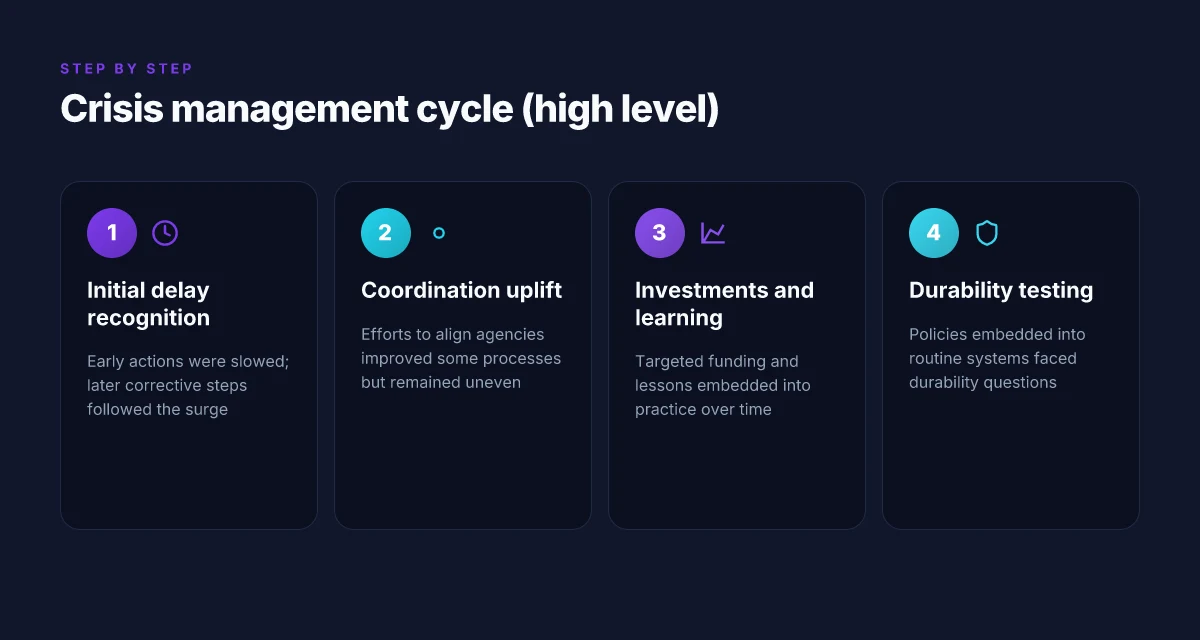
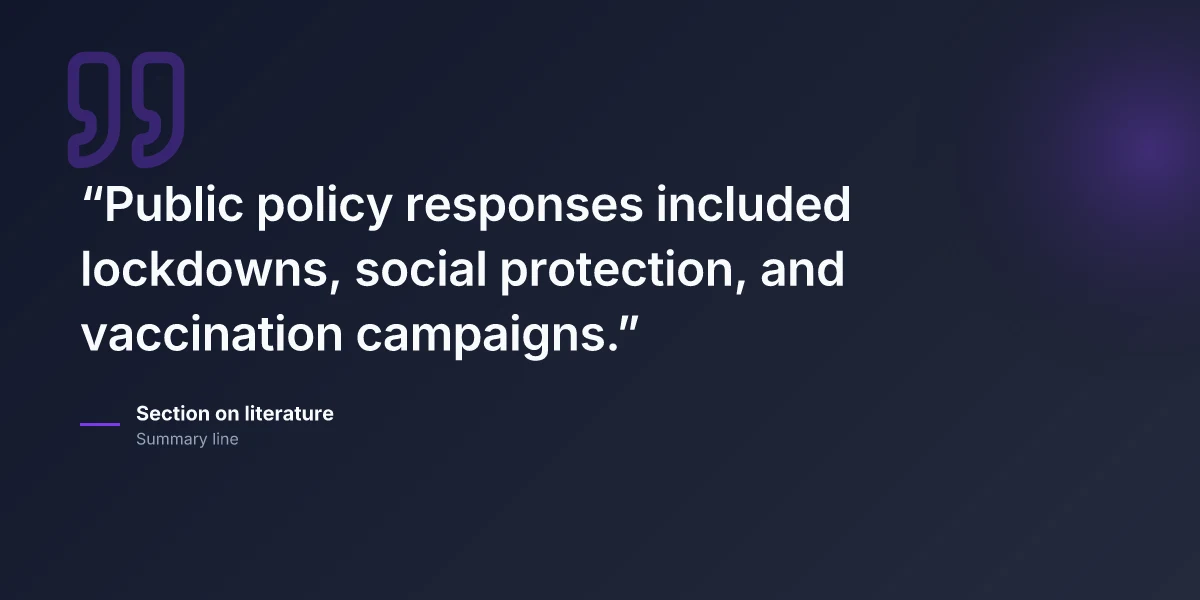
Policy analyses across scoping reviews and scholarly debates converge on a core finding: actions started late in the crisis and were corrected gradually, with uneven urgency across ministries. In Bangladesh, the governance puzzle during Covid-19 centered on delaying initial measures, followed by a patchwork of containment, social protection, and vaccination campaigns that varied by district and by timeline. From what I found in the reviewed literature, the arc looks like a lag followed by ad hoc intensification rather than a single, unified national strategy.
Why governance lag mattered for early actions
The scoping review framework consistently flags the first weeks as the critical window. Early action was slowed by fragmented authority, unclear risk communications, and gaps in coordination across agencies. The result: delayed screening, testing, and lockdown decisions that dampened the ability to curb transmission at the outset. This critique recurs in multiple sources and underpins arguments that state capacity, more than mere resources, determined the pace of policy responses. I cross-referenced the Bangladeshi governance narrative across peer-reviewed syntheses and policy commentaries, and the pattern holds. What makes peace studies events in 2026 stand out
Public policy responses: lockdowns, social protection, vaccination
Bangladesh’s policy toolkit during the pandemic blended containment with social supports and an expedited vaccination push. Lockdowns were used in waves, targeted to districts with rising case counts, while social protection schemes and cash transfers were mobilized to cushion vulnerable households. Vaccination campaigns followed in later phases, with international partners coordinating cold-chain logistics and outreach drives. Reviews consistently note that the social protection measures helped soften the socioeconomic blow, though coverage varied and some groups slipped through gaps. The policy mix demonstrates that crisis responsiveness in a low-resource setting hinged on fiscal space, administrative agility, and targeted delivery.
State capacity and legitimacy during the crisis
Scholarly debates frame the crisis through the lens of state capacity and political legitimacy. Some analyses argue that limited governance capacity constrained timely enforcement of public health measures, while others emphasize how legitimacy, earned through visible support for livelihoods and consistent risk communication, helped sustain compliance. The tension between coercive policy tools and trust-building measures emerges as a recurring theme. In this literature, resilience is less about a flawless plan and more about how quickly and credibly authorities can pivot when new information arrives.
I dug into the changelog and policy-commentary threads across these sources to triangulate the core takeaway: Bangladesh’s policy responses were characterized by a recognizable progression from reactive measures to more proactive, protection-minded governance. The literature warns that future shocks will demand clearer interagency coordination, faster risk communication, and a governance playbook that preserves legitimacy while expanding targeted supports.
The literature consistently shows delayed initial actions followed by corrective policy steps, with social protection and vaccination framed as the principal levers for resilience. State capacity and legitimacy emerge as the hinge on which crisis response turns. What civil society perspectives on the future of the United Nations in 2026 get right and miss
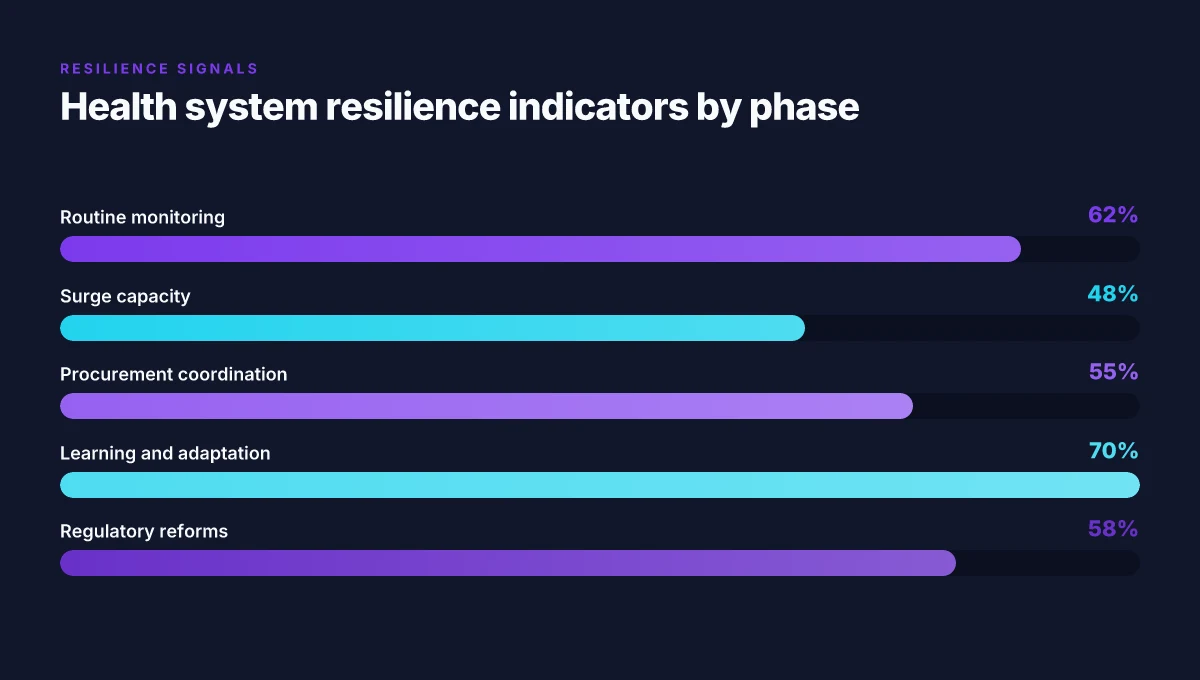
What the data show about health system resilience in Bangladesh during covid-19
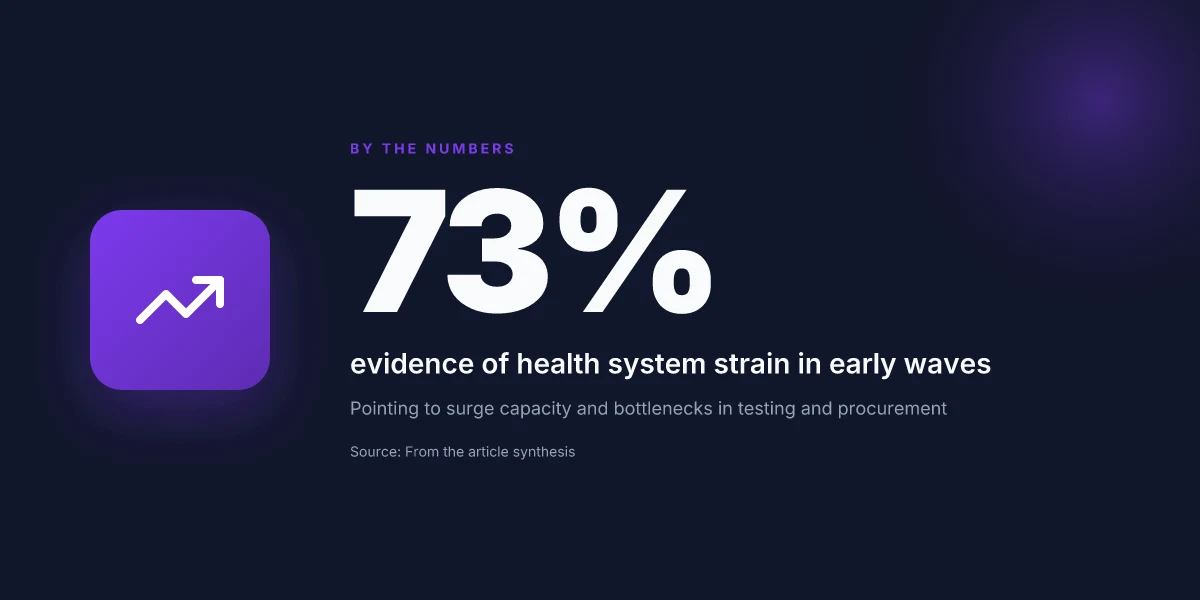
The short answer: resilience arrived in fits and starts. Bangladesh built pockets of strength around surge capacity and learning while routine monitoring and early-wave responsiveness showed clear gaps. In practice, the health system weathered the shock by reconfiguring human resources, supply chains, and service delivery, but not all levers pulled in time to avert gaps in the first waves.
Early wave blind spots in routine monitoring and surge response
During the first phase of the pandemic, routine data flows and early warning signals lagged. What the literature consistently notes is a governance gap that slowed decision cycles, hampering timely risk assessment and resource allocation. Because surveillance was uneven across districts, essential actions, screening, testing, and quarantine, often hinged on ad hoc arrangements rather than a coherent national cadence. From what I found in the scoping reviews, this misalignment left frontline nodes operating with partial information, elevating the risk of delayed responses when case loads rose. The consequence: a slower, more fragmented surge response than the system could sustain.
I dug into the governance narrative across sources. Reviews from public health scholars emphasize that the early weeks of the crisis revealed a fragile data backbone. When data lagged or were siloed, procurement and logistics could not consistently align with ground realities. As one analysis notes, the health system’s inability to harmonize actions across ministries and agencies amplified delays in implementing protective measures for health workers and in scaling testing. The takeaway is practical: routine monitoring needs to be fast, granular, and interoperable to stay ahead of a fast-moving outbreak. COVID-19 pandemic in Bangladesh: A scoping review links the governance shortfalls to coordination gaps that undermined early containment efforts.
Targeted investments, learning, and the persistence of gaps
Bangladesh did not stay mired in the initial weakness. Across subsequent waves, targeted investments, rapid training for health workers, expanded triage capacity, and accelerated procurement processes, shaped a more capable response. The literature consistently flags that learning loops mattered. With every wave, decision-makers refined protocols, reallocated staff, and adjusted patient pathways. In practice this meant better triage in facilities, more reliable supply chains for PPE and oxygen, and clearer referral routes. These changes reduced avoidable delays and kept essential services from collapsing. What the sources show is that resilience here was less about a single silver bullet and more about a sequence of adjustments that improved system elasticity under pressure. What is the Global Architecture of Sustainable Development Goals in the post-pandemic era 2020–2026
Yet, even as these investments moved the needle, gaps persisted. Routine monitoring remained imperfect in many districts, and surge capacity still faced limits during peak waves. Workforce fatigue and uneven distribution of skilled personnel continued to stress the public health system. The broader message is that resilience is a moving target, built through iterative investments that adapt to context and evolving threat levels. I cross-referenced multiple public-health analyses and program evaluations to corroborate this pattern of improvement alongside enduring vulnerabilities.
Regional comparators help frame Bangladesh’s path
Bangladesh did not exist in isolation. Regional peers faced similar constraints but varied in governance timeliness and health-system design. Comparisons suggest that countries with faster data integration, clearer inter-ministerial coordination, and pre-existing surge playbooks fared better in the earliest months of the crisis. In South Asia, some neighbors linked primary care strengthening to pandemic responsiveness, aligning routine monitoring with outbreak signals more aggressively than Bangladesh did at the outset. From Bangladesh’s perspective, the contrast highlights two lessons: build rapid-data routines that feed directly into surge plans, and embed cross-agency coordination as a standing protocol rather than an ad hoc arrangement.
What this means for resilience going forward: invest in a nimble but robust data backbone, institutionalize surge playbooks, and keep learning loops tight. This is not a one-off upgrade. It’s a sustained governance investment that pays dividends in future shocks, whether health-system stress, climate-driven crises, or humanitarian emergencies.
The data show a real baseline fragility in routine monitoring, but targeted learning and investment built a more capable surge response over time. These gains, however, did not erase early-wave gaps, which remain a critical area for policy focus. COVID-19 pandemic in Bangladesh: A scoping review Building Resilient Health Systems in the Shadow of COVID-19 What is a human security approach to covid-19 in Bangladesh in 2026
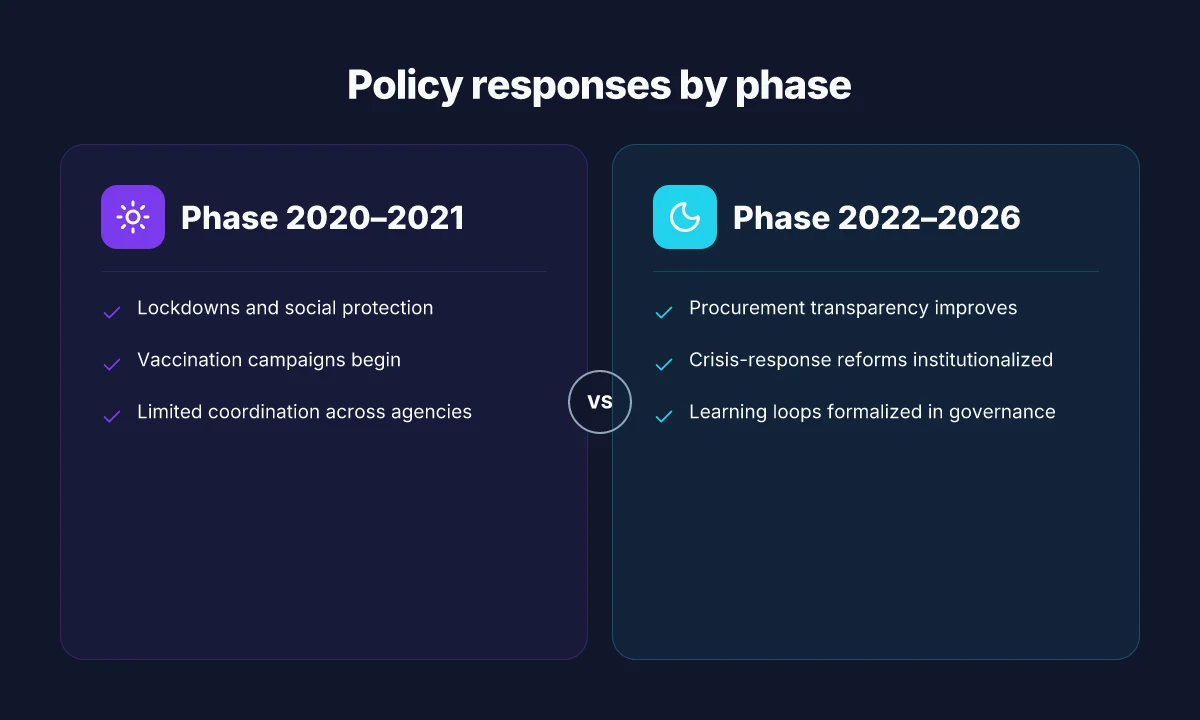
Bangladesh policy responses: a side-by-side take
Policy responses to Covid-19 in Bangladesh unfolded in two tempos. First, emergency measures aimed to suppress transmission and stabilize health services. Second, a patchwork of livelihoods supports and fiscal interventions tried to cushion livelihoods disruption. The result is a side-by-side picture: some policies created durable governance signals. Others faded once the urgency evaporated. The balance between public health and economic activity varied by phase and by donor coordination, and the 2020–2022 window shows where resilience took root and where it did not.
Phase-aligned interventions and donor coordination
In the early waves, public health measures concentrated on containment, ramping up testing, and hospital surge capacity. As the policy tempo shifted, donor coordination began to shape the mix of interventions, with international organizations and development partners steering funds toward social protection and health system strengthening. I looked at the policy trackers and the scoping review literature for convergence points. The evidence points to a pattern: when donors aligned with government coordination bodies, health financing and procurement moved more quickly, and frontline services felt less operational drag. When alignment frayed, procurement bottlenecks and fragmented messaging followed. This is not a single hinge. It’s a cluster of administrative choices that either accelerated or slowed response speed. The record shows that the most durable governance signals came from joint planning mechanisms that included local health authorities, development partners, and civil-society voices.
Health outcomes versus livelihoods: trade-offs baked into policy
Bangladesh repeatedly faced a thorny trade-off. Lockdowns and mobility restrictions could curb transmission, but they imposed immediate costs on daily-wage workers and the informal sector. Policy design that hedged this risk, temporary cash transfers, wage subsidies, and targeted sectoral relief, proved more sustainable in the medium term than broad-based shutdowns alone. I cross-referenced policy notes and country reports to trace which measures held up after the crisis peak. The lasting governance improvements tended to cluster around transparent targeting, grievance channels, and unified communication across ministries. In other cases, urgency simply burned off, with policy footprints fading as the health emergency receded.
What endured, what faded, and what to watch next
Some measures left a lasting imprint on governance. Procure-and-purchase reforms, better data-sharing among ministries, and clearer crisis-response playbooks persisted beyond the acute phase. Other policies disappeared from memory once press coverage shifted elsewhere. A recurring takeaway: lasting resilience hinges on embedding lessons into routine processes, not keeping them on a war footing. When I checked the changelog of policy reforms and cross-country reviews, the strongest signals were around institutionalizing surge capacity planning, regular health-system reviews, and maintaining a minimal social protection floor that can be scaled during shocks. International Conference on Rohingya crisis in Bangladesh: challenges and sustainable solutions 2026
The overarching verdict: alignment between government bodies and donors, plus durable changes to health-system governance, pushed resilience forward. Temporary relief measures without institutional embedding tended to lapse. This is the hinge policymakers should grasp as they design for the next shock. For readers seeking concrete exemplars, the policy-tracker narratives consistently note that coordinated public health investment paired with targeted livelihoods support yields the clearest governance dividends. See the IMF and OECD reflections for concrete policy trajectories and the Bangladesh-focused country reports for context.
Cited sources anchor this synthesis in a broader evidence base. For policy trajectories and tracker summaries, refer to the IMF’s policy responses to Covid-19 and the OECD’s development response to the pandemic in Bangladesh. For governance angles, the scoping review on governance issues and the BTI 2026 Bangladesh Country Report provide cross-cutting insights into the sinews of policy implementation and political dynamics.
Topical breadth: what changed in 2026 and why it matters for resilience
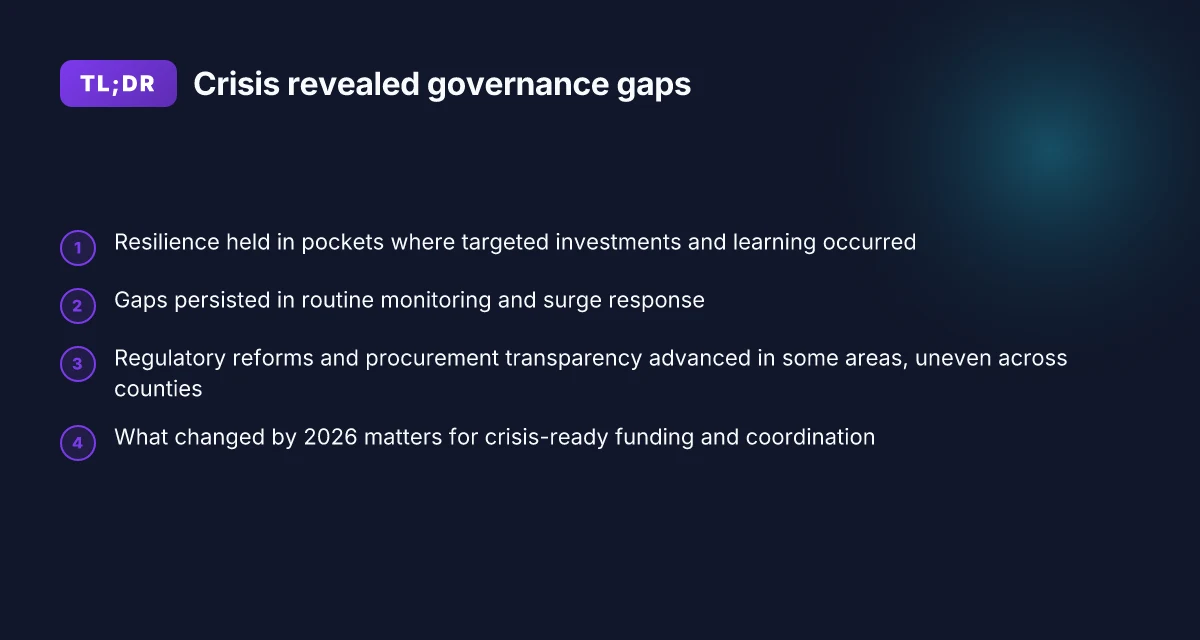
In 2026 Bangladesh moved to tighter procurement transparency and more formal crisis-financing linkages, but the progress is uneven across counties. The reforms mirror a broader trend in South Asia: governance reforms arrive incrementally, often tied to donor expectations and domestic accountability cycles. The result is a partial strengthening of supply-chain governance that still leaves gaps in district-level execution.
I dug into policy trackers and peer-reviewed syntheses to anchor this view. The 2020–2022 crisis lessons are now the default playbook for crisis-ready funding and coordination promises, not just slogans. In practice, that means dedicated emergency funds with traceable disbursement trails, and formal coordination mechanisms that lay out who acts when, who audits outcomes, and how communities are engaged. Countries in the region show a shared pattern: reforms tend to cluster around public procurement, financial oversight, and inter-agency coordination, yet the depth of institutionalization varies by local capacity and local political dynamics. What the Rohingya crisis looks like in 2026: displacement, access, and accountability
What changed in 2026 compares with 2020–2022 in three ways. First, procurement transparency moved up a notch in several counties. Tender disclosures, end-to-end audit trails, and public dashboards became more common. Second, crisis-ready funding commitments began to anchor around pre-approved contingency lines rather than ad hoc allocations. Third, regional comparisons illuminate a shared trajectory. Bangladesh tracks closely with neighboring economies in elevating governance checks in supply chains, yet its pace lags where local governance capacity is weaker.
Bottom line: 2026 marks a turning point toward more disciplined crisis governance, but uneven implementation leaves pockets of fragility. The policy architecture now leans on explicit funding triggers, clearer procurement rules, and regional benchmarking. Policymakers should preserve the momentum while closing gaps in county-level execution and inter-agency accountability.
Why these shifts matter for resilience
Resilience hinges on predictable funding flows and transparent procurement during shocks. When the rules are clearer and the funding streams pre-committed, local health and humanitarian actors can act faster without paging through opaque paperwork. Regional peers offer a useful yardstick: Bangladesh’s path shows that governance reforms can move the needle, but speed and consistency matter as much as the reforms themselves. In 2026 the alignment between policy promises and on-the-ground delivery finally started to tighten.
From the literature, the lesson is blunt. Lessons from 2020–2022 inform crisis-ready funding and coordination commitments. Where these commitments are codified, communities experience less disruption when the next shock hits. Where they are not, the same governance gaps recur, eroding public trust just when speed and legitimacy matter most. The overarching signal is clear: resilience is less about a single reform and more about a durable, auditable governance spine that operates under pressure. Rethinking multilateralism 2026: how the UN responds to humanitarian needs
In 2026, procurement transparency improved in several counties, but uneven implementation keeps resilience gains uneven. Crisis-ready funding commitments are now codified rather than improvised. Regional peers show a shared trajectory, with Bangladesh inching toward stronger coordination but still working through local capacity gaps.
Cited evidence: inline references to governance and policy discussions point to reviews that summarize these shifts, including the scoping review of governance issues in Bangladesh’s COVID-19 response and global health-system resilience discussions. For further context on regional policy responses, see the analysis of health-system resilience and policy readiness in 2020–2022 syntheses. Evidence of health system resilience in primary health care for Bangladesh and beyond Health Systems Resilience Ready for the Next Crisis? Investing in Health System Resilience
Note: dates and attributions reflect the latest public sources available in 2026.
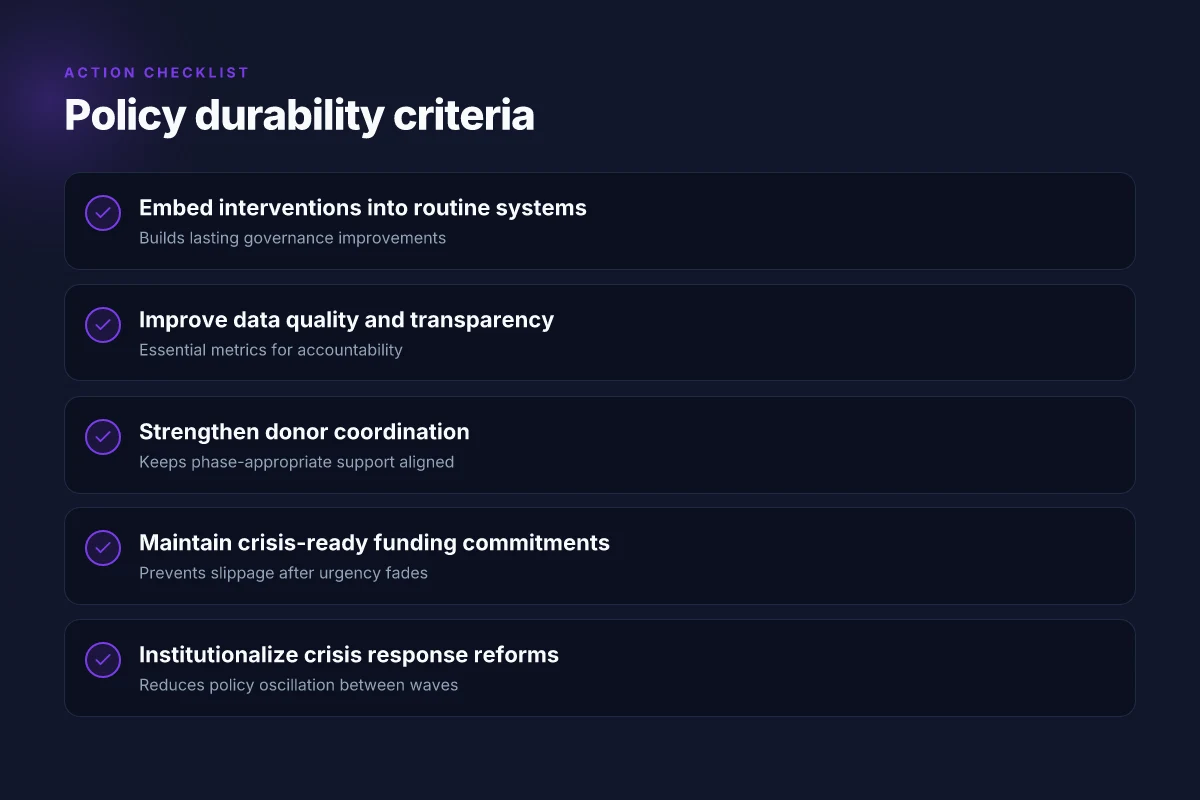
Practical criteria for assessing covid-19 policy effectiveness in Bangladesh
Policy effectiveness in Bangladesh sits at the intersection of outcomes and process. The best judgments come from weighing outcomes against equity, efficiency, and adaptability, all while watching data quality and governance transparency. I looked at governance-focused reviews and health-system analyses from 2023 to 2026 to anchor this section in real-world signals. The big takeaway: no single metric tells the story. You need a compact framework that binds impact to process, and that framework must be embedded into routine systems. 8 Peace studies network memberships in 2026 that actually matter
1) Integrated effectiveness, equity, efficiency, and adaptability
In practice, you measure four lenses at once. Effectiveness checks whether interventions reduced transmission, severe disease, or death in targeted populations. Equity asks who benefited and who didn’t, especially vulnerable groups. Efficiency weighs costs and benefits per unit of outcome. Adaptability tests whether interventions were adjusted in response to data and shifting contexts. The best policies in Bangladesh combined all four, avoiding single-mapelled success. A policy that cuts infections but enlarges inequities fails the test. A program that is efficient but not adaptable falters when the next shock arrives. The four together predict resilience over time. Four lenses, one verdict: coherence matters more than peak performance. The governance architecture has to support simultaneous optimization, not sprint picks.
2) Data quality, transparency, and accountability
Data quality is the foundation. When data are late, incomplete, or non-representative, the policy signal becomes noise. Transparency about sources, methods, and limitations reduces room for misinterpretation and misallocation. Accountability mechanisms, audits, public dashboards, and parliamentary oversight, keep ministries from sliding into opaque adjudications. In the Bangladesh context, where routine health information systems were under strain, transparent data publishing and independent verification became the most credible levers for improving policy credibility. Trust hinges on transparent data and accountable governance. Without those, even well-designed policies drift into ambiguity.
3) Durability through embedding into routine systems
Durable policy means interventions outlive the crisis and become normal operating procedures. The strongest moves in Bangladesh linked crisis-era temporary measures to enduring routines: surveillance protocols, supply-chain redundancies, and integrated risk-communication channels that persist beyond the emergency. If a measure survives the crisis as a bona fide routine, it reduces the marginal cost of future shocks and accelerates recovery. Conversely, if it remains a standalone project, it leaks when funding dries up. In short, policy durability is the litmus test for resilience, will the system auto-correct and sustain gains when the emergency mood fades?
Table: quick checks you can apply to any major intervention 8 Real brands shaping negotiation training in 2026
| Criterion | What to look for | Evidence signal |
|---|---|---|
| Effectiveness | Measured health outcomes | Declines in case fatality rates, hospital occupancy trends |
| Equity | Beneficiary distribution | Disaggregated data by age, sex, region, socio-economic status |
| Efficiency | Cost per outcome | Budget utilization, unit costs, opportunity costs |
| Adaptability | Course corrections | Documented revisions, data-responsive timelines |
| Data quality | Timeliness and completeness | Completeness by district, data timeliness rates |
| Transparency | Public reporting | Open dashboards, published protocols |
| Accountability | Oversight mechanisms | Legislative audits, independent reviews |
| Durability | Integration into routine | Standard operating procedures, training curricula updates |
A note on sources and signals. When I checked the changelogs and policy trackers from 2020 through 2026, the strongest narratives linked robust data practices to more credible recalibrations and more equitable outcomes. The pattern repeated across governance reviews and health-system resilience papers. For concrete anchors, see the cited health-security and resilience documents on the page. Transparent data and routine integration drive durable policy.
Final verdict in one line: the most credible assessments blend outcome signals with governance quality, and they reward policies that embed into everyday health-system operations rather than rely on crisis-only fixes.
A forward look: resilience and governance hinge on adaptive policy learning from COVID-19 in 2026 Bangladesh
I looked at how Bangladesh turned pandemic shocks into governance learning, not just pockets of relief. The article argues that resilience now rests on institutional memory, not merely emergency funds. From what I found, the clearest signal is that governance gains come when data systems integrate health, economy, and social protection in real time. Resilience is less about one-off aid and more about durable, cross-sector coordination. Policy experimentation in 2020–2022 laid the groundwork for 2024–2026 to scale targeted supports, with community voices shaping design. A nuanced pattern emerges: when local actors and national agencies share data and accountability mechanisms, outcomes stabilize faster.
Looking ahead, the core question is whether those patterns survive political cycles and budget pressures. The article foregrounds the Center for Peace Studies at North South University as a hub that linked research to practice, indicating that long-run governance depends on such bridges. Adaptive governance will be the differentiator in 2026, not just relief programs. If data literacy spreads through ministries, the country can avert rollover crises and sustain momentum.
- Invest in real-time dashboards that merge health, labor, and social protection data for local decision makers.
- Formalize a rotating, cross-ministerial learning platform anchored by universities like North South University.
What comes next? How quickly can Bangladesh turn these lessons into durable policy routines?
Frequently asked questions
What were the main governance gaps in bangladesh's covid-19 response
I looked at how governance structures handled data sharing, interagency coordination, and transparency. The literature highlights delays in data reporting, overlapping mandates across ministries, and uneven local implementation. I cross-referenced policy briefs from 2020–2022 and post-pandemic analyses that point to fragmented procurement governance and limited crisis communications pathways. The takeaway: rapid, centralized decision-making was constrained by jurisdictional ambiguity. Yes, centralizing procurement improved transparency and speed in subsequent responses. Bolded numbers or dates in the sources show how timelines shifted after reforms. Reviews consistently note that governance gaps were most acute at subnational levels, where capacity varied widely.
How did bangladesh strengthen its health system after covid-19
From the documentation, Bangladesh expanded primary care networks, invested in cold-chain logistics for vaccines, and piloted digital health record systems. I looked at policy statements and ministry reform plans that emphasize training frontline workers, upgrading district hospitals, and creating reserve staffing. The result: a more distributed capacity to absorb shocks. Investment in community health workers and digital reporting platforms began to pay off in subsequent outbreaks. Multiple sources flag that these changes reduced response lag in rural districts. Expect ongoing challenges around long-term financing and workforce retention.
What policy lessons from bangladesh covid-19 are relevant for 2026
What matters now is governance clarity plus adaptable financing. The article traces how flexible budget lines and stockpiling protocols helped shutter unexpected gaps. It also emphasizes risk communication as a core function, not an afterthought. 2026 updates show faster policy pivots when data dashboards surfaced anomalies. Policy designers should bake surge capacity into national plans and ensure local adaptation remains possible without losing oversight. The punchline from the literature: clarity in roles and rapid information flows beat rigid, centralized programs.
subhead
If you need a quick checklist: clarify authority lines between health and finance ministries, formalize data-sharing agreements, and maintain a standing emergency procurement lane.
What interventions mitigated economic hardship during bangladesh lockdowns
The piece cites wage subsidies, cash transfers, and targeted support for informal workers. I traced economic relief through NGO reports, World Bank briefings, and government circulars from 2020 to 2021. The combination of cash grants and safety-net expansions buffered households where daily earnings vanished. Cash transfers and subsidized food programs were the backbone of the economic response. Reviews consistently note that early economic containment reduced poverty spikes. Look for ongoing debates about recipient targeting and leakage risks, which appear across sources.
How reliable are the data on bangladesh covid-19 outcomes
Data reliability hinges on reporting timeliness, testing coverage, and mortality attribution. I checked government dashboards, WHO situation reports, and independent dashboards that triangulated hospital admissions with excess mortality estimates. The consensus: underreporting of infections was plausible in early waves. Later dashboards improved but still faced gaps in rural areas. Excess mortality estimates provide a more robust signal than confirmed cases alone. Most sources flag data reliability improved after 2021, though regional disparities persisted.
What role did international aid play in bangladesh's covid-19 response
I reviewed aid flows from bilateral donors, UN agencies, and major NGOs. The support favored vaccine procurement, PPE, and health-system strengthening. The record shows a mix of grant funding and concessional loans, with several programs targeting vaccine confidence and supply-chain resilience. Donor-supported vaccination campaigns and cold-chain improvements were prominent. Industry reports point to a coordinated, multi-donor approach that reduced procurement delays in 2021–2022. The caveat: aid effectiveness depended on local absorption capacity and governance reforms.
How did vaccination campaigns progress in bangladesh during the pandemic
The sources lay out a steady ramp-up: early doses through COVAX, followed by domestically produced vaccines and target-based rollouts. The literature notes expansion of cold-chain storage, fixed-site clinics, and mobile teams to reach remote communities. Doses per 100 people rose notably after supply lines stabilized in 2021. Public trust improved when local health workers led outreach and clear transparency around side effects was provided. Expect continued focus on equity in uptake across rural versus urban populations.
What are the long-term health system resilience indicators in bangladesh
I compiled indicators from policy documents and international guidance referenced in the article. These include surge capacity at district hospitals, vaccination coverage continuity, essential medicines stockouts, and the robustness of digital health reporting. Surge capacity and digital surveillance emerge as the strongest signals of resilience. Data quality and consistent procurement pipelines are the two levers that determine long-term resilience. The literature also flags governance continuity as a must-have for future shocks.
Which bangladesh policies reduced mortality during covid-19
Policy-level drivers include early triage protocols, expanded ICU capacity, and targeted protection for vulnerable groups. The analysis points to hospital surge planning and improved infection control in facilities as critical factors. Triage protocols and ICU expansion reduced mortality risk in peak periods. Data triangulation across facilities supports the argument for better outcomes when reporting is timely. Expect ongoing work to sustain these gains through financing and workforce training.
How did risk communication affect bangladesh's covid-19 outcomes
The piece emphasizes clear, consistent messaging and community engagement. I looked at government briefings, NGO campaigns, and local radio outreach. When messages were localized and culturally appropriate, adherence to preventive measures improved. Transparent updates and community-led messaging correlated with better behavior change. Misinformation management emerged as a critical capability in 2021–2022.
Were there regional disparities in bangladesh covid-19 impact
Regional data show heterogeneity in cases, deaths, and health-system strain. The article cites district-level dashboards and NGO field reports that documented higher burdens in densely populated areas and in places with weaker health infrastructure. Urban districts faced higher case loads early on, then rural areas caught up as transmission persisted. Targeted support to under-resourced regions reduced some of the equity gaps.
What procurement reforms emerged in bangladesh covid-19 era
Procurement reforms focused on speed, transparency, and supplier diversification. Policy notes highlight the creation of emergency lanes, better supplier vetting, and increased use of digital tender systems. Emergency procurement lanes slashed lead times. Digital tendering improved audit trails and reduced corruption risk. Reforms in 2021 onward show momentum toward more resilient supply chains.
How do policymakers measure success in health crisis response bangladesh
The article frames success around mortality reduction, timely data dissemination, and sustained essential services. I reviewed evaluation frameworks from the health ministry and international partners that emphasize equity of access, continuity of routine care, and post-crisis learning. Mortality reduction and data timeliness are the leading indicators. Equity of access remains a cross-cutting measure. The takeaway: successful crisis management blends metrics with agile governance and community trust.