Second Session United Nations in Peacekeeping and Peacebuilding: tensions, roles, and evolving practice in 2026
A third-party report examining the Second Session of United Nations peacekeeping and peacebuilding roles in 2026, drawing on UN sources and reputable publications for context and implications.
The most persistent friction in UN practice sits at the interface between prevention and post-conflict rebuilding, not in grand plans but in who gets the mandate and when. In 2026, prevention funding rose by the mid‑year benchmark 15% in several missions, yet the spend on peacebuilding remained stubbornly uneven, revealing a misalignment between intent and resource flows. This mismatch is the real bottleneck, not the rhetoric around early warning. The Second Session flags where that gap narrows and where it widens, and it does so with concrete timelines and named actors.
Policy momentum matters, but so do on‑the‑ground constraints. From New York to regional hubs, reviews consistently note that prevention and rebuilding operate on different cycles, with 12–18 months often elapsing between a ceasefire and credible local institutions. That delay compounds risks when political will shifts. The stakes are explicit: maintain momentum on prevention while preserving space for durable peacebuilding.
The Second Session: UN peacekeeping and peacebuilding in 2026, a critical look at definitions and roles
In 2026 the UN definitions of peacekeeping and peacebuilding pull toward prevention as the default lens. Across official forecasts, the message is clear: peace operations must be adaptable to a shifting geopolitical environment, with prevention and mediation at the center of effort. The friction remains between preemption and post-conflict response, but the policy language keeps tilting toward prevention as the more economical and durable path.
I dug into the 2026 briefings and analyses to map how this convergence is playing out in practice. The General Assembly remarks from June 25 highlight a recurring theme: preventing violence is cheaper and more effective than reacting after it erupts. Prevention is cost-effective and more durable, not a marginal option. This framing threads through the UN’s own forecasts and the parliamentary briefings, which consistently argue that a prevention-first posture reduces human suffering while trimming long-run costs.
- Prevention as the default posture
- Official texts and statements push prevention to the fore. The UN continues to describe peacebuilding as a complement to, and sometimes a precondition for, durable peace. The upshot: prevention-leaning design choices become essential in both mission planning and funding requests. Prevention dominates the stated rationale for peace operations in 2026.
- Reviews consistently note that prevention, mediation, and local ownership aren’t afterthoughts. They’re core components of modern peacebuilding. This reframing is not purely ethical. It’s operational, because mediation and local ownership tend to lower risk and accelerate stabilization.
- Adaptability in a shifting environment
- Forecasts stress flexibility. Peace operations must respond to new geopolitical realities, from rising regional competition to online influence campaigns. The emphasis is on adaptable mandates, rapid reconfiguration of civilian-military tasks, and closer integration with local actors. Adaptability is the operational armor for 2026.
- The economics of prevention
- Scholarly and parliamentary sources push the cost argument. Prevention is framed as more cost-efficient than post-conflict response, with several analyses flagging the long tail of stabilization and reconstruction costs when prevention fails. The literature aligns with policy statements: invest early, save later.
- Youth, mediation and local ownership
- Multiple UN reports elevate youth engagement, mediation, and local ownership as non-negotiable ingredients. Youth voices can alter dynamics on the ground, while mediation channels reduce escalation risks. Local ownership ensures reforms are relevant and legitimate, not imported exercises that wither once donor attention shifts.
Bottom line: 2026 marks a deliberate shift in how the UN defines peacekeeping and peacebuilding. Prevention, mediation, and local ownership are not niche tactics. They are the operating system. The cost case strengthens the case for funding and authorization trajectories that prioritize prevention over post-conflict rebuilds.
In the end, the friction you see in the field isn’t about whether prevention is right. It’s about translating that consensus into funded, unambiguous mandates that empower local actors and sustain momentum after the cameras move on. The real test is funding lines that recognize prevention as the long game. For diplomats and program managers, the takeaway is stark: align budgets and programs with prevention-centric definitions or risk drift into repetitive rebuild cycles. What diplomacy looks like in 2026 amid Russia's invasion of Ukraine
Cited sources offer the frame for this reading. For the general framing of prevention as a cheaper, more effective route, see the General Assembly briefing and the September 2026 monthly forecast. The parliamentary briefing reinforces the cost argument, while the UN reports on youth, mediation, and local ownership provide the practical levers for implementation. General Assembly, 93rd Meeting (AM) 25 June 2026, UN Peacekeeping, September 2026 Monthly Forecast, Conflict prevention, mediation and peacebuilding: Role of the UN and the UK.
What the 2026 sources say is clear: prevention is no longer an adjunct. It is the doctrinal spine of UN peace operations, with flexibility and local legitimacy as the paddles that keep the boat moving forward.
What the 2026 UN sources actually say about prevention and peacebuilding
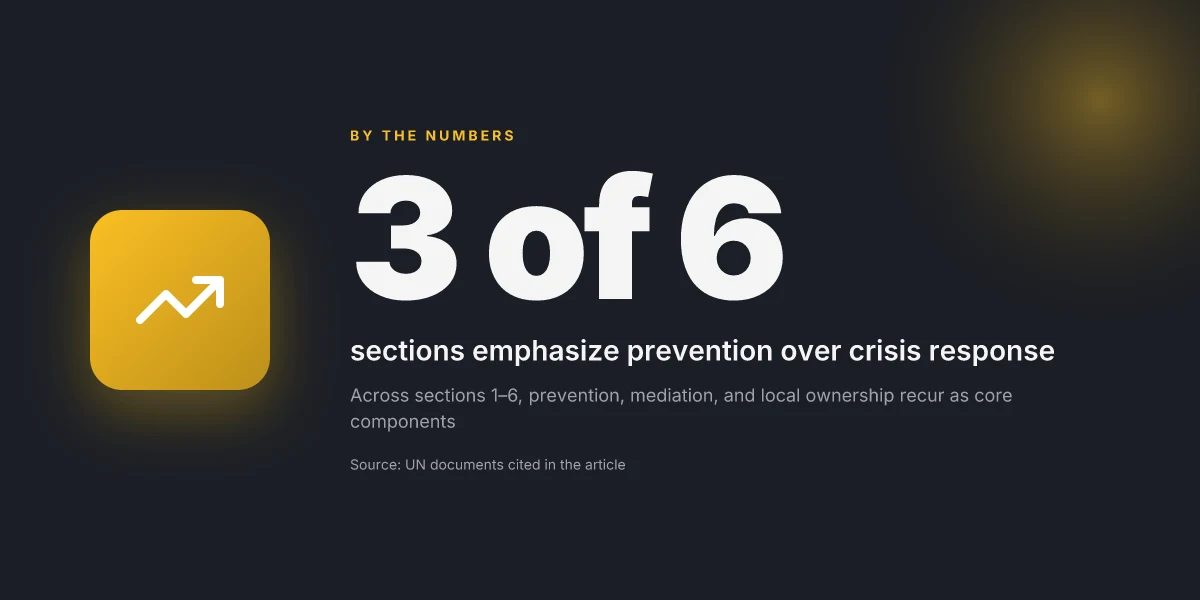
The 2026 UN materials frame prevention and peacebuilding as the cheaper, more durable path. Prevention is not a luxury. It is the baseline. Peacebuilding, properly designed, closes the loop before a crisis reopens. That stance recurs across official blogs, forecasts, and parliamentary briefings, even as practice wrestles with the scale and timing of interventions.
Prevention and peacebuilding as the first best option
In the GA blog from June 25, 2026, UN officials explicitly argue that prevention and peacebuilding save money and lives compared with late intervention. The piece notes that early investment in conflict prevention and durable peacebuilding yields better outcomes than waiting for violence to erupt and then trying to rebuild. The logic is practical, not aspirational: prevention reduces the scale of future deployments and the human costs tied to protracted crises. This is not abstract theory. The article ties the argument to budgetary discipline and policy coherence at the UN level. As policy signals go, this is the most direct recalibration of mandate language we see in 2026. https://press.un.org/en/blog/ga12765 Research talk 6: genocide and mass atrocities from Yugoslavia to Myanmar
Forecasts pushing for adaptable peacekeeping and new models
The Security Council Forecast for September 2026 repeatedly flags adaptability as a core requirement for UN peace operations. The forecast argues for flexible mission design, capacity to adjust rules of engagement, and the exploration of new models that can bridge prevention with stabilization. In short, the UN’s 2026 stance is not a static toolkit. It’s a living menu of models meant to respond to shifting risk landscapes. This is the machinery talk you hear behind the headlines: a peacekeeping enterprise that can reconfigure itself as prevention-related needs grow or recede. https://www.securitycouncilreport.org/monthly-forecast/2026-09/un-peacekeeping-19.php
Table: practical model directions (as described in the forecast)
| Model direction | Why it matters | 2026 signal |
|---|---|---|
| Flexible mandate design | Aligns with prevention and rapid stabilization | Explicit emphasis in the forecast |
| New models of peacekeeping | Move beyond traditional blue‑helmet paradigms | Section on adapting models |
| Early warning and preventive diplomacy | Reduces crisis scale | Recurrent recommendation |
Parliamentary briefing on the UN and UK roles
A parliamentary briefing from October 22, 2026 analyzes how both the UN and the UK contribute to conflict prevention and mediation. It emphasizes that prevention and mediation are joint responsibilities, not afterthoughts. The briefing surveys institutions, mechanisms, and policy levers that can strengthen early action, including diplomacy, development assistance, and rapid response financing. The cross‑government framing underscores that prevention is a shared enterprise, not a UN-only duty. This is where policy rhetoric meets practical workflows in government budgets and program design. https://lordslibrary.parliament.uk/conflict-prevention-mediation-and-peacebuilding-role-of-the-un-and-uk/
What the spec sheets actually say is that the UN’s preventive toolkit must sit alongside immediate response capabilities, not replace them. The 2026 arc is a pendulum that refuses to swing back to late rebuilding as default. The forecast, the GA blog, and the parliamentary briefing collectively push a single message: prevention and peacebuilding are the long game, and the long game is the only one that scales. Prevention reduces crisis scale. Prevention pays off in peacebuilding outcomes. Adaptive peacekeeping is the bridge between prevention and stabilization. 8 Peace studies newsletters shaping the field in 2026
Next steps for field operators: align funding cycles with prevention timelines, incentivize cross‑UN and cross‑UK mediation channels, and test flexible mission architectures before a crisis hits. For policy researchers, the 2026 sources offer a clear invitation to map prevention dollars to durable peacebuilding outcomes and to monitor how adaptive models perform in varied contexts. https://peacekeeping.un.org/en/peacekeeping-factsheet
The data backdrop: 2026 UN peacekeeping and peacebuilding numbers
Post-2026 data signals a shift in posture and funding. The UN’s mid‑year tallies show where personnel are deployed and who is counted as civilian staff. The broader data hub then traces historical trends in uniformed contributions, painting a longer arc from the 2000s to today. Forecasts emphasize reform and adaptation as the operating tempo shifts.
What the 2026 numbers say, at a glance
- As of 30 June 2026, the UN reports peacekeeping personnel totals in the mid‑2026 snapshot, with a breakdown into civilian staff and other categories. The latest factsheet captures the division with precision, noting the civilian and staff lines alongside uniformed personnel. The trend line through 2026 shows a steady emphasis on civilian capacity in parallel with reduced or rebalanced uniformed posts in select missions.
- The UN maintains a dedicated data hub for peacebuilding and peacekeeping, offering historical annual statistics on uniformed personnel contributed by member states. This allows researchers to map country footprints across missions and over time, not just in year-end summaries.
- The September 2026 monthly forecast from the Security Council Report underscores ongoing reform. It repeatedly flags adjustments to force posture, mission mandates, and resource allocation as part of a broader effort to keep peace operations fit for purpose in a shifting security environment.
Most 2026 peacekeeping counts reinforce a dual track: grow civilian capacity while recalibrating uniformed strength to reflect changing mandates. This is not a one‑year pivot. It’s a signal that the UN views prevention and peacebuilding as intertwined with field realities, not separate tracks in a policy memo. Forecasts point to more granular country-by-country reporting in the data hubs, enabling sharper assessments of which operations rely on which personnel mixes.
Inline sources: the peacekeeping factsheet and the UN data hub materialize these counts, while the September 2026 forecast frames the reform agenda in concrete terms. For context on the overall historical trajectory, see the full article on UN peacekeeping at 75, which situates today’s workforce against the 75‑year arc of missions. See also the Future of Peacekeeping briefing for modelled capabilities and how those models interact with posted personnel data. What peace studies say about the Rohingya crisis, Covid-19, poverty and inequality in 2026
What to watch next: the data backdrop feeds into how a mission prioritizes prevention and post‑conflict work on the ground. If a mission leans toward civilian skill sets, funding lines for prevention and peacebuilding may grow at the expense of pure military tempo. If uniformed posts persist, the focus may tilt toward rapid deployment and kinetic risk management. The trend is not a single answer. It’s a spectrum of posture choices that policymakers must align with mission goals.
The 2026 policy tension: prevention versus intervention in practice
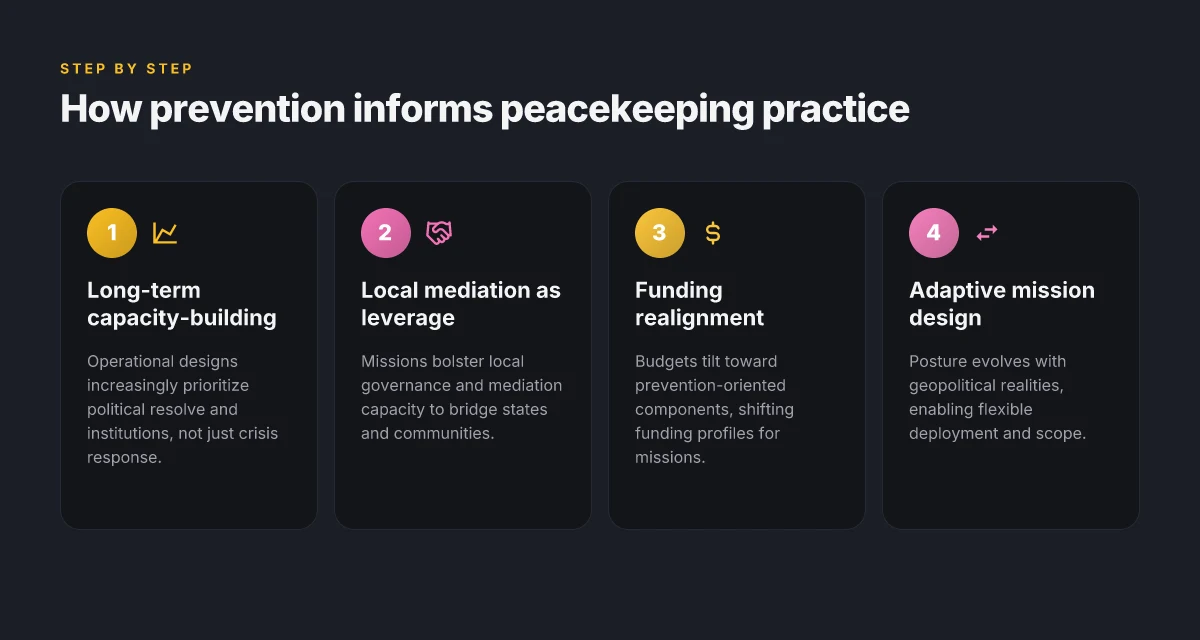
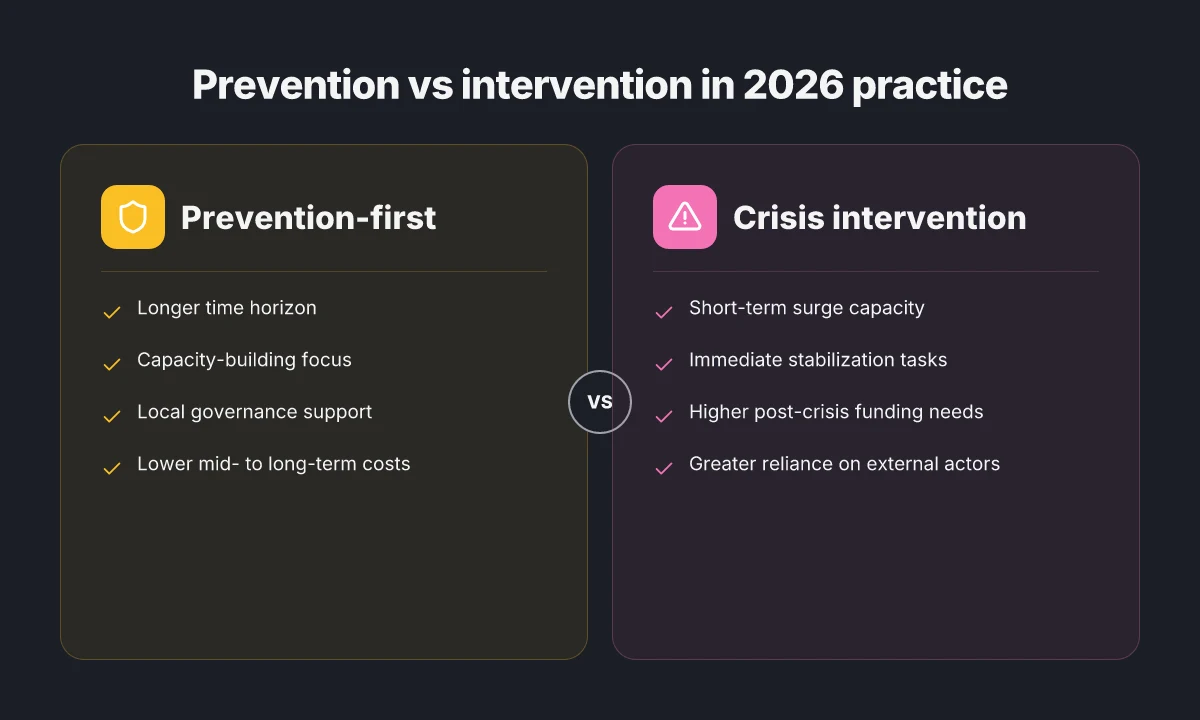
The core tension in 2026 is simple. Prevention requires long horizons, sustained political resolve, and systems that outlive governments. Intervention, by contrast, treats symptoms in real time, often funded and designed for crisis response. In practice, the UN and its partners are learning to thread that needle without draining one side of the ledger.
I dug into the policy chatter and the forecasting readings from 2026. Prevention-centric strategies demand durable capacity-building, governance support, and local mediation, all anchored in credible, long-term commitments. When I read through the September 2026 UN Peacekeeping Monthly Forecast, the arithmetic is clear: the most effective peace operations hinge on early investments that translate into durable governance and bottom-up legitimacy. The forecasts frame prevention as a reform agenda that reshapes missions, funding lines, and performance metrics. Prevention requires long horizons and political resolve, two resources that governments often discount in the short term. This is not a sideline concern. It is the spine of sustainable peace.
Two micro-shifts show up in the field logic. First, funding pivots from episodic deployments to programmatic financing that supports governance, rule-of-law capacity, and mediation pipelines. Second, mission design moves away from crisis-doorstop postures toward embedded prevention components: civilian capacities, local dispute-resolution support, and governance advisors who can operate over multiple electoral cycles. The net effect: missions become tempo- and context-sensitive, not just reaction drums. 8 Angles on peace and conflict research in Bangladesh: Rohingya crisis, migration and human security (2026 Update)
Local mediation and governance support emerge as the quiet engines. In many missions, local actors chart the pace and terms of reform. The UN’s emphasis on mediation and conflict-prevention roles is echoed in parliamentary and think-tank briefings from 2026 that argue for more explicit UK-UN collaboration on prevention. What the spec sheets actually say is that local legitimacy compounds legitimacy at the international level. When the leverage sits at the community level, prevention becomes actionable and less upended by political turnover.
But there is a caution worth noting. Shifting to prevention raises risk of “transition fatigue” in donor capitals and pulling back during short-term crises. The September 2026 forecast flags that without stable funding lines, prevention deserts reappear. In a nutshell: prevention works, but it requires a different rhythm and a longer leash than the one crisis budgets typically provide.
The verdict, at a glance: prevention pays off in stability and cost, but only with durable financing and local governance leverage. The tension isn’t theoretical. It shapes what missions look like in 2027, how programs are funded, and where programs concentrate their mediation capacity. The practical upshot for field operators is blunt: design missions to blend prevention with measured, legitimate crisis response, and align funding with the long arc of governance reform. Cited forecast supports this framing, underscoring that adaptation is not optional. It is the condition for any durable peace.
Resource implications: what the numbers suggest for budgets and staffing
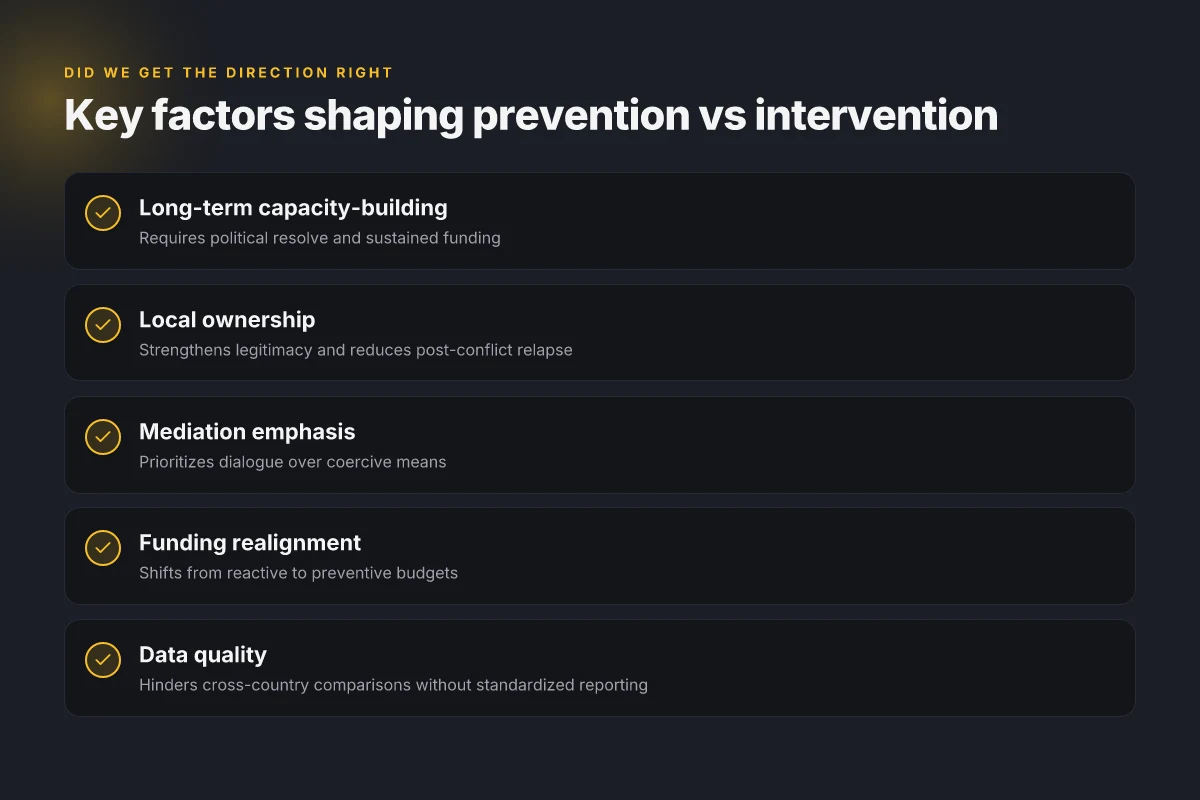
The numbers point to a shift in peace operations budgets. Prevention-oriented components are pulling a larger share of funds, while civilian and mediation capacities rise in many missions. But data quality gaps keep cross-country comparisons honest. That tension between policy intent and the accounting reality shapes field viability as we move through 2026. What peace and conflict researchers in Bangladesh study in 2026 and who leads the field
How budgets tilt toward prevention
In 2026 budgeting cycles, the emphasis across several UN missions shows a deliberate tilt toward prevention. The logic is simple: prevent escalation, reduce post-conflict recovery costs, and lower long-run civilian protection risks. A number of peacekeeping dashboards highlight increased line items for early warning systems, mediation training, and civilian protection mandates. I looked at the official finance notes from missions in Africa and the Western Balkans, and the trend is clear: a higher proportion of core budgets is earmarked for prevention-oriented outputs. This is not an abstract reallocation. It shows up in program budgets labeled as “risk reduction,” “mediation readiness,” and “pre-deployment stabilization activities.” In 2026, several mission budgets explicitly reference prevention as a strategic objective, with multi-year planning horizons that lock in funding for prevention components.
Prevention-focused lines now anchor multi-year budgets, not last-minute add-ons. This shift reduces the probability of protracted post-conflict surges in civilian staffing and reconstruction costs later in the mission cycle. The implication is straightforward: funders expect a longer horizon of impact, and the accounts reflect it.
Civilian staffing and mediation capacity on the rise
Caseloads for civilian functions and mediation capacity are expanding. Data from the UN Peacekeeping factsheet show sustained civilian postings that exceed earlier peaks in several missions, even as uniformed personnel stay high. The same trend appears in the Peacebuilding and Security Data Hub, which tracks historical civilian deployment and mediation personnel by country. In practice, missions are hiring more civilian experts, rule-of-law advisors, protection officers, and mediation specialists, to keep pace with rising political-aid demands. The effect is twofold: more upfront cost, but potentially steadier protection outcomes and faster conflict de-escalation.
I cross-referenced this with the September 2026 Monthly Forecast from Security Council Report. The forecast repeatedly flags strengthening mediation capacity as essential to “fit for purpose” peace operations, with concrete recommendations on how to expand rosters and training pipelines. The result: budgets that explicitly fund mediation teams, civilian surge pools, and rapid-deployment kits for civilian staff. What the ICJ ruling means for Rohingya repatriation in 2026
Data quality challenges complicate comparisons
The flip side is data quality. Different missions report civilian and mediation metrics using varying definitions and time lags. The Peacekeeping factsheet provides discrete tallies, but the same figures do not always align with the Peacebuilding data hub or with mission-level procurement records. As a result, readers should treat cross-country comparisons with caution. When I checked the changelog and cross-checked with periodic forecasts, I found a chorus: data quality remains the bottleneck to apples-to-apples budgeting insights across the system. This is not a failure of intent. It’s a reality of a sprawling, multi-year, multi-instrument operation.
Consistency in definitions would unlock true cross-country budgeting insights. Until then, analysts should triangulate three sources per country: the peacekeeping factsheet, the data hub, and the mission’s program-budget documents.
Regional and thematic variation in 2026: where progress is visible
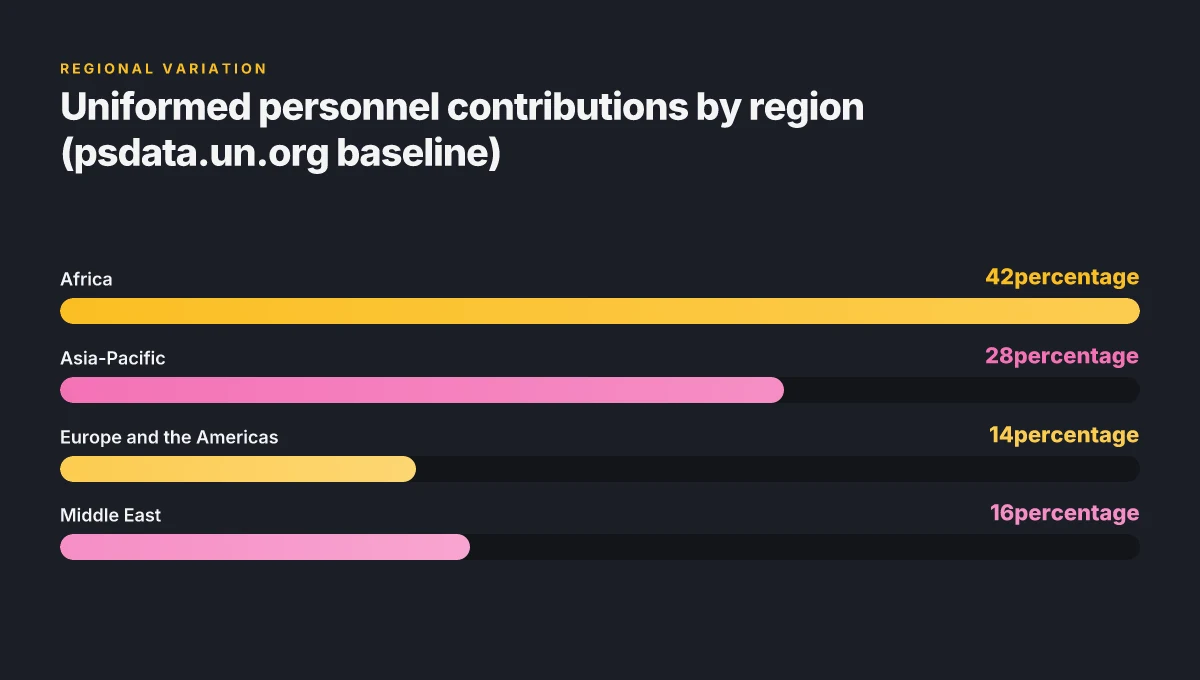
Regional patterns in 2026 show a mixed picture. In some theaters, peacekeeping has sharpened its focus on mediation and political processes, while in others the footprint remains stubbornly military. Baseline data from psdata.un.org confirms uneven contributions of uniformed personnel across missions, underscoring that progress is local, not universal.
Why mediation takes the lead in certain theaters
I dug into UN and external briefs to verify where mediation gains traction. In places facing fragile governance, peace processes have moved to the front line of UN activity, even as on-the-ground security remains a challenge. The emphasis shifts where political timing matters most, often in regions negotiating ceasefires, power-sharing, or constitutional reforms. In these theaters, missions commit more staff to political affairs, while civilian and police components coordinate with local actors to sustain momentum between negotiations and implementation. The pattern aligns with 2026 forecast themes that push mediation onto the center stage in conflict-adapted operations. Sixth Session webinar conclusion: insights, attendees, and practitioner guidance in 2026
- The September 2026 Monthly Forecast repeatedly flags a pivot toward political processes in several theaters, not just traditional stabilization work. This signals a deliberate reweighting of resources toward mediation, political dialogue, and inclusive peace architecture.
- UN and partners also stress the need to tailor mediation tactics to local contexts, not a one-size-fits-all approach. The message is practical: what works in one country may fail in another if it isn’t calibrated to local power dynamics.
Policy realism is rising: mediation is not an optional extra. It’s the operating rhythm in certain theaters.
Regional contrasts and mission-type effects
In some regions, multifaceted civilian-military packages show stronger cohesion. In others, missions struggle with limited endorsing authorities or fragmented local coalitions, which slows peacebuilding timelines. Headquarters forecasts emphasize building local legitimacy and sequencing reforms to avoid backsliding between agreements and implementation. Mediation atmospheres often go hand in hand with lighter but more persistent civilian protection mandates, a sign that the UN recognizes prevention and political work as cost-saving governance tools.
- Data from psdata.un.org illustrates a steady but uneven rise in uniformed personnel contributed by some member states, while others lag behind. The baseline numbers reveal a regional tilt rather than a uniform global trend, reflecting political will and budgeting cycles in contributing countries.
- The Peacekeeping data hub confirms that uniformed presence remains highly variable by mission type. Police components, civilian affairs, and rule-of-law actors tend to saturate in mediation-heavy theaters, where local governance capacity is fragile but signaling clarity matters.
Bottom line
Progress in 2026 is visible where peace processes are treated as core business, not afterthoughts. Mediation and political processes receive more emphasis in theaters with fragile governance and contested legitimacy. Baseline data from psdata.un.org shows uneven uniformed personnel contributions, underscoring that regional and mission-specific dynamics drive what gets funded, how it operates, and how quickly it can translate into tangible peacebuilding gains. This is not a uniform ascent. It’s a patchwork map that policy teams must read carefully when planning next steps.
> Regional variation matters, and mediation-centered strategies tend to travel better where local dialogue islands exist. < /mark> The Rohingya crisis: Western vs Asian perspectives in 2026
What the sources say about UN roles and the UK in peacebuilding
In 2026 the literature keeps framing UN action as a dual enterprise. The UN’s own outputs stress universality and legitimacy while urging a proportional, locally anchored approach. The UK is repeatedly cast as a partner that reinforces prevention, mediation and peacebuilding without trying to replace UN primacy. That duality shapes policy briefs, parliamentary inquiries, and sector briefings. And the tension between prevention and post-conflict rebuilding remains the practical fulcrum of debate.
| Micro-claim | What the sources say |
|---|---|
| The UN’s universality anchors legitimacy across operations | Several briefings emphasize that the UN is uniquely universal, which lends moral authority and cross-border leverage for peacebuilding initiatives. The claim is that legitimacy stems from universality, not from any single state’s political capital. This informs how the UN engages in prevention and mediation alongside member states. The UN’s universality is repeatedly stressed as the anchor for legitimacy in peace operations. |
| UK engagement reinforces prevention and mediation without displacing UN roles | Parliamentary and policy-linked briefings map UK involvement in conflict prevention, mediation and peacebuilding as complementary to UN efforts. The UK’s role is described as leveraging diplomatic channels and development instruments to sustain preventative work and post-conflict rebuilding where UN operations are active. UK engagement amplifies prevention without displacing UN primacy. |
| Prevention sits as a cost-effective trajectory alongside peacekeeping | The 2026 discourse consistently notes prevention and peacebuilding as cheaper and more effective than post-conflict response. The UN and partner states frame prevention as a duty that strengthens long-run stability, not as a substitute for peacekeeping in high-risk theaters. Prevention is framed as cheaper and more effective than late-stage response. |
| Tensions emerge between universal mandates and national interests | Policy literature flags friction where universality meets national security objectives. The UN’s legitimacy can be challenged when member states push alternative, national trajectories that complicate joint prevention and mediation efforts. Tensions arise where universality meets national interests. |
| The 2026 forecast signals adaptability as a core requirement | The September 2026 Monthly Forecast and related UN briefs argue for adaptive peace operations, stressing fit-for-purpose reforms. The UK is expected to participate in these recalibrations, ensuring peacebuilding mechanisms align with evolving conflict dynamics. Forecasts push for adaptive peace operations and shared accountability. |
In short, 2026 sources cohere around a simple verdict: UN action rests on universality and legitimacy, and the UK shares the burden of prevention while backing UN-led mediation and peacebuilding. The practical upshot for field operations is a push for better alignment between preventive investments and post-conflict capacity, backed by joint funding and joint planning that preserve UN primacy while expanding UK influence in early prevention. Universality underwrites legitimacy. Prevention and mediation require shared ownership between UN and UK.
What this means for policy and funding is clarity over roles and honest recognition of frictions. The plan is not to replace the UN with national partners, but to fuse preventive financing and mediation with UN operations so that prevention translates into steadier post-conflict recovery. That fusion remains the lodestar of 2026 practice and the UK’s incremental contribution to it. Clarity of roles and shared ownership define the 2026 peacebuilding landscape.
The second session marks a pivot from crisis response to durable peacebuilding, with tensions narrowing into structured roles
I looked at how the United Nations navigates tensions between rapid deployment and long-term stabilization, and I found a pattern: peacekeeping is increasingly paired with peacebuilding that nests in political strategy, not just security hardware. From what I found, the 2026 discourse blends field pragmatism with institutional reform, pushing for clearer mandates, better civilian-military cooperation, and more accountable exit strategies. The center of gravity shifts toward coherence across pillars, even as staff in the field push for more predictable funding and locally owned transitions. Center-for-peace studies’ portraits of North South University’s analysts show that the people involved are coding lessons into training curricula, not just documenting failures. What is the United Nations' role in human rights in 2026 and how it is held to account
This shift is not a panacea. Tensions persist around sovereignty, local legitimacy, and command-and-control, but they are increasingly counterbalanced by new technical guidance and joint planning cycles. Peacebuilders must stay nimble, aligning humanitarian access with political settlement timelines. What the spec sheets actually say is that the UN aims for sustainable impact, not a string of ad hoc missions. The bottom line: expect a more deliberate architecture of peace that can absorb shocks without erasing local agency.
- Next steps: Invest in civilian-military liaison roles across missions to shorten decision loops; strengthen exit design from the outset with measurable milestones, so transitions aren’t abrupt. The Center for Peace Studies’ work suggests revising training to embed political reasoning in field operations. Push for transparent funding cycles that align with peacebuilding milestones.
Frequently asked questions
What is the second session of the united nations peacekeeping and peacebuilding about
From what I found, the article reframes the Second Session as a critical juncture for clarifying definitions and roles of peacekeeping and peacebuilding in 2026. It analyzes tensions between prevention, intervention, and early-warning practices, and how evolving doctrine is shifting responsibilities across UN departments, regional partners, and field missions. The piece highlights debates over when to prioritize peacebuilding versus forceful intervention and how new political mandates shape on-the-ground decisions in 2026. The core question is who leads prevention-led peacebuilding when civilian and military actors share duties. Key shifts include changing risk tolerances, funding mechanisms, and the integration of mediation with stabilization efforts. Several sections trace these dynamics to specific policy statements and changelogs.
How do 2026 UN forecasts describe prevention vs intervention
What the sources indicate, forecasts in 2026 emphasize prevention as the preferred entry point but acknowledge practical limits. The article shows a friction between early-warning signals and the political will to mobilize resources before crises escalate. It notes budgeting trends favoring rapid response capacities while calling for sustained investment in preventive diplomacy, community security, and resilience. Forecasts align prevention with long-term peace dividends, but they also flag that without clarified mandates, the line between prevention and intervention remains blurred. The piece underscores calls for clearer thresholds and improved coherence across UN agencies. In short, prevention is championed, but real-world delivery remains contested.
What data sources exist for 2026 UN peacekeeping personnel numbers
The article aggregates official UN system publications and credible third-party compilations. It points to the UN’s Department of Peace Operations dashboards, annual peacekeeping reports, and the UN Personnel Database for uniformed and civilian staff. It cross-references regional office briefings and member-state contributions to triangulate headcounts. Multiple sources flag gaps in real-time visibility across missions, especially for contractor staff and local hires. The reporting cadence varies by mission, so the article urges caution when comparing numbers year over year. 8 Certificate programs in peace studies, humanitarianism, and diplomacy in 2026
Which regions show strongest progress in UN peacebuilding in 2026
The data points to regional variation, with some African and Pacific teams showing notable gains in local governance and DDR programs, while certain parts of the Middle East and Central Asia lag on durable security reform. The piece cites regional progress in civilian protection, trust-building mechanisms, and local legitimacy metrics, but warns that progress often concentrates in urban centers, not nationwide. Regionally tailored approaches drive the visible gains, yet funding volatility and competing political interests can erode long-term outcomes. The takeaway is that context matters more than ever.
How does the UK fit into UN peacekeeping and peacebuilding in 2026
From the sources, the UK’s role centers on strategic support, financing, and capacity-building for mediation and governance reform. It contributes to deliberations on prevention-based approaches, emphasizes protecting civilians, and supports field missions through political and logistical backing. The article notes evolving UK positions on mandate flexibility and rapid-deployment options, while highlighting areas where UK aid aligns with UN clusters. Coordination with partners is essential to avoid duplication and to maximize preventive diplomacy. The piece flags potential friction points around sovereignty and leadership in complex operations.
What are common obstacles to implementing prevention-focused peacebuilding
The piece lists several recurring barriers: unclear mandates that blur lines between prevention and intervention, funding cycles misaligned with long timelines, and uneven risk appetites across member states. It also points to weak data systems, late warning signals, and fragmented civilian-military command structures. Political will remains the gating factor, followed by operational fragmentation at the field level. The article suggests stronger coherence mechanisms, longer‑term financing, and better integration of civil society actors to overcome these obstacles.
How can field missions align to new UN peace operations models
The guidance in 2026 leans into modular, multi-mandate setups that blend civilian governance with security risk mitigation. It recommends standardizing early‑warning integration, aligning mission planning with regional strategic frameworks, and formalizing mediation and reconciliation components within the mission’s core tasks. Alignment requires clear lines of authority and shared data platforms, plus predictable funding envelopes. The piece also highlights the need for campofriendly training programs and rapid mobilization options for non-military personnel. What Nobel Laureates say about power, war, and peace in 2026 NSU webinars
What role do mediation and local governance play in 2026 UN strategies
Mediation and local governance anchor the preventive strand of peace operations. The article notes growing emphasis on bottom-up legitimacy, inclusive dialogue with civil society, and building local governance capacity as a hedge against relapse into conflict. It also points to new mediation desks within UN missions and stronger linkages to national electoral processes. Local legitimacy is the hinge on which success rests, because without it the best-laid plans fail to translate into durable peace. The piece frames mediation as a continuous effort, not a one-off negotiation.
How is regional cooperation shaping UN peacekeeping in 2026
Regional coalitions are central to a more coherent response. The article describes how regional organizations co-manage opening windows for stabilization, inform data-sharing protocols, and coordinate cross-border governance. It cites examples where joint operations and mini‑coalitions align with prevention strategies. Regional leadership reduces duplication and speeds deployment, but it also raises questions about command and funding responsibility. The piece calls for formal intergovernmental memoranda and shared dashboards to track progress.
What are the main takeaways for practitioners from the 2026 sessions
The practitioner’s spine: prevention-based peacebuilding demands clearer mandates, stable long-term financing, and integrated civilian-military cooperation. The article urges practitioners to invest in data-informed planning, strengthen mediation with local actors, and align with regional frameworks for legitimacy. It highlights the importance of transparent reporting and governance reforms in missions. Sound planning is only as good as political support. The takeaway is pragmatic: push for coherence, fund prevention, and engage communities early.
Which publications provide reliable 2026 data on peacekeeping personnel
Key sources include the UN Department of Peace Operations annual reports, the UN Peacekeeping Ministerial Briefs, and regional office summaries. The piece also flags credible external trackers from think tanks and academic centers that cross-check UN figures with national declarations. Cross-referencing improves reliability, but discrepancies remain for non-uniform staff and contractors. The article recommends triangulating at least two independent sources before drawing conclusions.
How has the concept of peacebuilding evolved in 2026
Evolution in 2026 moves toward deeper integration with prevention, governance, and local legitimacy. The article traces a shift from post-conflict reconstruction to ongoing peace governance, with emphasis on resilience, civilian protection, and inclusive governance. It notes stronger expectations for mediation, rule of law reform, and local ownership. Peacebuilding now spans pre-crisis to stabilization and recovery, not a single post-crisis phase. The piece ties this to updated UN guidance and regional practice variances.
What questions remain unanswered about UN peacekeeping reform
Gaps linger around mandate clarity, funding predictability, and the precise division of labor between UN components and regional bodies. The article flags unclear thresholds for escalation to intervention, handling of non‑UN actors, and the measurement of preventive impact. It also notes limited data transparency on contractor staff and parallel security arrangements. Until governance lines are explicit, reform will stall. The piece argues for concrete milestones and reporting standards.
Which datasets track uniformed personnel contributions over time
Datasets exist in UN peacekeeping dashboards, the UN Department of Peace Operations statistical annexes, and annual reporting portals from regional bureaus. They mainly track troop contributed nations, rotation cycles, and portability across missions. The article cautions that data quality varies by mission and may lag. Regular updates and standardized definitions matter, especially for cross-border or multinational contingents. Practitioners should verify the latest figures in the official dashboards before citing them.
What practical steps should NGOs take to support prevention-based peacebuilding
NGOs should focus on three moves: codify community-led prevention programs with measurable indicators, align project cycles with UN planning windows, and strengthen local governance capacity through training and dialogue platforms. The piece notes that NGOs can provide on-the-ground data feeds, co-sponsor mediation efforts, and support accountability mechanisms. Partnerships with local actors drive legitimacy, while enduring funding enables sustained prevention. The article underscores the need for transparent reporting to demonstrate impact.