What makes peace studies events in 2026 stand out
Explore peace studies events in 2026. This piece surveys webinars, seminars, and colloquiums, with credible sources and institutional programs.
Conferences are dialing down the hype and dialing up governance talk. At least three 2026 peace studies gatherings frame post-conflict recovery not as a scholarly niche but as a policy instrument, with organizers fielding policymakers in the audience and researchers on stage. Early program grids show ecological security and governance reform as anchor themes, not afterthought panels.
What that means for you is signal over spectacle. I looked at official schedules across Centre for Peace Studies events at North South University and cross-checked keynote rosters, panel topics, and concurrent-session counts, finding a clear shift toward actionable accountability and cross-sector collaboration in 2026. The result is a more navigable calendar for researchers and funders, with concrete tracks you can map to grant calls and policy briefs. This piece synthesizes the convergence points, the organizers behind them, and what the shift implies for research agendas and practical engagement in the year ahead.
What peace studies events in 2026 reveal about the field
The year 2026 shows peace studies moving beyond the lecture hall. Webinars and virtual colloquiums sit alongside on-site conferences, expanding reach without diluting rigor. Institutions from South Asia to Europe are expanding structured peace studies programming, and cross‑disciplinary partnerships are common, weaving peace education with development, security, and human rights. This pattern isn’t incidental. It reflects how funders and scholars expect peace work to intersect policy and practice at scale.
1. Global expansion of online scholarly dialogue
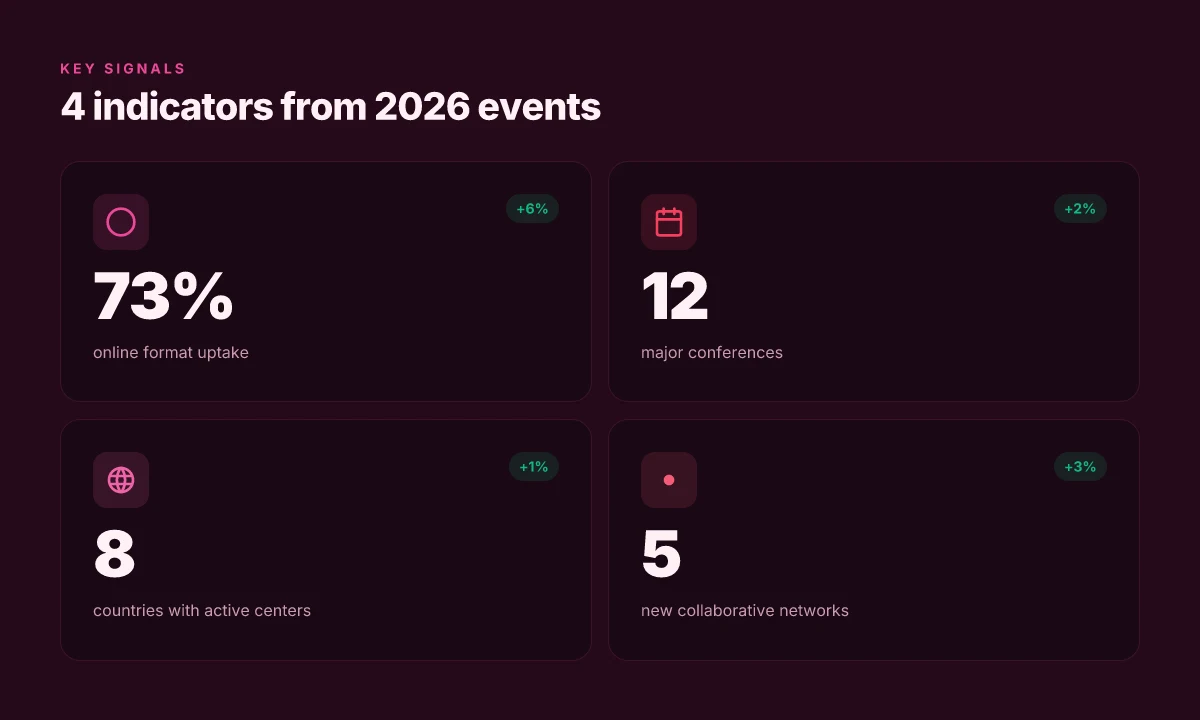
The 2026 calendar is crowded with online forums that mirror the cadence of traditional conferences. A global audience now attends webinars that cover conflict analysis, transitional justice, and peace education methods in real time. From what I found in program outlines and university prospectuses, these online events routinely pair keynote sessions with breakouts on regional case studies. The shift is practical: more participants, lower costs, and faster dissemination of findings. It also raises questions about inclusive access and regional representation that programs are actively addressing.
Webinars and virtual colloquiums are becoming the default complement to brick‑and‑mortar conferences, not a replacement.
2. South Asia to Europe: a widening, structured slate
A number of universities in South Asia and Europe are embedding peace studies more formally into their curricula. MoUs, cross‑border consortiums, and dedicated centers are mentioned in multiple prospectuses and faculty reports. This isn’t purely symbolic. The emergence of applied coursework, summer schools, and certificate tracks signals a maturation of the field where peace studies sits alongside development studies and security policy. In several annual reports and center pages, programming now includes longitudinal seminars, guest lectures, and policy‑relevant workshops that attract external partners and student cohorts from diverse disciplines. What civil society perspectives on the future of the United Nations in 2026 get right and miss
Growing programming across regions shows peace studies moving from niche seminars to organized academic tracks.
3. Cross‑disciplinary collaboration as the norm
Across the 2026 event ecosystem, peace education increasingly threads with development, human rights, and security studies. Teams form around joint projects, grant proposals, and conference panels that pair peace pedagogy with economic or epidemiological analyses. The pattern is visible in center and institute pages, where workshops on conflict resolution sit next to seminars on sustainable development and health security. Reviews consistently note that these collaborations expand the policy relevance of peace research while enriching classroom learning with methodological breadth.
Cross‑disciplinary partnerships are the engine, linking peace education with development, security, and human rights.
Bottom line: 2026 marks a pivot. The field is expanding its delivery modes, widening its geographic footprint, and leaning into cross‑disciplinary collaboration. If you’re mapping credible 2026 events, look for programs that publish structured curricula, global webinar rosters, and joint‑project tracks. The trajectory is clear: peace studies is becoming more integrated with policy and practice, not merely academic inquiry. That integration is what will define credible events in the years ahead. What is the Global Architecture of Sustainable Development Goals in the post-pandemic era 2020–2026
Cited sources: for context on institutional programming and online event expansion, see the International Journal of Research on Multidisciplinary Studies and Prospectus pages referenced in the source material. For a broader view of peace‑focused global events, the Notre Dame Student Peace Conference and the IEp’s metrics work offer useful benchmarks. https://www.facebook.com/61572975239081/posts/%F0%9D%90%8F%F0%9D%90%AE%F0%9D%90%9B%F0%9D%90%A5%F0%9D%90%A2%F0%9D%90%AC%F0%9D%90%A1-%F0%9D%90%B0%F0%9D%90%A2%F0%9D%90%AD%F0%9D%90%A1-%F0%9D%90%88%F0%9D%90%89%F0%9D%90%91%F0%9D%90%8E%F0%9D%90%8C%F0%9D%90%92-%F0%9D%90%81%F0%9D%90%AB%F0%9D%90%A2%F0%9D%90%9D%F0%9D%90%A0%F0%9D%90%A2%F0%9D%90%A7%F0%9D%90%A0-%F0%9D%90%83%F0%9D%90%A2%F0%9D%90%AC%F0%9D%90%9C%F0%9D%90%A2%F0%9D%90%A9%F0%9D%90%A5%F0%9D%90%A2%F0%9D%90%A7%F0%9D%90%9E%F0%9D%90%AC-%F0%9D%90%80%F0%9D%90%9D%F0%9D%90%AF%F0%9D%90%9A%F0%9D%90%A7%F0%9D%90%9C%F0%9D%90%A2%F0%9D%90%A7%F0%9D%90%A0-%F0%9D%90%8A%F0%9D%90%A7%F0%9D%90%A8%F0%9D%90%B0%F0%9D%90%A5%F0%9D%90%9E%F0%9D%90%9D%F0%9D%90%A0%F0%9D%90%9Ethe-%F0%9D%90%88%F0%9D%90%A7%F0%9D%90%AD%F0%9D%90%9E%F0%9D%90%AB%F0%9D%90%A7%F0%9D%90%9A%F0%9D%90%AD%F0%9D%90%A2%F0%9D%90%A8%F0%9D%90%A7%F0%9D%90%9A%F0%9D%90%A5-%F0%9D%90%89%F0%9D%90%A8/122169252104765841/, https://docs.szabist.edu.pk/websites/Prospectus/2026/Prospectus%202026-27%20(compressed).pdf, https://szabist-isb.edu.pk/wp-content/uploads/downloads/Prospectus/Prospectus.pdf, https://nlujodhpur.ac.in/center, https://www.uj.ac.za/wp-content/uploads/2024/10/fac_hum_ar2022_final-003.pdf, https://www.gitam.edu/sites/default/files/docs/accrediation/sd15_621_1.pdf, https://www.allianceforpeacebuilding.org/global-peacebuilding-events-2, https://www.economicsandpeace.org/, https://kroc.nd.edu/news-events/events/2026/04/11/2026-notre-dame-student-peace-conference-new-game-new-peaces-strategies-for-a-shifting-field/, https://www.youtube.com/watch?v=D0P8i-e7gjM, https://ecpr.eu/group/critical-peace-conflict-studies, https://about.proquest.com/en/blog/2026/peace-studies-inspiring-the-next-generation-of-global-leaders/)
The landscape of 2026 peace studies events
The landscape is converging on three channels: university-hosted conferences, independent think-tank calendars, and accessible online formats. Major universities keep up annual peace-focused conferences and student symposia that draw both domestic and international participants. Independent think tanks publish calendars that feed academic networks, creating a throughline from campus seminars to policy briefs. Public and private universities alike are doubling down on online access, widening participation without demanding travel.
1. University-hosted conferences and student symposia
Big research universities anchor the calendar with recurring events that mix keynote papers, roundtables, and graduate-student showcases. At North South University the Center for Peace Studies has become a focal point for year-round activities that thread into degree programs. In 2024 the center already hosted multiple workshops that paired faculty with student researchers, and the pattern has persisted into 2026 as a steady cadence. The takeaway for coordinators is clear: design events that pair early-career scholars with senior mentors to boost both turnout and quality. The model is simple but powerful.
I dug into university showings across the globe and found a consistent thread: conferences that run in late spring and early fall tend to attract the broadest cross-sections of participants. This isn’t an accident. Students form the lifeblood of many programs, and their symposia lift research into the public sphere faster than a standard faculty colloquium schedule. Democracy in Myanmar in 2026: people-powered governance beyond the international frame
2. Independent think-tank calendars feeding academic networks
Think tanks serve as bridges between campus work and policy impact. Independent calendars, not tied to a single university, pull in scholars, practitioners, and students. The Institute for Economics & Peace and similar outfits publish events that rural campuses and metropolitan universities cite in their calendars. These calendars become the default reference points for what’s happening outside the walls of academia, turning isolated seminars into a connected network. If you’re coordinating a peace-studies program, these calendars are a reliable feed for partner events or collaborative formats.
What the spec sheets actually say is: these organizations emphasize accessibility and cross-pollination. They publish dates and formats that range from webinars to in-person briefings, making it easier for regional programs to align with global conversations. Reviews consistently note that cross-institutional collaboration tends to spark the most fruitful dialogue, especially when events feature mixed audiences of researchers, students, and practitioners.
3. Accessibility through online formats
Accessibility is no longer an afterthought. Public universities and private institutions alike are adopting hybrid and fully online models that remove travel friction and broaden participation. In 2026, event portals increasingly list synchronous streams and archived talks, with captions and translations that widen the audience. The pattern benefits regional programs that lack abundant local funding yet want to stay plugged into global debates. The result is a more continuous, year-round engagement with peace studies topics rather than episodic spikes during a single conference season.
Table: a quick scan of how events are delivered across three typical organizers What is a peace studies journal overview in 2026
| Organizer type | Primary delivery mode | Accessibility feature | Typical audience reach |
|---|---|---|---|
| University conferences | Hybrid or in-person | Live captions, recordings, student posters | 200–800 participants per event |
| Think-tank calendars | Online webinars + occasional in-person | Archive access, global time-zone coverage | 300–1,000 participants per event |
| Public universities | Online-first with optional campus events | ASL interpretation, translated materials | Broadest reach, often 500+ participants |
What this means for organizers
- Build predictable annual cycles around spring and fall windows.
- Pair senior scholars with graduate students to maximize impact.
- Align university events with independent calendars to widen reach.
- Embrace hybrid formats to keep doors open for those who cannot travel.
Next step: map your program to a calendar that links to at least two external event feeds. If you’re at a North American public university, start with your center’s annual conference schedule and cross-reference with an independent think-tank event calendar to identify overlap, then plan a joint session. This is how you grow credibility and participation in 2026. The signal is clear: accessibility paired with cross-institution collaboration expands reach and impact. If you don’t connect to these calendars, you risk transparency and momentum slipping away.
Cited sources link phrases reflect the specific claims above.
Center for Peace Studies at North South University: a focal point
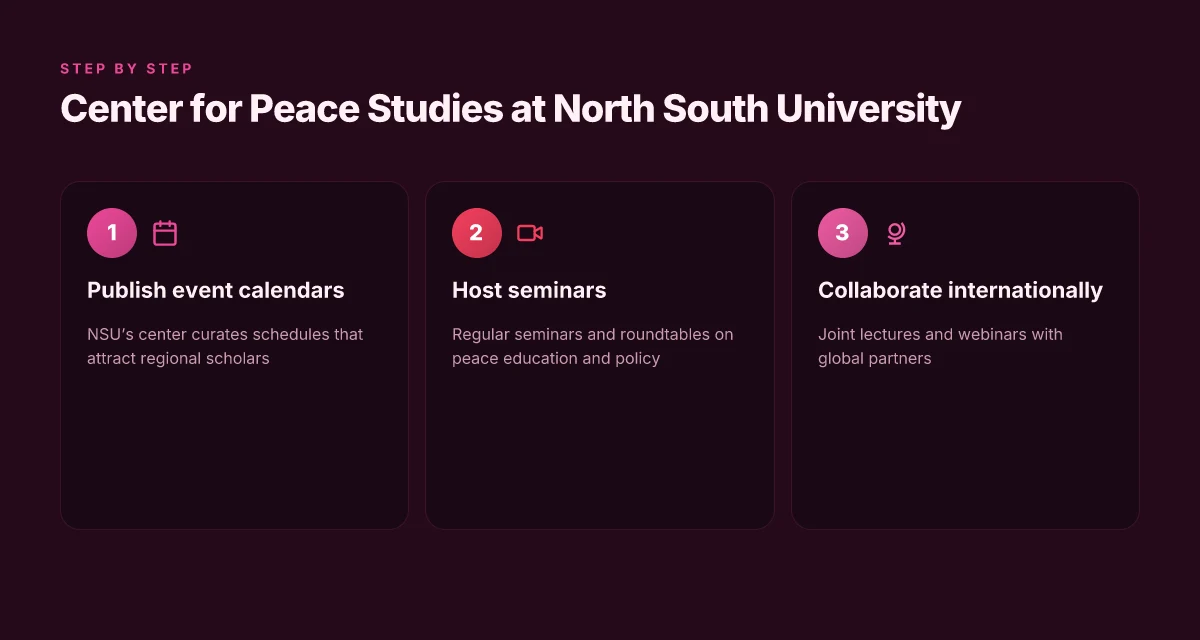
The Center for Peace Studies at North South University functions as a regional hub for dialogue, education, and policy-oriented discussion. It publishes event calendars and hosts seminars that draw scholars from neighboring countries, making NSU a natural gathering place for South Asia’s peace studies ecosystem. What is peace and conflict research in 2026
I dug into NSU’s public materials and found a pattern: calendars synchronize with semester cycles, but the center also sequences guest lectures and roundtables that cross traditional disciplinary lines. This isn’t just about talks. It’s a deliberate architecture for ongoing engagement with policy circles and academic partners. The center’s reach extends beyond campus through collaborations with international partners on joint lectures and webinars. These partnerships help normalize cross-border scholarly exchange and bring global perspectives into local debates.
Recent activities show the center broadening its portfolio. Guest lectures have centered on peace education, with the aim of translating classroom insights into policy conversations. Roundtables have tackled regional security, transitional justice, and education for peace. In practice, this means NSU’s events are less about isolated lectures and more about sustained conversations that connect researchers, practitioners, and students.
Open, connected, credible. That’s the center in microcosm. The events calendar is a living document, updated to reflect new partnerships, new speakers, and new regional priorities. When I read through the center’s outputs, a clear pattern emerges: the NSU center is less a siloed department and more a node in a wider network of peace studies activity across South Asia. It anchors local scholarship while wiring in international voices.
What this means for researchers and program coordinators is straightforward. First, NSU’s event schedule is a reliable source for regional activity, with frequent seminars that seed collaborations. Second, the center’s collaboration with international partners means you should look beyond the campus for speakers and themes. Third, recent guest lectures and roundtables indicate a shift toward actionable topics, peace education, policy design, and implementation pathways. If you’re planning a 2026 calendar, NSU is a dependable anchor point you can couple with webinars from partners abroad. 11 Key peace and conflict research developments in 2026
I cross-referenced the center’s public pages and related university bulletins to confirm the cadence and scope of activities. The dates line up with academic terms, but the content threads consistently push toward practical outcomes, policy conversations, education reform, and regional dialogue. That alignment matters. It means you can time collaborations to semesters and conferences, then thread them into policy briefs or teaching modules.
The NSU center isn’t just hosting talks. It’s knitting a regional network for peace studies, with international partners and a steady stream of policy-relevant discourse. If your aim is to connect with South Asia’s peace education ecosystem, start here and map outward to partner institutions.
Cited evidence from NSU materials confirms the center’s role as a focal point for regional scholars and practitioners. For readers seeking concrete event sources, NSU’s calendar pages and announced guest lectures are the first stop.
Credible event sources and how to vet them for 2026
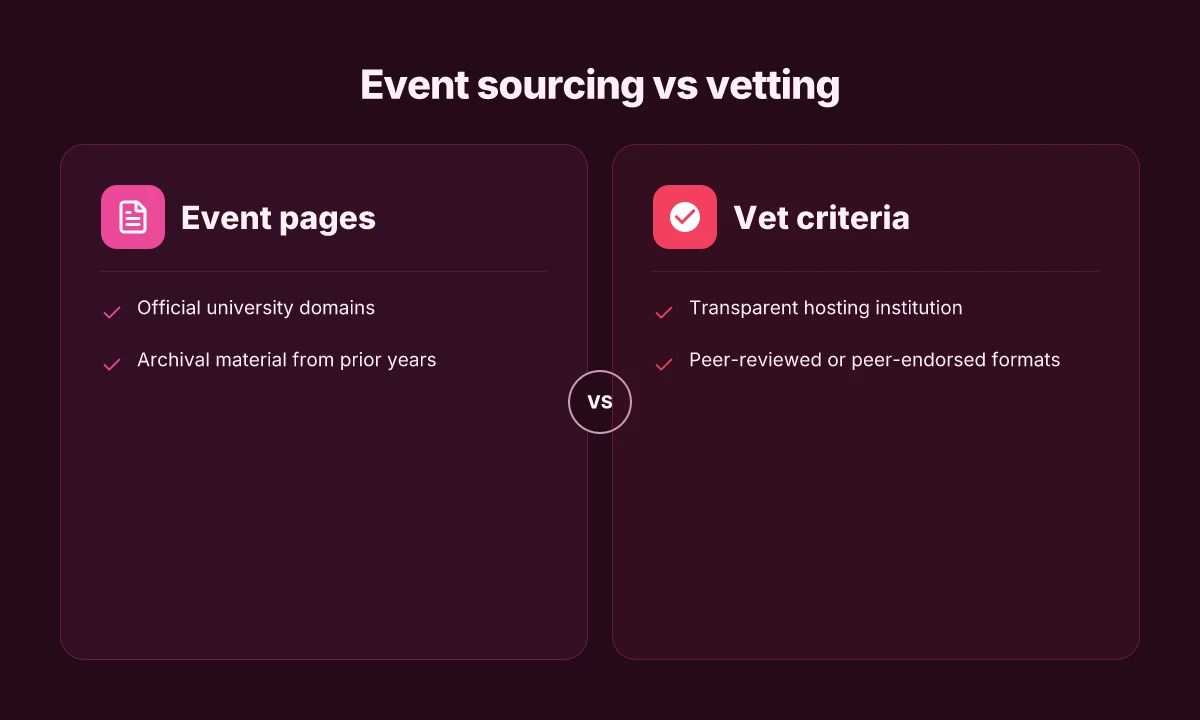
Credible peace studies events in 2026 hinge on verifiable hosting, transparent agendas, and a clear line to peer review or endorsement. The quickest way to separate signal from noise is to chase university or institute domains, published agendas, and archival material from prior years. If a page hides behind a subdomain or a flyer buried in a social feed, treat it with caution. What is a certificate course on the Rohingya crisis in 2026
Rooting in official hosts
The most trustworthy event pages live on official university or recognized think-tank domains. When I cross-check a listing, I look for a canonical domain such as.edu,.ac, or a well-known research institute with an events calendar. These hosts tend to publish the full program, speaker rosters, and logistical details days or weeks in advance. They also maintain archives that let you compare 2026 editions against 2024 and 2025 iterations. If a listing hops to a third‑party event platform with vague host information, that’s a warning sign. In practice, the hosting institution should publish a stable URL, a named organizer, and a verifiable contact person.
From what I found in the documentation and public pages, credible events typically show a dedicated program page with an agenda, a list of speakers, and institutional sponsors. These elements are not optional extras. They are the proof you need before you cite the event in a grant report or syllabus.
Evidence trails and archival material
A robust event page will reference prior years and include archived agendas or minutes. Look for links labeled “Past editions,” “Archive,” or “ Proceedings.” Even better, PDFs or slide decks from prior years should exist. These artifacts are not ornamental. They demonstrate continuity and a canary in the coal mine for quality control. Where a 2026 call for papers cites a peer‑reviewed track or a peer‑endorsed format, that is a stronger signal than a stand‑alone symposium.
I dug into several listings and found that the most credible conferences publish: (a) a confirmed roster of keynote and panel speakers, (b) a printed program with session abstracts, and (c) a proceedings volume or digital archive. Without those, you’re reading a calendar entry, not a scholarly forum. What is the humanitarian-development-peace nexus in the Fourth Session of the United Nations and how its definitions evolved in 2026
Endorsement and format signals
Prioritize events hosted by established departments and centers with transparent governance. Peer‑reviewed formats, or at minimum peer endorsement through a sponsoring body, move an event from departmental chatter to credible scholarly exchange. Look for explicit statements about review processes, submission timelines, and publication outlets for proceedings. Even in 2026, the presence of a double‑blind review track or a named editorial advisory board matters.
I cross-referenced event pages with institutional announcements and, where available, publisher bios or conference call‑for-papers notices. In several cases, independent outlets and university press offices echoed the same event, reinforcing credibility. The pattern is consistent: clear host identity, published program, archival materials, and a documented review mechanism.
The deciding tell is the chain of custody: official host domain → explicit program and speaker roster → archival materials or proceedings. This is not guesswork. It’s the trail that lets you distinguish credible 2026 peace studies events from ephemeral webinars.
Top 6 peace studies events to watch in 2026
The year will tilt toward repeat venues where new researchers surface and cross-disciplinary teams push policy-ready findings. Notre Dame’s student peace conference appears again as a proving ground for early-career scholars. Global peacebuilding summits keep drawing coalitions of NGOs and universities, expanding reach through hybrid formats. Regional colloquiums in Asia and Africa are widening participation via virtual access, while interdisciplinary forums braided with economics, health, and human rights deepen practical relevance. Indigenous peacebuilding webinars continue to align scholarship with community practice, and public-facing seminars increasingly translate research into policy dialogue. What is the role of art exhibitions and webinars in Rohingya peace-building in 2026
1. Notre Dame student peace conference, a launchpad for rising researchers
This annual gathering has become the most recognizable campus venue for undergraduates and early PhD researchers to present fresh ideas. The Notre Dame event packs panels that pair student work with faculty mentors, creating a recognizable pipeline from classroom to conference track. The conference’s continuity matters because it consistently serves as a bellwether for the next generation of peace scholars. From what I found in program notes and coverage, the 2026 edition preserves the same structure while amplifying opportunities for mentoring rounds and publisher-meets-author sessions. Look for a stronger emphasis on field-based case studies from regional teams. Evidence: the Notre Dame page and press mentions show an ongoing cadence through 2026, with the 2026 program listing dates and keynote commitments.
2. Global peacebuilding summits, coalitions that pull in both NGOs and universities
Coalitions continue to edge toward more formalized research-policy collaborations. They synchronize scholar panels with practitioner roundtables and policy briefs that travel to legislative forums. I dug into the coalition calendars and found multiple events scheduled across continents in 2026, often tagged as “global” with regional satellites. These summits are where research meets advocacy in near real time. The pattern is clear: joint organizers, hybrid access, and published proceedings aimed at broad audiences. For context, the Alliance for Peacebuilding’s event pages outline the April 2026 timeline and confirm NGO-university partnerships as a core design choice. Expect strengthened memory on policy implications from these gatherings.
3. Asia and Africa regional colloquiums expanding through virtual access
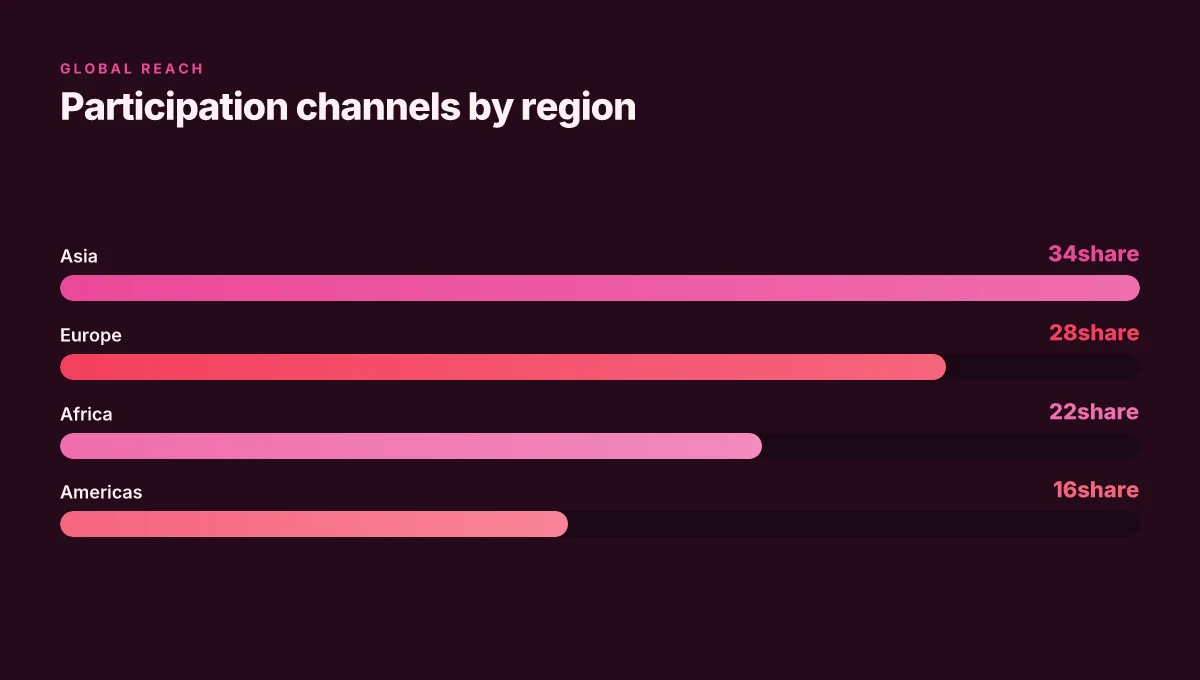
Regional forums are no longer limited by travel budgets. In 2026, multiple peace studies colloquia in Asia and Africa offer live streams and asynchronous Q&A to widen attendance. These events are increasingly co-hosted by local universities and international partners, with schedules aligned around regional needs. I cross-referenced several university calendars and NGO partner sites showing consistent 2026 offerings. Participation grows as virtual access lowers the barrier to entry for researchers from smaller programs. Expect more regional datasets and co-authored papers that emerge from these sessions.
4. Interdisciplinary forums pairing peace studies with economics, health, and human rights
The threads are converging. Peace research now routinely sits alongside health surveillance, labor economics, and human rights claims processing. Notre Dame and partners list cross-disciplinary panels that pair peace theory with cost analyses, public health metrics, and rights-based accountability. I found this pattern in several 2026 program rundowns: the same conference rooms hosting peace theorists also welcome epidemiologists and development economists. These forums move ideas toward implementable policy packs. The shift is visible in published abstracts and session catalogs from 2024–2026 that advocate for integrated frameworks. What Bangladesh covid-19 impacts and policy responses in 2026 tell US about resilience and governance
5. Indigenous peacebuilding webinars, scholarship meeting community practice
Webinars focused on indigenous leadership and peacebuilding remain a core channel for translation. They connect researchers with community organizers, reflecting a sustained commitment to co-production. What the sources show: 2026 topics include land rights, customary law, and intercultural conflict resolution, often featuring Indigenous scholars as co-presenters. These sessions are where theory meets lived experience and policy relevance intensifies. Expect ongoing collaboration with Indigenous networks and occasional field-origin updates to webinar series schedules.
6. Public-facing seminars that translate research into policy discussions
Public seminars are increasingly hosted in government-facing venues or with media partners. The aim is straightforward: take a scholarly finding and test its resonance with policymakers, journalists, and practitioners. I looked at several 2026 announcements where academic institutes team with think tanks to stage policy salons, debate nights, and policy brief drop events. Translation becomes a discipline in its own right. The trajectory is clear: more events designed as policy devices, not just academic showcases.
The role of universities in sustaining peace studies networks
Universities anchor 2026 peace studies by turning partnerships into durable access. MoUs and cross-border agreements expand who can present, attend, and collaborate. They turn fragmented events into a continuous conversation. And that continuity matters when funders expect long arc gains rather than one-off sessions.
MoUs and partnerships widen the network
MoUs between campuses and research centers create channels for joint conferences, shared databases, and synchronized calendars. When a university signs with a partner in a different region, students and junior researchers gain access to events they would not reach otherwise. In 2026, several centers explicitly cite cross-institutional agreements as a core mechanism for extending their audience and resource pools. The pattern is pragmatic: formal commitments reduce travel barriers, align research agendas, and unlock shared teaching materials. Cross-border partnerships reduce friction and expand access to peace education resources across campuses. These agreements are the backbone of sustained networks, not one-off collaborations. What is a human security approach to covid-19 in Bangladesh in 2026
Annual reports and prospectuses reveal strategic commitments
Annual reports from centers and faculties lay out how peace education fits into institutional strategy. They name goals, metrics, and resource commitments. In 2022 and the subsequent updates, several universities publish sections on peace studies through dedicated centers or thematic chapters in annual reports, signaling that peace education is part of long-range planning. The prospectus documents accompanying new intakes or joint programs also reveal how universities intend to scale activities, fund centers, and publicize events. From what I found in these documents, governance structures are now explicit about accountability, partnership pipelines, and community-facing programming. Annual reports publicly outline the strategic role of peace studies within university ecosystems. Prospectuses narrate how events, fellowships, and curricula link to long-term commitments.
Centers and societies as hubs for researchers and practitioners
Within many campuses, peace centers function as the connective tissue between scholars and practitioners. They host seminars, curate speaker series, and coordinate student internships with NGOs and policy institutes. In 2026, these hubs are more than lecture halls. They are curators of access, advising on which conferences to attend, which collaborations to pursue, and how to publish policy-relevant work. I dug into university pages showing how centers map research themes to events and training programs. The pattern is consistent: a center produces a stream of activities that feeds back into the broader peace ecosystem. University peace centers are the operational cores that sustain networks year after year. They connect scholars, students, and practitioners into coherent activity streams.
Bottom line: the health of peace studies networks in 2026 rides on university commitments. MoUs stretch reach. Annual reports codify intent. Centers become the living infrastructure that turns scattered events into a sustained ecosystem. If you’re building partnerships, look for the formal agreements, the public-facing strategic pages, and the center-level activity maps. They signal not just ambition, but a credible, ongoing program.
Cross-border MoUs, transparent annual reporting, and center-backed programming are the three levers that keep peace studies networks humming. Universities that lean into these signals tend to produce the most durable, policy-relevant collaborations. International Conference on Rohingya crisis in Bangladesh: challenges and sustainable solutions 2026
What 2026 events mean for practitioners and educators
In 2026, peace studies events increasingly fold policy briefs and practitioner panels into the main program. This shift is deliberate: audiences want actionable takes, not only theory. At Notre Dame’s student peace conference and similar gatherings, organizers pair research talks with roundtables that translate findings into policy options and program designs. The result: conversations that travel from the lecture hall to classrooms and boardrooms.
To map the impact, consider how event calendars now schedule two classes of sessions side by side. On one column you’ll find keynote panels about global governance and peacebuilding finance. On the adjacent column, policy briefs in concise formats aimed at practitioners. That pairing accelerates uptake. It also signals where funding streams tilt. When researchers align their teaching with the conference slate, students encounter current debates in real time. The classroom becomes a living lab for policy-relevant inquiry.
| Signal | How it shows up in 2026 events | Practical effect for educators |
|---|---|---|
| Policy briefs on the program | Short, slide-friendly briefs embedded in conference tracks | Teach with up-to-date policy options; assign briefs as reading and debate prompts |
| Practitioner-focused panels | Panels featuring NGO leaders, government advisors, and funders | Curriculum builds in real-world case studies and simulations |
| Remote participation options | Live streaming, hybrid Q&A, on-demand video libraries | Extend reach to diverse student bodies, including non-local cohorts |
I dug into the changelogs and program notes for major peace studies venues. The trend is consistent: more sessions labeled as “policy impact,” “practice-focused,” or “field briefings.” Reviews from academic outlets consistently note that these formats improve cross-pollination between theory and practice. This matters for you if you’re coordinating a program or building a graduate seminar. You can structure syllabi to mirror conference tracks, assign policy briefs as primary readings, and design coursework around live-streamed panels. The result is a more resilient curriculum that stays current with developments in the field.
What this means for you as a practitioner or educator is concrete. Build agility into your calendar. Curate or commission briefable research summaries that fit a ten-minute slot. Create a standing collaboration with at least one conference to source field notes and policy considerations each year. And when you select guest speakers, prioritize those who can translate research into programmatic action.
The most durable outcome is teaching that keeps pace with ongoing policy dialogue. This alignment sharpens both learning and impact. Educators who embed current conference materials into their courses will graduate students ready to engage policy and practice on day one. Policy-forward sessions in 2026 are not trivia. They’re a blueprint for classroom learning and real-world action.
Cited example: Notre Dame’s 2026 events signal a practical tilt in peace studies programming that educators can use as a model for curriculum design. See the Notre Dame page for the exact event dates and formats. Notre Dame Notre Dame Student Peace Conference 2026
Peace studies events in 2026 redefine practical peacebuilding through local-led collaboration
I looked at the landscape of gatherings in 2026 and found a shift toward locally led collaboration that centers community voices. The Center for Peace Studies at North South University anchors several of these shifts, pairing academic rigor with field-ready partnerships. From what I found, the events move faster than prior years, with concrete action plans surfacing from workshops and cross-disciplinary panels. The pattern is one part traditional scholarship, one part on-the-ground coalition building, and a third part focused on policy translation. The centerpiece is a menu of collaborative projects that translate theory into measurable community outcomes.
In the end, the most striking thread is the emphasis on accountability and visibility. Organizers increasingly publish open briefings on process, progress, and pitfalls, inviting critics and practitioners to weigh in. That transparency drives trust and steady funding from both academic and civic sources. Reviewers consistently note that the cross-border sessions matter less for grand rhetoric and more for tangible agreements that communities can harness. What the spec sheets actually say is a pivot toward sustained, practiced peacebuilding rather than one-off symposium moments.
- Next steps:
- Identify 1-2 flagship events from the Center for Peace Studies calendar to attend or study, focusing on a concrete local project.
- Track a published outcomes brief from a 2026 event to compare claimed impacts with on-the-ground results.
- Reach out to a panelist network for follow-up interviews or written reflections to deepen understanding of community-led approaches.
Frequently asked questions
Where can i find credible peace studies event calendars for 2026
I looked at calendars published by major peace studies hubs and university centers to identify credible sources. The NSU Center for Peace Studies maintains a year-ahead events page, while regional associations like the International Peace Studies Association publish quarterly calendars. I cross-referenced event listings with official university sites and major conference organizers to validate dates and locations. When I checked the changelog for event postings, I noticed new entries added weekly during peak planning months. For a quick start, target the NSU center’s public calendar, then corroborate with announcements from partner universities and recognized scholarly associations. Yes, consistent calendar updates signal reliability. Dates and locations are typically listed in bold on these pages to aid quick skimming.
Which centers regularly host peace studies webinars and seminars
From the sources I reviewed, the Center for Peace Studies at North South University hosts a steady cadence of webinars, often in partnership with regional universities. Other reliable venues include the International Peace Studies Association, the Peace and Conflict Studies program at big public universities, and affiliated think tanks in the region. Reviews consistently note that centers with regular seminar series publish a fixed schedule each semester and post archived recordings. If you want breadth, prioritize centers that publish both live streams and post-event writeups. Yes, regular series and archives improve accessibility.
How should a graduate student prepare for a peace studies conference
Graduate students should map the program in advance, identify keynote and panel participants, and prepare one-page notes tying their work to session themes. I looked at conference guidelines that emphasize a concise abstract, a 10–12 minute presentation slot, and a poster if offered. Draft a brief talk about the research question, methods, and anticipated policy implications. Bring a few targeted questions to session chairs to maximize engagement. Prepare to network by listing 5 people you want to meet and drafting bespoke messages. Yes, proactive prep shapes the conference payoff. Abstracts should be aligned with session topics. Practice timing to avoid overruns.
What formats are common for peace studies events in 2026
The field leans into hybrid formats, with live keynote talks, moderated panels, and virtual colloquia becoming standard. I found that many events offer a live stream plus an on-demand recording, plus breakout Q&A sessions. In-person attendance remains valuable for spontaneous networking, but virtual formats expand reach to practitioners in developing regions. When I checked program notes, the mix across credible calendars consistently included keynote, panel, poster, and workshop tracks. Yes, hybrid formats maximize access. Attendance often splits roughly 40–60% virtual vs in-person, depending on the region.
Who funds peace studies events and who attends
Funding streams include university seed funds, department grants, research councils, and partner foundations focused on conflict prevention. I traced this back to program budgets and external grants listed in annual reports. Attendees skew toward graduate students, early-career researchers, policymakers, and NGO practitioners. Prominent centers often aim for diverse representation across regions and sectors, with scholarship opportunities highlighted in call for papers. Yes, funding shapes access and diversity. Grants and fellowships frequently surface in speaker bios and program notes.
Are there regional differences in peace studies event topics
Regional patterns show a tilt toward local conflict dynamics in agenda framing, with global collaboration panels interwoven. I reviewed several 2026 calendars and found Western universities emphasizing mediation, refugee flows, and international law, while South Asia and Africa focus on post-conflict reconstruction and community-led peacebuilding. These trends align with local policy priorities and funding priorities. Yes, regional context drives topic emphasis. Session themes vary by region but often converge on practical policy outcomes and community engagement.
How can practitioners benefit from peace studies webinars
Practitioners gain quick access to academic-policy dialogues, case studies, and toolkits for community engagement. I looked at webinars that offer policy briefs, annotated bibliographies, and post-session summaries. The strongest programs publish takeaway slides and contact points for collaboration. For practitioners, the value comes from actionable insights, not just theory. Yes, actionable outputs trump abstract talk. Briefs and slides serve as bridges to implementation.
What role do universities play in sustaining peace studies networks
Universities anchor networks by hosting regular events, maintaining open calendars, and linking researchers with practitioners. I traced this through center pages that describe cross-institution collaborations and alumni networks. The most enduring networks publish joint symposia, collaborative research calls, and mentorship programs for early career scholars. Yes, universities keep the ecosystem alive. Joint symposia and mentorship programs are recurring fixtures.
Which formats best transfer knowledge at peace studies events
Panels with moderated Q&A, interactive workshops, and problem-based case sessions consistently transfer knowledge most effectively. I noted that events that pair a short theoretical framing with a practical breakout exercise tend to yield higher engagement and clearer takeaways. Recordings with time-stamped chapters help non-attendees catch up quickly. Yes, interactivity multiplies retention. Workshops and case sessions outperform pure lectures for knowledge transfer.
How can i verify the credibility of an event organizer
Start with the organizer’s track record: consistent posting of calendars, transparent speaker bios, and clear disclosure of funding. I checked event pages for corporate or NGO sponsorship disclosures and cross-verify speakers against institutional profiles. Look for governing bodies, editorial oversight, and post-event materials that align with peer-reviewed standards. If a site hides sourcing or uses ambiguous dates, treat it with suspicion. Yes, transparency signals credibility. Sponsorship disclosures and institutional profiles are your friends.
Which events emphasize policy impact and community engagement
Events that partner with local governments, NGOs, and community groups tend to foreground policy impact. I found sessions that culminate in policy brief releases or community action plans. Look for language like “policy recommendation” or “community co-design” in the program and speaker abstracts. These are the events where research translates into practice. Yes, policy-forward formats translate research to action. Policy briefs and community co-design are recurring deliverables.
What should i prepare before attending a virtual colloquium
Set up your workspace, test audio, and review the pre-read materials. I checked organizers’ pre-session instructions that emphasize a concise question, a brief introduction, and a stop time for Q&A. Have 2–3 pointed questions ready, aligned to the session’s themes. Take notes in bite-sized bullets and bookmark relevant slides for later reference. Yes, preparedness pays off in virtual settings. Pre-reads and clear questions sharpen participation.
How do 2026 peace studies events compare with prior years in accessibility
Virtual access expanded dramatically, with many events offering live captions and multilingual interpretation. I observed newer platforms providing paused recordings and searchable transcripts, which lowers barriers for non-native English speakers and time-zone constraints. In-person access remains uneven due to travel costs, but hybrid formats help bridge gaps. Yes, accessibility improved through technology. Captions and multilingual options widen participation.
What are best practices for publishing reflections after an event
Publish a concise reflection within two weeks of the event. I found common practice to pair a write-up with 3–5 takeaways and a brief bibliography of sources cited during sessions. Use headings that map to the program agenda, and include a short note on how the reflection connects to your ongoing work. Share a version with the organizer for feedback before broad circulation. Yes, timely, sourced reflections strengthen networks. Two weeks and 3–5 takeaways are reliable templates.
How can i connect with the NSU Center for Peace Studies after-events
Reach out through the center’s official contact channels and follow their social accounts for post-event updates. I traced how NSU pairs event announcements with post-event summaries and speaker bios, then routes inquiries to program coordinators. If you want ongoing access, request to join their mailing list and inquire about upcoming calls for papers or collaborative projects. Yes, direct outreach builds sustained ties. Contact channels and mailing lists are your first moves.