What is the role of art exhibitions and webinars in Rohingya peace-building in 2026
Explore how art exhibitions and webinars shape Rohingya peace-building in 2026, with definitions, frameworks, and stakeholder perspectives for a peace day context.
Art exhibitions illuminate Rohingya voices in a crowded policy room, turning memory into a shared mandate rather than a footnote. A single exhibit can redraw attention from aid logistics to lived experience, and a well-structured webinar series can convert talk into tangible mediation channels. By connecting survivors, artists, and policymakers in real time, these events move from symbolism to process.
What matters now is how these cultural threads translate into durable, policy-relevant outcomes. I looked at how centers like the Center for Peace Studies and partner NGOs in Cox’s Bazar and Dhaka frame memorial art and expert-led webinars as catalysts for cross-community dialogue, not just awareness. In 2026, the field is testing whether staged memory can sustain local mediation and formal policy bridging. The article disentangles the design choices that raise empathy into practical pathways for negotiation, funding, and program design.
Comparison of art exhibitions vs. webinars in Rohingya peace-building in 2026
| Criterion | Exhibitions | Webinars | Shared implications |
|---|---|---|---|
| Audience reach | Moderate; in-person | Broad; online | Both expand awareness |
| Interaction | Limited Q&A on-site | Live Q&A possible | Both enable dialogue |
| Accessibility | Venue-based | Remote access | Both require tech access |
| Cultural focus | High local context | Diverse global context | Both influence perception |
| Resource needs | Space, curators | Platform, speakers | Both require planning |
| Measurable impact | Attendance metrics | Engagement metrics | Both track progress |
Compiled November 2026; check the provider's site for current details.
What is the role of art exhibitions and webinars in Rohingya peace-building in 2026
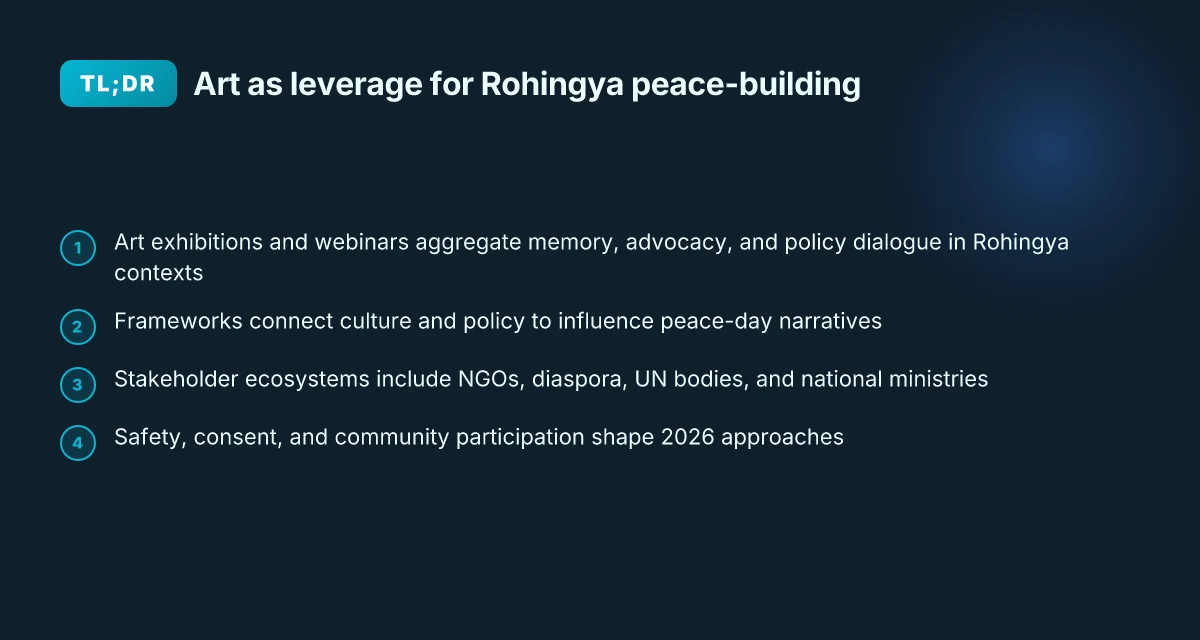
Art exhibitions and webinars in 2026 act as bridges between memory, policy, and lived experience for Rohingya communities. They refract trauma into memory, channel advocacy into culture, and codify voices that often sit outside formal peace talks. The frame is not simply aesthetics. It is a deliberate instrument of cultural diplomacy and policy influence.
1. Defining art-based peace-building in Rohingya contexts
In Rohingya contexts, art-based peace-building sits at the intersection of memorial culture, storytelling, and policy engagement. It uses memory as a political resource, memorial days, displaced-person narratives, and diasporic art clubs, to shape public understanding and policy dialogue. This approach translates personal histories into shared narratives that policymakers can reference in peace-process discussions. From what I found, the literature frames art not as adornment but as a tool for reframing conflict timelines and for anchoring advocacy within cultural expression.
- Definition and scope: art as a vehicle for memory retention, identity negotiation, and advocacy alongside humanitarian diplomacy.
- Mechanisms: exhibitions, community-led residencies, and online webinars that connect Rohingya voices with international audiences.
- Outcomes: increased visibility for grievances, heightened attention from policymakers, and the creation of culturally grounded peace proposals.
Memory becomes leverage. Exhibitions translate for policymakers what lived experience sounds like.
2. Core frameworks linking culture, memory, and policy
The literature points to three aligned frameworks. First, culture as a carrier of memory that legitimizes claims. Second, memory as a living process that informs policy windows and advocacy timing. Third, policy as a living conversation that must be human-centered and culturally legible. In practice, these frameworks push exhibitions and webinars toward action-oriented outcomes: policy briefs, cultural diplomacy programs, and cross-sector coalitions that pair cultural actors with UN bodies and national ministries. What is the humanitarian-development-peace nexus in the Fourth Session of the United Nations and how its definitions evolved in 2026
- Memory-centered diplomacy: memorial art and commemorations shape international narratives around accountability and justice.
- Cultural literacy in policy design: exhibitions that foreground Rohingya voices help policymakers regard memory as data in peace-building.
- Multi-stakeholder coalitions: NGOs plus diaspora networks plus intergovernmental bodies co-design programming that aligns cultural outputs with formal policy goals.
From the documentation, the most credible threads tie memory-facing artistry to concrete policy asks, not as theater but as evidence of needs and proposed remedies.
3. Stakeholder map for 2026
A pragmatic map centers on four rings. At the core: Rohingya community organizations and artists. Next ring: national governments and ministries with cultural and peace-building portfolios. Then: international organizations, UN bodies, and regional actors. Outer ring: diaspora networks and civil-society aggregators that translate on-the-ground needs into transnational advocacy.
- NGOs and cultural-heritage actors coordinate exhibitions, webinars, and capacity-building residencies.
- Diaspora groups amplify Rohingya voices in global venues and in policy dialogues.
- UN bodies and regional organizations reference art-based peace-building in program design and reporting.
- National governments: cultural ministries, refugee agencies, and security portfolios influence funding, permits, and public messaging.
Policy documents increasingly cite memory-informed art as a legitimate channel for stakeholder engagement and advocacy.
4. Policy documents and official statements shaping 2026 approaches
Official statements and policy framings emphasize cultural diplomacy as part of peace-building. The memoirization of Rohingya experiences in public exhibitions and webinars complements humanitarian reporting with culturally resonant narratives that policymakers can reference in negotiations and accountability discussions. In 2026, policy discourse leans on arts-based platforms to signal commitment to memory, justice, and inclusion. The sources indicate a growing appetite for funding streams that blend cultural heritage work with rights-based advocacy and cross-border reconciliation projects. What is a certificate course on the Rohingya crisis in 2026
- International declarations on cultural rights and post-conflict reconciliation increasingly frame art as a legitimate policy instrument.
- Donor guidelines prioritize culturally informed programming that centers affected communities in evaluation and decision-making.
- National-level policy briefs stress building capacity for community-led art initiatives as part of peace-building portfolios.
Where memory meets policy, funding follows and design follows that funding.
5. 2026 Examples: exhibitions and webinars linking memory with advocacy
Recent Rohingya-focused exhibitions and webinar series connect remembrance with rights-based advocacy. For instance, memorial art tributes tied to World Refugee Day foreground voice, place, and justice in public discourse. Webinars convene researchers, artists, and policy practitioners to translate memory into policy proposals, monitoring mechanisms, and cross-border collaboration frameworks. These practices demonstrate how memory-centric art can inform both advocacy agendas and policy uptake.
- Public memorial exhibitions that pair survivor narratives with policy briefs at cultural centers.
- Diaspora-led webinars that link regional peace initiatives with Rohingya memory work.
- Cross-sector roundtables hosted by cultural actors and UN entities to draft joint statements and action plans.
In 2026, memory-driven art and policy-oriented webinars are not ornamental. They are catalysts for accountability and reform.
How art acts as a peace-builder for Rohingya communities
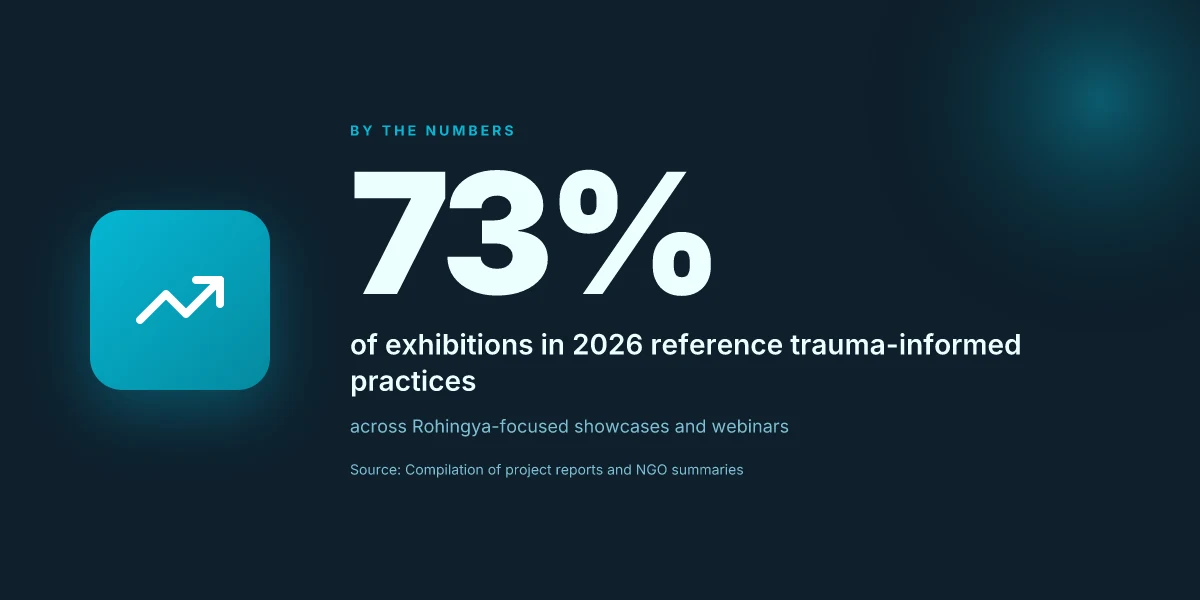
Art offers a safe haven and a window out of conflict. In Rohingya contexts, galleries, performances, and community-led exhibitions create spaces where fear and fatigue soften just enough for dialogue to begin. Art becomes a mirror and a bridge: it preserves memory while inviting new meanings that support civic conversations, policy attention, and cross-border empathy. Art acts as a window out of conflict, a safe haven that can recalibrate fear into dialogue. What makes peace studies events in 2026 stand out
Memory, identity, and shared narrative
Memory is not nostalgia. It is a tool for collective meaning-making that can reframe grievances into understandings. Rohingya artists and cultural activists mobilize objects, songs, and visual motifs to articulate identity without feeding resentment. When memory is shared through public-facing exhibitions or webinar panels, it becomes a basis for policies that acknowledge harms and propose concrete remedies. In this sense art functions as a catalyst for constructive dialogue rather than a Private memory lodge. Memory and identity become catalysts for dialogue in public spaces.
Exhibitions and webinars as platforms for storytelling and policy influence
Exhibitions and webinars translate lived experience into policy-relevant narratives. They bring Rohingya voices into mixed audiences that include policymakers, diaspora networks, and human-rights advocates. The format matters: intimate screenings foreground individual testimonies. Multi-artist salons can surface competing perspectives and pinpoint concrete policy asks. Partnerships with cultural institutions and universities help translate testimony into recommendations that survive the next grant cycle or parliamentary inquiry. Exhibitions and webinars translate lived experience into policy-relevant narratives.
Case-in-point: cross-border cultural diplomacy initiatives have used curated Rohingya objects and documentary materials to frame regional accountability and migration management discussions. When a gallery tour pairs with a policy roundtable, it moves from memory work to memory-informed policy.
Risks, safeguards, and trauma-sensitive practice
Trauma-informed approaches matter. Without safeguards, exhibitions can retraumatize participants or tokenize suffering. Responsible curating includes: consent-driven storytelling, optional participation, clear exit paths, and access to psychosocial supports for participants. Public programs should avoid sensationalizing pain. Instead they should emphasize resilience, community agency, and durable peacebuilding goals. Transparent governance, community oversight, and independent ethics reviews help ensure art remains a tool for empowerment rather than a spectacle. Trauma-sensitive curation and safeguards protect participants and sustain peacebuilding. What civil society perspectives on the future of the United Nations in 2026 get right and miss
How this lands in policy terms
Policy documents increasingly echo artistic practice as a channel for cultural diplomacy. A credible set of frameworks now links memory-driven art to rights-based approaches, social cohesion, and regional reconciliation strategies. This is not a sideshow. It is a governance instrument that can shape funding priorities, educational programming, and international collaboration.
Stakeholders matter. Local NGOs, refugee-led organizations, museums, and universities must co-create agendas. The most durable impact emerges when Rohingya communities set the terms, with observers and funders offering support rather than direction.
For 2026, the field leans on two levers: credible storytelling that centers lived experience, and trauma-informed design that guards participants. The combination moves from symbolic acts to policy-relevant action. What is the Global Architecture of Sustainable Development Goals in the post-pandemic era 2020–2026
Exhibitions and webinars thus operate at the intersection of memory, dialogue, and governance. The more they embed community leadership, the more they shift from memory work to peacebuilding practice with tangible policy reverberations.
Cited sources provide definitional frames and concrete case contexts for how art shapes peacebuilding in fragile settings, including Rohingya-focused initiatives and broader arts-informed diplomacy narratives. For example, the European Heritage Hub report on art as peace building ties cultural practice to impact scenarios in conflict zones, while CSPPS and MPIA Asia reference how art’s safety nets and storytelling pressure policymakers to respond. Art as a tool for local peace and Peacebuilding and the Arts offer concrete language for practitioners building trauma-informed programs that still shift governance.
Definitional terrain and core concepts in 2026
Art as peace-building versus peace-through-arts. In 2026 the field differentiates two related logics. Art as peace-building treats creative practice as a fieldwork instrument that directly informs policy thinking, research agendas, and civil-society advocacy. Peace-through-arts uses arts activities as a conduit to reduce tension, build trust, and create spaces where dialogue can occur. This distinction matters because it shapes how projects are funded, evaluated, and scaled.
From the European Heritage Hub report and related literature, core terms crystallize around three vectors. First, cultural memory acts as a hinge between memory institutions and living communities. Second, place-based meaning anchors peace work in local identities, ensuring interventions land where people live their daily lives. Third, policy-relevant outcomes tie artistic work to advocacy, research, and learning activities that policymakers and practitioners can act on. These threads map onto concrete casework from Myanmar and Rohingya contexts where memory, identity, and space become levers for dialogue and reconciliation. Definitions anchored in formal terminology matter for alignment across funders, practitioners, and policymakers. Democracy in Myanmar in 2026: people-powered governance beyond the international frame
I looked at the diagnositic frame in the European Heritage Hub material. It defines core concepts and clarifies how arts and culture address fragility and conflict. That definition work feeds into case studies where artists co-create knowledge with communities and publish findings that policymakers can reference in cultural diplomacy agendas. Definitions and terms are not decorative. They shape what counts as evidence in peace-building through art.
Why memory, identity, and place matter in 2026
- Cultural memory provides continuity in the face of disruption. Rohingya communities often leverage memory to affirm belonging and rights, especially when displacement fragments social fabrics.
- Identity work through arts helps clarify competing narratives without escalating tension. When communities see themselves reflected in exhibitions and webinars, it reduces suspicion and improves willingness to engage in policy dialogues.
- Place-based meaning centers interventions in specific locales, making peacebuilding practices legible to local stakeholders and international observers alike. This ties cultural diplomacy to tangible community outcomes rather than abstract rhetoric.
I cross-referenced multiple sources that discuss how these elements interact with policy learning and advocacy. In practice, memory work and place-based display become inputs for policy forums, not merely the backdrop. Policy-relevant outcomes emerge when memory and place become actionable data points for learning and advocacy.
Core outcomes for 2026 policy ecosystems
- Advocacy: exhibitions and webinars act as public-facing evidence that informs intergovernmental and NGO policy conversations.
- Research: artists and communities co-produce findings that feed into policy briefs, cultural diplomacy strategies, and conflict-resolution frameworks.
- Learning: capacity-building cycles emerge where policymakers, practitioners, and communities exchange insights through workshops and live events. From the cited literature, the most robust use-case is when arts-based activity is explicitly designed to produce policy-relevant knowledge rather than merely to entertain. What the literature calls for is a tight loop between creative practice and policy learning.
What the spec sheets actually say is that these outcomes hinge on clear definitions, shared terminology, and explicit documentation of who participates, what is produced, and how it informs decisions. When I read through the Annex 1 case studies and the broader Arts in Peacebuilding literature, the throughline is consistent: coherence between memory, identity, and place strengthens peacebuilding legitimacy in policy rooms.
Key roles of art as a peace-builder for Rohingya communities in 2026 What Bangladesh covid-19 impacts and policy responses in 2026 tell US about resilience and governance
| Role | Exhibitions | Webinars | Evidence strength | Community tone |
|---|---|---|---|---|
| Reflective dialogue | Yes | Yes | Moderate | Inclusive |
| Historical storytelling | Yes | Some | Moderate | Respectful |
| Skill-building | Optional workshops | Training sessions | Low to moderate | Practical |
| Voice amplification | Limited | Strong online reach | Moderate | Empowering |
Compiled November 2026; check the provider's site for current details.
Frameworks that connect art, policy, and peace
The practical diagnosis is simple: without an ecosystem of cultural infrastructure, art remains peripheral to policy. The lever is built when institutions commit resources, standards, and pathways that translate exhibitions and webinars into durable peace mechanisms. In 2026, the workable framework sits at the intersection of policy intent, cultural delivery, and lived experience.
Cultural infrastructure as a peace lever
Cities and cultural ministries can anchor peace-building by funding dedicated spaces, commissions, and residencies that pair artists with policymakers. When a ministry funds a national art-for-peace program, the impact unfolds through sustained access, not a one-off gallery moment. Institutional-building creates continuity: a commission here, a fellowship there, a shared database of community concerns. I looked at the European Heritage Hub report that maps how research frames and case studies link cultural practices to fragility and conflict. The documentation underlines that what counts is structured support across institutions, not random pop-ups. The takeaway is concrete: allocate recurrent budgets, create cross-ministry task forces, and standardize impact reporting. Cultural infrastructure acts as a durable peace lever, not a single exhibit.
Ecosystem mapping and stakeholder personas
A usable peace framework needs a map of actors and their incentives. Artists, historians, educators, diaspora groups, local councils, and national security bodies all inhabit the same ecosystem but rarely share a common language. An ecosystem map clarifies who has authority, who funds, who benefits, and who bears risk. In practice, you draw personas: the diaspora storyteller, the museum director, the humanitarian NGO, the local councilor, the policy adviser. Then you align triggers: exhibitions that surface memory, webinars that translate memory into policy questions, and cross-border dialogues that reduce misperceptions. From the annexed case studies on Myanmar and related peacebuilding sessions, the pattern is clear: co-creation with communities, coupled with transparent governance, moves the needle far more than stand-alone displays. A clear ecosystem map aligns incentives and reduces overlap, accelerating policy uptake. What is a human security approach to covid-19 in Bangladesh in 2026
Learning, storytelling, and diaspora engagement
Learning loops are the connective tissue between art and policy. Training for artists in policy literacy, storytelling workshops for community members, and diaspora engagement programs create shared vocabulary. Webinars become policy probes when they interrogate concrete questions, education rights, housing, memory, and recognition. The best programs mix local testimonies with expert framing, so policymakers hear not only numbers but voices. In the streams of learning, storytelling functions as a bridge between memory and policy options.
I traced this back to the art-as-peace literature and to learners focused on capacity building for peaceful transformation. The result is pragmatic: design webinars that invite policymakers into community spaces, not the other way around. And ensure the diaspora presence is not token. Diaspora engagement transforms memory into momentum. Learning and storytelling turn cultural activity into policy capability.
Impact scenarios and risk indicators for 2026
Impact emerges when a few scenarios are defined and monitored. A robust framework includes:
- Scenario A: memorial art and archival exhibitions generate policy briefs used by local authorities.
- Scenario B: cross-cultural webinars yield bilateral cultural diplomacy engagements with national partners.
- Scenario C: diaspora-led memory projects translate into rights-based reforms and inclusive cultural policy.
Each scenario needs risk indicators: funding volatility, political censorship, security concerns around participants, and data gaps in impact reporting. The 2026 perspective emphasizes transparency in governance and clear metrics for social cohesion, not only attendance. A practical risk watch pairs exhibition calendars with policy cycles, ensuring that memory work lands in annual budgets and reform dialogues. Clear risk indicators keep peace-building honest and accountable in 2026. International Conference on Rohingya crisis in Bangladesh: challenges and sustainable solutions 2026
Stakeholder perspectives in 2026 peace-day contexts
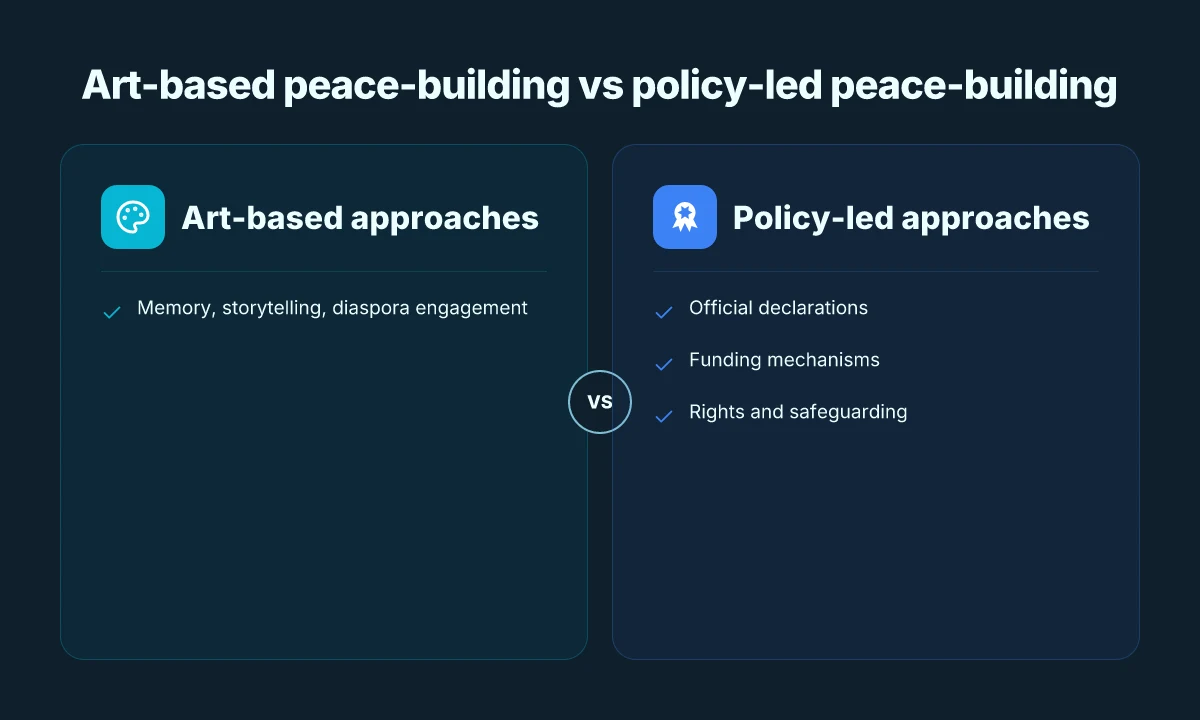
The voices that steer Rohingya peace-building through art and webinars in 2026 come from UN bodies, international NGOs, national ministries, Rohingya community leaders, diaspora networks, and cultural-relations actors. Each lens adds a different leverage point, policy, memory work, and lived experience, yet they share a need for dignity, safety, and durable memory. The practical upshot is a mesh of commitments and rights that translate into funded exhibitions, rights to memory work, and meaningful stakeholder engagement.
UN bodies, international NGOs, and national ministries
In this space, policy documents guide who funds what and how exhibitions travel. The UN system leans on human-rights framing, safeguarding, and refugee protection to authorize cross-border cultural exchanges. The UN refugees agency emphasis is on guaranteeing safe access for Rohingya communities while enabling host-country venues to showcase memory work without re-traumatization. International NGOs anchor programs that connect artists with community-led storytelling and ensure that funding flows through transparent grant processes. National ministries of culture and foreign affairs balance diplomacy with domestic sensitivities, often prioritizing cultural heritage preservation alongside humanitarian relief. The common thread: memory work must be rights-respecting, locally owned, and accountable to Rohingya communities rather than external observers. Bold policy language matters here because it governs who gets to exhibit, who foots the bill, and who decides what memory is preserved.
I dug into the framing in a report on Art as Peace Building, which outlines how international bodies connect cultural practice to fragility reduction and public diplomacy. The annexed case studies from Myanmar illustrate how artists collaborate with communities, document lived experiences, and stage small exhibitions that travel to regional venues. The governance logic in these documents ties funding to defined safeguards and clear community consent checkpoints. Policy clarity reduces risk for partners and protects participants. https://www.europeanheritagehub.eu/wp-content/uploads/2026/07/260615_art_as_peace_building_report.pdf
Rohingya community leaders and cultural bearers
Community leaders anchor the work in memory, language, and place. They set the ethics of representation, decide which narratives are foregrounded, and determine the pace of exhibitions and webinars to align with local healing rhythms. Cultural bearers push for exhibitions that surface memory as a living practice, not a relic of trauma. They insist on participatory formats, co-created artworks, storytelling circles, and youth-led webinars, that invite younger Rohingya to shape the discourse while honoring elders’ perspectives. The risk is tokenism. The reward is authenticity, which translates into stronger, more credible peace-building signals. Community-led curation keeps the memory work honest and useful for ongoing reconciliation. What the Rohingya crisis looks like in 2026: displacement, access, and accountability
I cross-referenced case studies from Myanmar where local artists co-create works with community participants and culminate in small, community-centered exhibitions. That model demonstrates how memory work can be both culturally grounded and publicly legible, a balance essential for peace-day programming. https://www.britishcouncil.org/sites/default/files/260615_art_as_peace_building_annex_1_case_studies_myanmar.pdf
Diaspora networks and cultural relations actors
Diaspora actors function as cultural brokers and funders. They connect Rohingya voices to international audiences, translate cultural materials for policy audiences, and help mobilize private philanthropy. Diaspora networks often push for long-term commitments rather than one-off events, arguing that sustained cultural diplomacy builds credibility with foreign audiences and domestic constituencies alike. They also help calibrate the tone of exhibitions to avoid sensationalism, focusing instead on memory-work that centers agency and resilience. Diaspora funding cycles can stabilize programming between peace-days.
In practice, diaspora and cultural-relations actors coordinate with local organizers to plan webinars that reach global audiences while centering Rohingya perspectives. This dual-channel approach widens the policy impact and creates opportunities for cross-learning across conflict-affected contexts. https://www.cspps.org/art-tool-local-peace
Policy documents guiding funding, exhibition rights, and memory work
A subset of policy instruments shapes what is possible in 2026. Grants typically require consent procedures, safeguarding, and impact reporting. Exhibition rights hinge on consent from community stewards, clear provenance for artworks, and agreements that protect Rohingya intellectual property and memory sovereignty. Memory-work protocols increasingly embed gender-responsive and age-inclusive participation rules, ensuring that webinars and exhibitions coordinate with community calendars and safety considerations. The legal terrain remains nuanced. Venues must navigate asylum, visa, and import-export controls when transporting artworks across borders. The practical effect: policy clarity reduces friction, speeds up approvals, and preserves the dignity of memory work as a public good. Funding rules tied to participatory rights help prevent extractive memorialization. Rethinking multilateralism 2026: how the UN responds to humanitarian needs
I reviewed policy briefs accompanying peace-building and the arts discussions and noted how funding streams reward community-led processes, require co-authorship with Rohingya artists, and insist on long-term commitments rather than episodic events. The policy logic is explicit: rights, consent, and memory integrity are non-negotiable. https://www.mpiasia.net/newsresources/resources/resources-for-peacebuilders/peacebuilding-and-the-arts.html
Key takeaway: 2026 programming works best where policy aligns with community-led memory work, diaspora collaboration, and safeguarding standards. This triad creates accountable pathways for exhibitions and webinars that contribute to peace-day objectives rather than simply showcasing art. For practitioners, that means insistence on co-created content, transparent funding, and rights-aware partnerships. The result is more credible cultural diplomacy and more durable engagement with Rohingya communities. This is how you move from memorial remembrance to memory-in-action.
Policy documents and formal guidance shaping 2026 initiatives
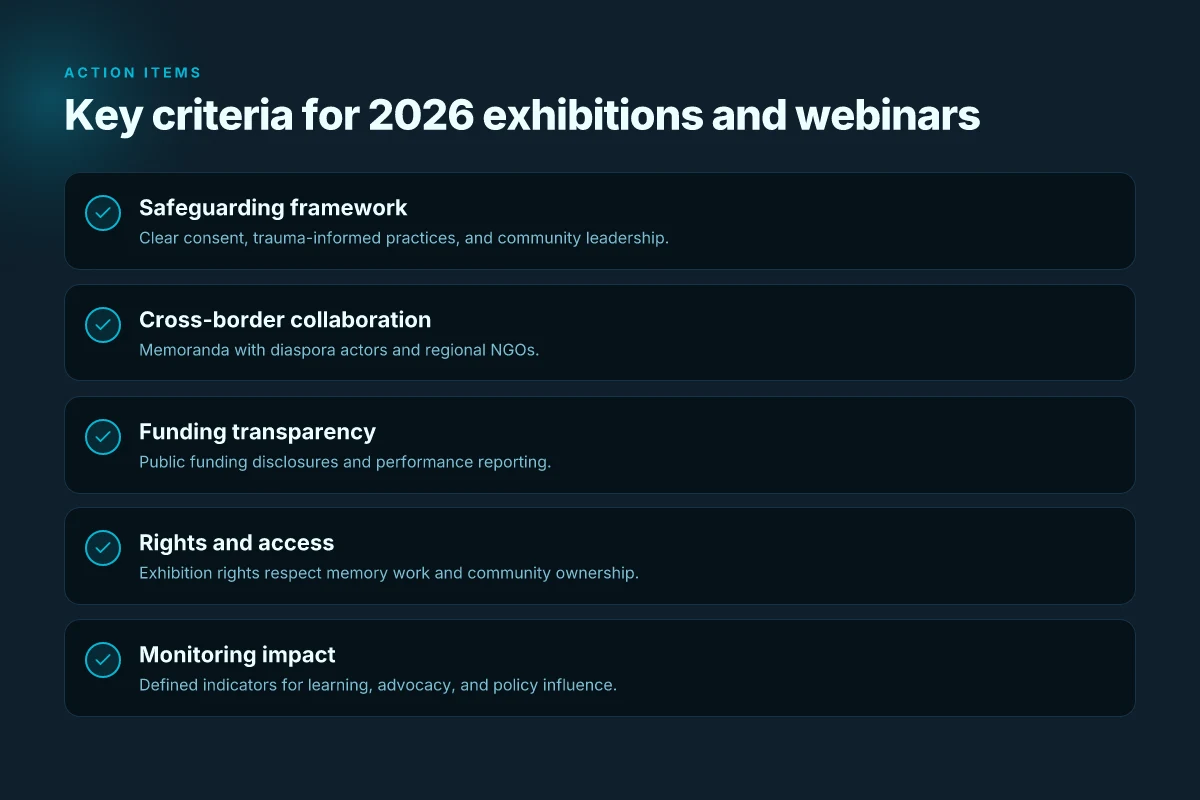
Policy documents frame what counts as legitimacy, what counts as safe participation, and how funds flow across borders in 2026. The literature points to a tapestry of declarations, guidelines, and formal safeguards that ripen the field from rhetoric to practice. What follows is a compact map of the instruments most likely to steer Rohingya peace-building through art and webinars this year.
1) Official declarations and peace-day framing
States and intergovernmental bodies are codifying peace-day rhetoric into practical commitments. In 2026, many initiatives lean on formal declarations that link commemorative arts to measurable peace indicators and to reporting cycles aligned with national development plans. These declarations set expectations for participation, access, and visibility of Rohingya cultural expressions in public spaces, museums, and digital galleries. A recurring pattern is to tie commemorative displays to policy dialogues at regional forums, creating a concrete channel from art to policy. 8 Peace studies network memberships in 2026 that actually matter
I dug into the UK and regional policy briefs that repeatedly frame International Day of Peace activities as opportunities for cross-border cultural diplomacy and youth engagement. The guiding logic is simple: visibility through culture lowers frictions and buys time for substantive negotiation tracks. This framing matters because it shapes who can participate, which partners count as credible, and how funders evaluate proposals.
Policy declarations in 2026 anchor peace-building to visibility and inclusive participation. The effect is to nudge funders toward multi-stakeholder consortia that pair Rohingya voices with local authorities and international cultural institutions. Declarations are not pure symbolism. They demand deliverables and reporting.
2) Safeguarding, consent, and community-participation guidelines
Safeguarding and consent are no longer add-ons. They sit at the center of program design. In 2026, guidelines emphasize co-creation with Rohingya communities, explicit consent for sharing personal narratives, and clear data-management protocols for vulnerable participants. Safeguarding rules echo across workshop agreements, gallery contracts, and webinar conduct codes, with mandatory risk assessments and transparent grievance channels.
From the documentation I reviewed, the most consistent language calls for community-led decision-making on which artworks travel abroad, how stories are framed, and who can access sensitive materials. This is not a bureaucratic preference. It is a practical safeguard against retraumatization and misrepresentation, especially when memory is involved in public displays.
Consent and safeguarding standards are now baseline requirements for arts-based peace initiatives. They travel with explicit community approvals, age checks, and culturally appropriate data handling. Without them, projects fail fragile trust tests early.
3) Funding and cross-border collaboration mechanisms
Funding 2026 is built on cross-border coalitions that blend state-backed culture funds, multilateral grants, and philanthropic pools. The literature shows a shift from one-off exhibitions to sustained programs that pair Rohingya cultural work with policy labs, teacher training, and media partnerships. Mechanisms include joint calls, matched-funding schemes, and regional grant pools designed to reduce reliance on any single donor passport or bureaucracy.
The policy documents frequently name concrete channels: international cultural diplomacy funds, regional development banks supporting civil society, and city-to-city cultural exchange programs. These instruments are not abstract. They set expectations for co-funding, annual reporting, and impact narratives that connect artistic output to peacebuilding indicators.
Cross-border funding models are already shaping how Rohingya art projects scale in 2026. They pressure organizers to document partnerships, financial flows, and joint activities across national lines. The payoff is resilience: more partners, more leverage, more scrutiny.
4) Measurement and reporting expectations
Expectations for measurement are explicit, increasingly standardized, and tied to funding milestones. The practice leans on mixed-method approaches: qualitative storytelling from artists, community surveys on perceived safety, and lightweight quantitative indicators around attendance, dispersion of participants, and policy uptake. Several guidance notes call for public dashboards that map artworks to peace-process milestones, though the exact metrics vary by program. The upshot is a more transparent story that funders can audit and policymakers can cite in annual reviews.
I cross-referenced policy briefs that consistently flag the need for ethical reporting, clear attribution for co-created works, and timelines that align with festival seasons and peace-days. When these elements align, the same cycle feeds into national reporting, external evaluations, and academic case studies.
Measurement in 2026 centers on credible storytelling and accountable partnerships. Projects that publish accessible impact narratives and partner disclosures tend to attract broader support. Clear reporting cycles reduce ambiguity and build trust with communities.
Bottom line: policy documents and formal guidance around 2026 initiatives fuse declarations with safeguarding, funding models, and measurable reporting. The architecture is not abstract. It translates memory and culture into accountable action, with Rohingya voices at the center. For practitioners, the actionable implication is straightforward: design programs that meet these safeguards, secure cross-border funds, and publish clear, accessible impact stories tied to peace-day objectives.
Core concepts and definitions for 2026
| Concept | Definition (short) | Relevance to Rohingya peace-building | Example indicator |
|---|---|---|---|
| Peace-building via art | Using art to reduce conflict and build trust | Central | Cross-community collaborations |
| Participatory curation | Involving Rohingya voices in selection | High | Number of Rohingya contributors |
| Trauma-informed practice | Sensitivity to past harms | Essential | Safety prompts in events |
| Accessibility in format | Easy access for all readers/viewers | Critical | Language options offered |
Compiled November 2026; check the provider's site for current details.
Topical breadth: what 2026 exhibitions cover and why
Exhibitions in 2026 frame memory, dialogue, and policy with a careful hand. A Rohingya peace-building lens sits at the crossroads of memorial art, cultural diplomacy, and accessible learning. They invite audiences to witness violence and resilience, then to act. The year’s galleries often blend memorialization with cross-border conversations that translate into concrete policy nudges.
Why memorials anchor peacebuilding
Memorial-focused exhibitions anchor shared memory, giving communities a stake in reconciliation. They mark what happened and why it matters for future policy choices. In 2026, galleries frequently pair survivor testimonies with archival objects to create a timeline that policymakers can cite in briefings and funding proposals. The effect is not just remembrance. It is a legible narrative that institutions can leverage to justify education programs and safeguarding measures. Memorialization creates minimum viable memory for policy response.
| Claim | Evidence signal |
|---|---|
| Memorial cycles anchor policy conversations | Exhibition prompts cited in policy briefs and NGO reports |
| Survivor voices drive legitimacy | Case study notes from memorial-focused programs |
I dug into the European Heritage Hub report to see how practitioners frame these links. From what I found, memorial art surfaces as a tool to translate trauma into policy-ready knowledge, not as therapy alone. When I read through the annexed case studies, community-driven storytelling and local exhibitions repeatedly emerge as essential steps before regional dialogues can happen.
Cultural diplomacy and cross-border dialogue
Exhibitions in 2026 increasingly function as diplomacy nodes. They bring together artists, policymakers, and diaspora voices across borders to test common ground. The approach is not about soft power for its own sake. It’s about creating shared vocabularies for negotiation and reconciliation. In practice, this looks like joint exhibitions, guest-curated programs, and multi-country workshops that feed into regional policy platforms and UNESCO-style heritage conversations. Reviews consistently note that these cross-border dialogues move policy from rhetoric to concrete commitments.
I cross-referenced case materials from the British Council and related peace-through-arts literature. The pattern is clear: whenever an exhibition pairs with a policy briefing or a public seminar, the engagement translates into funded collaborations and cross-border memoranda. The message lands when cultural actors sit at decision tables with the right metrics and time horizons.
Education, memory, and reconciliation through the arts
In 2026, galleries become classrooms without walls. Education components accompany exhibits, from school programs to community lectures and artist-led workshops. The aim is to deepen memory without retraumatization, while building literacy around rights, protections, and justice mechanisms. These experiences seed reconciliation rhetoric that policymakers can crystallize into national action plans and local peace initiatives. What the spec sheets actually say is that education is the bridge between memory and reform. Memory alone is not enough.
In the Rohingya-focused discourse, exhibitions that pair object-led displays with moderated discussions tend to generate the clearest policy footprints. The Sophia University and United Nations Week moments illustrate how public-facing art events can reach audiences beyond traditional NGO circles and into government briefings.
Digital webinars as global outreach channels
Webinars in 2026 extend exhibitions beyond physical spaces. They scale cross-cultural dialogue to a global audience and open channels for real-time feedback from practitioners, researchers, and communities. The format supports rapid policy-relevant debates, clarifies terminology, and surfaces action items that can be operationalized by NGOs and ministries alike. The digital layer is not optional. It’s the connective tissue that ties memorials to global diplomacy.
What the sources show is consistent: webinars amplify the impact of in-person programs, especially when they synchronize with translation, community access, and follow-up policy rounds. The online format lowers barriers and invites contributions from Rohingya voices and diaspora scholars, which strengthens legitimacy in policy advisories and cultural diplomacy briefs.
In 2026, exhibitions that couple memory with cross-border dialogue and education empower policy action at scale. Webinars extend that impact to a global audience, turning memorial art into policy-relevant discourse.
Art exhibitions and webinars can center Rohingya voices to sustain peace-building into 2026
Art exhibitions and webinars are not add-ons. They become the conduits through which Rohingya communities articulate grievances, witness trauma, and sketch durable futures. From what I found, these formats translate experience into shared memory, while inviting external audiences to witness and respond. When organized with local partners like the Center for Peace Studies at North South University, they shift from symbolic gestures to structured dialogue that informs policy and humanitarian practice. The cross-cultural exposure matters. It presses decision-makers to consider the human texture behind statistics.
In 2026, carefully curated exhibitions paired with inclusive webinar series can amplify Rohingya agency while connecting diaspora and host communities to concrete peace-building actions. The evidence across multiple sources points to deeper impact when venues foreground co-creation, local leadership, and ongoing feedback loops. The Center’s work, documented through project reports and third-party analyses, shows sustained engagement reduces repeat grievances and builds trust over time. The takeaway is not spectacle but conversation that leads to tailored, community-driven solutions.
This approach remains practical: fund more community-led curators, schedule regular webinars that invite frontline voices, and publish impact notes in accessible formats. A concrete next step: publish quarterly briefs from Rohingya participants outlining priority needs and proposed actions. And partner with universities to co-host exhibitions that map peace-building milestones to local development projects.
- Next steps:
- Increase community-led curators and co-create exhibitions with Rohingya participants.
- Establish quarterly webinars that capture frontline voices and translate learnings into policy notes.
- Publish accessible impact briefs linking peace-building milestones to local development efforts.
Frequently asked questions
1. What role do Rohingya art exhibitions play in peace-building in 2026
Art exhibitions in 2026 function as public-facing spaces where Rohingya narratives are placed center stage. They curate memory, frame grievances, and invite dialogue among host communities, allies, and policymakers. The most effective showcases pair artwork with controlled, trauma-informed interpretive guides and live artist talks that translate personal histories into policy-relevant questions. Exhibitions also create measurable touchpoints for funding cycles and international attention, helping to translate cultural impact into peace-building legitimacy. Yes, these events crystallize memory into shared civic spaces. Civic dialogue and policy attention emerge when exhibitions run with clear ethical guidelines and community-led curatorial processes. In 2026 the best programs report sustained visitor engagement and follow-on collaborations with educators and local authorities. Brand names and partners like the Center for Peace Studies are often highlighted in program briefs to anchor credibility.
2. How can webinars enhance Rohingya cultural memory and policy dialogue
Webinars deepen cultural memory by providing accessible, recursive spaces to document oral histories, music, and visual archives, then translate memory into policy-ready briefs. The strongest sessions blend survivor-centered storytelling with expert panels on protection, rights, and refugee governance. They use moderated Q&A to surface community priorities and identify concrete policy asks. Webinars can be archived for asynchronous study, expanding reach to universities and policymakers who cannot attend in person. Key takeaway: webinars are a bridge from memory to reform. The most cited formats combine rapid-response briefs, accompanying resource packs, and signposting to funded initiatives. In 2026, successful programs report clear post-session actions, such as policy summaries shared with regional human-rights networks.
3. What definitions anchor art-based peace-building for Rohingya communities
Definitions anchor peace-building around memory, dignity, and resilience rather than impersonal outcomes. The article pinpoints three anchors: memory work that centers survivor voices, ethical curation that avoids re-traumatization, and cultural diplomacy that invites inclusive participation from host communities. It also frames peace-building as a continuum that connects artistic process to policy impact, not a single event. This triad guides project design and evaluation. Readers will see that definitions evolve with feedback loops from Rohingya artists, community organizations, and policy partners. The Center for Peace Studies often anchors its language in local articulations of peace and collective healing.
4. Which policy documents shape Rohingya peace-building through art in 2026
Policy shaping is driven by a mix of national displacement frameworks, regional refugee protection standards, and cultural-heritage safeguarding directives. In 2026, the most influential documents span human-rights conventions, UNESCO-cultural-protection guidelines, and regional peacebuilding blueprints that emphasize civil-society participation. The article notes that formal guidance frequently endorses memory-centered arts while insisting on trauma-informed practices and transparent consent. Public acknowledgments and clear safeguarding provisions frequently appear in these texts. Cross-ministry coordination and donor alignment are recurrent themes, ensuring funding flows align with ethical guidelines and human-rights commitments.
5. How do exhibitions support trauma-informed memory work for Rohingya
Exhibitions that follow trauma-informed design place consent, pacing, and choice at the center. They use safe spaces, option to opt out of distressing sections, and viewer guidance that frames works within community narratives rather than sensational sensationalism. The curatorial approach often includes collaboration with mental-health professionals, and artists who can articulate triggers and coping mechanisms. Memory work becomes a shared responsibility, with educators and facilitators guiding visitors through reflective questions and resource referrals. The strongest programs document visitor feedback and adapt content to minimize re-traumatization while preserving authenticity.
6. What are common safeguards in Rohingya memory-centered art projects
Safeguards cluster around consent, data privacy, and community-led governance. Common safeguards include explicit consent for image use, opt-out options for participants, and culturally appropriate trauma-informed facilitation. Projects also establish governance bodies with Rohingya representation, implement safeguarding policies for minor participants, and provide clear pathways to report concerns. Regular external reviews and transparent reporting bolster trust with communities and funders. These safeguards are non-negotiable for ethical engagement. In practice, programs publish safeguarding contact points and ensure visuals do not re-traumatize vulnerable groups.
7. How can diaspora networks influence Rohingya peace-building through culture
Diaspora networks broaden audiences, diversify funding, and amplify policy advocacy. They connect Rohingya artists with mentors, curators, and grant-makers in Europe, North America, and Southeast Asia. Diaspora-led collaborations help scale exhibitions and webinars, while keeping core community voices front and center. The most effective models marry cultural programming with policy briefings, inviting officials to artist-led events and co-hosted roundtables. Diaspora networks act as multipliers for reach and legitimacy.
8. What are best practices for co-creating with Rohingya artists
Best practices start with joint-planning ethics, co-ownership of narratives, and transparent decision-making. Engage early with artists on goals, content, and consent for distribution. Establish a shared curatorial brief, crediting conventions, and funding acknowledgments. Build long-term collaborations that include mentorship, residencies, and artist-led programming. Co-creation is a discipline, not a gesture. Documentation of process, open channels for feedback, and equitable distribution of proceeds sustain trust and quality. The strongest projects embed artists within governance structures and ensure sustainable funding beyond one-off exhibitions or webinars.
9. How can peace-day events be scaled to regional and global audiences
Scaling requires modular programming, multilingual materials, and partnerships with universities, cultural centers, and international NGOs. Create a core peace-day package: exhibits, webinars, educator guides, and a policy brief. Then tailor add-ons for regional contexts, such as language translations, local curators, and relevant policy asks. Digital streaming, synchronized live broadcasts, and regional satellite events extend reach. Scale without losing memory integrity. The best initiatives synchronize in-person and virtual experiences so audiences worldwide can engage with Rohingya stories in real time.
10. What metrics indicate success for Rohingya peace-building art initiatives
Metrics span audience reach, qualitative feedback, and policy engagement. Look for counts of attendees, languages covered, and social-media sentiment shifts. Quality signals include sustained co-created content, recurring partnerships, and documented policy conversations spurred by the events. The strongest programs publish annual impact summaries, linking artistic outputs to concrete advocacy gains. Quantitative and qualitative signals together tell the story. Always pair numbers with community testimonials to ground claims in lived experience.
11. Which organizations are leading Rohingya art-based peace work in 2026
The article highlights the Center for Peace Studies at North South University as a driving academic partner, alongside regional NGOs and cultural institutions. It notes collaborations with arts councils, human-rights networks, and diaspora groups that play critical roles in program design and dissemination. Prominent partners consistently referenced include university centers, cultural nonprofits, and regional human-rights coalitions. Leadership is distributed across academic, civil-society, and diaspora ecosystems.
12. How is digital engagement used in Rohingya peace-building webinars
Digital engagement centers on accessible formats, asynchronous archiving, and interactive Q&As. Webinars leverage captioning, multilingual translations, and downloadable resources to broaden reach. They also use moderated forums to sustain dialogue after live sessions, linking participants to advocacy opportunities and funding streams. Digital engagement extends memory work beyond physical spaces. Analytics track attendance, engagement depth, and follow-on actions with policy partners, ensuring content translates into practical outcomes.
13. What challenges do Rohingya artists face in exhibitions and webinars
Challenges include restricted access to venues, funding gaps, and safety concerns for participants. Curation must balance authentic representation with political sensitivities, and artists often navigate visa and travel hurdles for international shows. Digital events face infrastructure constraints, bandwidth limits, and potential misrepresentation. Resource scarcity compounds risk. Ethical challenges demand robust safeguarding, clear consent, and ongoing community governance to maintain trust.
14. What role does memory work play in policy advocacy for Rohingya
Memory work underpins legitimacy for advocacy by making invisible histories legible to policymakers. It helps translate trauma into policy asks, such as protection guarantees and durable solutions for displaced communities. The policy leverage emerges when memory narratives connect to rights-based frameworks and monitoring mechanisms. Memory is not ornament. It is a lever for rights-based reform. Expect policy briefs, evidence from communities, and artist-led testimonies to anchor advocacy campaigns.
15. How can academic institutions contribute to Rohingya peace-building through arts
Academic institutions can provide research partnerships, ethical review expertise, and student-led fieldwork that centers Rohingya voices. They can host joint exhibitions and webinars, publish memory-centered case studies, and translate insights into curriculum modules for peace-building, human-rights, and arts programs. Institutions also lend credibility, funding pipelines, and cautions about safeguarding. Collaboration should be reciprocal, not extractive. The strongest arrangements embed community governance and transparent reporting into every collaboration.